
Florida ranked 47th out of 50 states in a 2025 national safety study, placing it among the bottom 5 least safe states in the country for the second year running. That ranking reflects real, measurable risk, not just for residents and visitors, but for business owners and jobsite managers operating across the state.
Although Florida's violent crime rate and property crime rate both sit below the national average, this is only part of a bigger picture. Rapid population growth, a booming construction sector, thriving tourism, and high immigration numbers all contribute to how crime shows up across the state.
This piece breaks down what's driving Florida's safety profile, what the data shows, and where the real risk is for people and businesses operating across the state. We'll also discuss how to mitigate your risk of being targeted for crime.
Is Florida Safe?
Florida ranked 21st for murders and assaults per capita, but it also ranked 45th for climate disaster losses per capita and 47th for its share of uninsured residents. The latter 2 categories carry significant weight in the state's overall safety rating.
Rankings are built on 52 metrics, grouped into:
-
Personal and residential safety
-
Financial safety
-
Road safety
-
Workplace safety
-
Emergency preparedness
As such, the final number reflects a lot more than standard street crime. A state can score poorly overall while still being relatively safe in the categories that matter for locals on a day-to-day basis, and vice versa.
Read more:
Florida's overall crime statistics
If you're looking at crime rates alone, Florida may be safer than its poor safety ranking suggests. Florida's violent crime rate is 3.96 incidents per 1,000 people (lower than the national average of 4.43), and its property crime rate was 20.29 incidents per 1,000 people in 2024, which was lower than the U.S. average of 22.89.
This is a meaningful gap, since Florida residents and the businesses and jobsites operating alongside them face less violent crime and less property crime than the average American, even in a state ranked in the bottom 5 for overall safety. Despite these numbers, 49% of Floridians report a high level of daily safety concern.
Property crime is a particular worry, cited by 53% of residents, while 45% worry about package theft specifically. This same concern shows up at a larger scale in how businesses operate, with assets left exposed or jobsites being left unattended overnight.
Feeling unsafe and being statistically unsafe aren't always the same thing. This is why jobsites, retail properties, private residences, and public venues often invest in visible security measures to ensure that they feel less exposed.
Additionally, the difference between perception and reality shows up in how businesses plan around crime risk. A business with a strong on-paper safety record can still see a spike in opportunistic theft during high-traffic seasons, particularly around tourism corridors and construction jobsites where valuable equipment is unattended for long stretches.
So, while statistics can describe the state's overall statistics, they can't describe any individual site.
Read more:
How Florida's Cities Compare to Each Other
Not every part of Florida carries the same risk profile. According to the latest data, Vero Beach is Florida's safest city overall, with Safety Harbor close behind at number 2. In 2026, Safety Harbor recorded a violent crime rate of 1.3 per 1,000 residents and a property crime rate of 7.0 per 1,000 residents, which is well below the statewide averages of 3.96 and 20.29, respectively.
Unlike Florida's largest cities, these cities tend to share a few traits:
-
Lower population density
-
Less tourist traffic
-
Fewer large commercial and industrial sites
-
Smaller overall visitor footprints
While overall crime rankings vary widely between Florida's safest and highest-crime cities, vehicle theft follows its own pattern. Miami Beach, for example, has one of the highest motor vehicle theft rates in the nation, driven largely by its high tourist footfall and distracted visitor population. This pattern also puts rental fleets and commercial vehicles parked in high-traffic areas at greater risk.
Zooming out, the picture improves statewide. Florida posted the largest year-over-year drop in vehicle thefts of any state in 2025, with almost 10,000 fewer stolen vehicles than in 2024.
For businesses operating in higher-traffic areas like Tampa, Miami, and Orlando, that contrast is a useful reminder that location matters just as much as statewide or national averages. A jobsite in a dense urban corridor faces a different risk profile than one in a quieter coastal town.
Businesses expanding into new Florida markets often benchmark against city-level crime rates rather than statewide figures for this reason, since a single number can mask an enormous variation between a small coastal community and a major metro center.
Read more:
- Top 10 Cities with the Highest Crime Rates in Florida
- 8 Factors Behind the Surge in Motor Vehicle Theft Across Florida
Where Florida's Real Crime Risks Are
While Florida's overall violent and property crime rates sit below the national average, that doesn't mean risk is evenly spread across the state. Certain categories and locations carry disproportionate weight, and understanding which ones apply to your business or property is more useful than the statewide average alone.
Construction jobsites remain a consistent target for theft and burglary across America. Construction equipment theft costs the industry an estimated $300 million to $1 billion annually, according to the National Insurance Crime Bureau (NICB).
Materials and tools left exposed for weeks or months at a time, in particular, are making jobsites an easy mark. Florida's rapid development boom also means more active jobsites, more exposed materials, and more opportunity for this kind of loss.
At the same time, retail properties face a different but related risk. Retailers reported a combined 18% increase in shoplifting and merchandise theft incidents from 2023 to 2024, according to the National Retail Federation (NRF).
50% of the surveyed retailers also reported an increase in cargo and supply chain theft due to organized retail crime in 2025, with heavy-traffic corridors in Florida's larger metro areas accounting for the majority of these cases.
Read more:
- Crime in Florida: The Trends Construction Projects Need to Know About
- Types of Construction Theft and How to Prevent Them
How Florida Compares to Other States
Florida's crime statistics look different when placed next to other large, high-population states. California's violent crime rate sits at 486 incidents per 100,000 residents, noticeably higher than Florida's rate of roughly 396 per 100,000.
That difference matters for businesses that are weighing security investments across multiple states, since a Florida property or site is in a lower-risk position than a comparable one in California, even though both are large, high-tourism states with large metro areas.
Texas and New York are in a similar position to Florida. Both states rank well outside the top 10 for violent crime nationally, placing them in the same middle tier as Florida rather than among the highest-risk states in the country. This is useful context for any businesses weighing jobsite or property security investment across Texas, New York, or Florida.
The states with the highest violent crime rates, like New Mexico and Tennessee, tend to be smaller, less urbanized states. This runs counter to the assumption that population size or tourist volume automatically means higher risk for a business or jobsite operating there.
Violent crime comparisons are only part of the broader picture, and what matters more for businesses operating across state lines is understanding which specific categories of crime run higher in Florida and how they affect day-to-day operations.
Construction jobsites face elevated equipment and material theft that is driven by the state's rapid development boom, and retailers see higher organized retail crime and cargo theft in high-traffic tourist corridors.
Statewide comparisons may be useful for big-picture planning, but they say little about any individual property or jobsite, which is why city and state-level factors matter just as much as the state number.
How to Stay Safe in Florida
A few habits go a long way toward avoiding becoming a crime statistic, whether you're protecting yourself personally or managing risk across a jobsite or property. However, the right approach looks different depending on which one you're solving for.
For individuals, it's essential to stay alert in crowded areas, where pickpockets and opportunistic theft are more common. You should also keep valuable accessories inside your trunk or out of sight in parked cars, since a visible phone or bag on a passenger seat is an easy target. When staying in a hotel, use the in-room hotel safe for documents, jewelry, and extra cash rather than leaving them in a suitcase. Businesses should look to distribute this information to customers also.
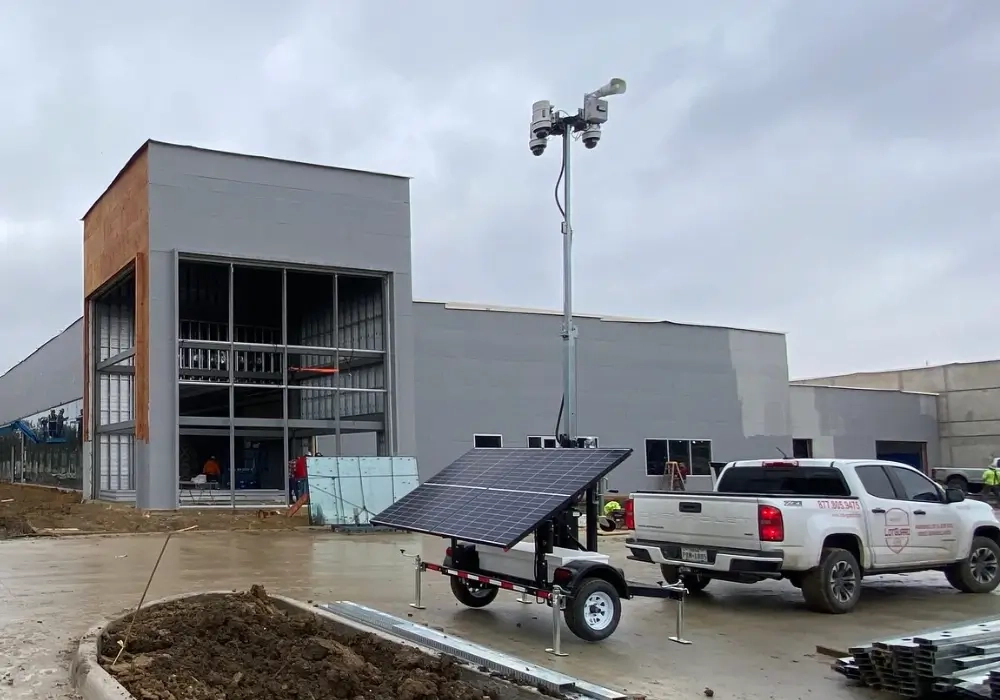
For businesses, the same logic that applies to individuals simply scales up. Well-lit entry points, clear sightlines across a property, visible monitoring, and marked camera signage all reduce the likelihood that it becomes a target in the first place.
Deterrence is often the most cost-effective form of security, since a would-be offender who notices a camera or a lit perimeter is far more likely to move on than to test their luck.
How Surveillance and Monitoring Can Reduce Risk Exposure in Florida
For businesses, property managers, jobsite supervisors, and operators alike, closing the gap between Florida's genuine crime risks and day-to-day safety comes down to visibility and fast response.
The table below outlines how each of WCCTV's security solutions addresses the safety risks in Florida.
|
Solution |
Key Features |
Benefits |
|
Redeployable, solar-powered units available on a rental basis for temporary or targeted coverage. |
|
|
|
Professionally trained operators review real-time camera feeds and respond to unusual activity as it happens. |
|
|
|
Automated analytics that flag risks across a site through advanced AI technology, including Intrusion Detection. |
|
|
|
License Plate Recognition (LPR) An add-on that logs vehicle activity at a site's entry and exit points. |
|
|
Every one of these solutions can connect directly to our cloud-based management platform, bringing all surveillance units and sensors together under one interface. This makes it straightforward to oversee safety and security across multiple properties in the Sunshine State without switching between systems.
The platform combines live and recorded video, AI-powered intrusion detection, equipment health monitoring, and more, all remotely accessible via browser or mobile app. Every unit deployed connects over 4G/5G directly to the platform, so coverage doesn't depend on a site's existing infrastructure.
In areas where risk exposure changes quickly, this kind of centralized oversight removes the need to juggle multiple systems and providers just to know what's happening on a site. It turns a collection of siloed tools into one clear, ongoing picture of safety across your properties or jobsites.
Read more:
- How Surveillance Trailers Are Protecting Construction Projects Across Florida
- The Role of Surveillance Trailers in Protecting Florida’s Tourism Industry
What Florida's Safety Data Means for You
Florida's safety rating and its crime statistics don't always connect. Statewide crime rates are below the national average, but that hides real, concentrated risk around certain jobsites, retail properties, and high-traffic corridors.
Understanding where the real risk lives, rather than relying on a single statewide number, helps business owners, property managers, and jobsite supervisors make smarter decisions about protecting their people, assets, and projects.
If you live or operate your business in Florida, it's important to examine whether your current security setup matches the risks specific to your location. And if you're unsure of where your security gaps are, contact us today for a professional assessment and recommendation on how to improve your setup.

