
To strengthen your property management strategy in 2027, you need consistent standards across every property, earlier risk warnings, and one clear view of what's happening across your portfolio.
That sounds simple, but it's where most strategies struggle. Managing properties well takes more than keeping buildings maintained and responding when something breaks. You're coordinating tenants, contractors, vendors, and security systems across multiple sites, while trying to report clearly to property owners about how everything is performing.
When those pieces don't connect, small gaps appear: a vacant unit goes unchecked for weeks, an incident sent via email instead of a logged report, or a regulatory fine that cannot be disputed due to a lack of evidence.
This guide is for U.S. property and facility professionals planning for 2027. We'll discuss 8 practical ways to improve your property management strategy, from security and safety to tenant relationships, environmental monitoring, and portfolio-wide reporting.
8 Property Management Strategy Priorities for 2027
A good property management plan ties day-to-day work back to your business objectives, whether that's protecting asset value, keeping occupancy high, or proving performance to owners.
The priorities below follow property management best practices for commercial properties and multi-site portfolios. Each one covers what to do, why it matters, and how to put it into practice.
1. Set consistent standards across every property type
Problems can compound when each property operates differently, especially when managers oversee multiple sites and can't be everywhere at once. One property might log incidents in a spreadsheet, while another relies on email or handwritten reports.
Inconsistent reporting creates hours of extra admin as teams manually reconcile records, making it harder for property managers and owners to see the bigger picture across their portfolios. And the same applies to general maintenance, as without consistent inspection schedules and reporting processes, routine issues can go unnoticed until they become costly repairs, disrupt tenants, or affect a property's value.
The solution is a shared operating baseline that includes standard operating procedures (SOPs), inspection and maintenance schedules, and escalation protocols that apply across your portfolio. Centralized reports for all properties, kept in one place, make it easier to identify recurring issues, track outstanding actions, and maintain consistent oversight across the portfolio.
For 2027, agree on:
- Minimum security, safety, and maintenance standards for each property/facility type
- How maintenance issues and incidents are recorded, categorized, and escalated
- Who is responsible for each property, including who provides cover when they're away
2. Build a property security and risk management plan
In 2025, the U.S. property crime rate fell 12.4% to 1,534.8 incidents per 100,000 people, largely consisting of larceny-theft, vehicle theft, arson, and burglary. However, the data still shows that around 5.2 million property crimes were committed, and fewer than 1 in 5 were cleared by arrest. This shows that falling national crime rates don't eliminate the risks to individual properties.
Those risks vary with occupancy, usage, and site conditions. A vacant property awaiting redevelopment may be vulnerable to trespassing, theft, vandalism, and illegal dumping, while a fully leased retail center may need to manage vehicle crime and unauthorized access across busy parking areas. Without a clear view of these risks, security gaps may be missed, which can lead to damage, losses, or disruption.
Effective prevention depends on understanding each site's vulnerabilities and putting the right controls in place before incidents occur. Start with a risk assessment for each property, then review security measures whenever occupancy, usage, or site conditions change. This helps you assign security resources where they're needed most, and adapt your approach as risks evolve.
To build your security plan in 2027, assess each site for:
- Perimeter weak points, unlit areas, and camera blind spots
- After-hours activity, repeat trespass, and suspicious vehicle movements
- Vacant units and buildings awaiting redevelopment
- Parking areas and entry/exit points
Modern integrated security systems can make a big difference here and help address these vulnerabilities.
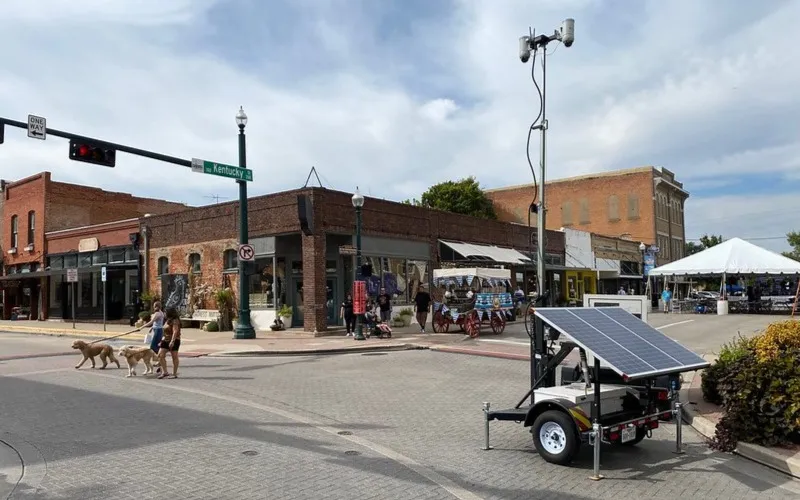
Solar Surveillance Trailers provide reliable 24/7 perimeter protection even in areas without power infrastructure; with live video monitoring, trained operators issue audio voice-down challenges to deter crime before damage occurs. Add-on intrusion detection software uses AI to flag unusual behavior while filtering harmless movement. License Plate Recognition (LPR) solutions log plates alongside vehicle make, model, and color, creating a timestamped record that can support investigations and insurance claims.
Read more:
3. Strengthen tenant relationships to reduce turnover
Tenants are the income behind every property, so keeping good ones matters as much as finding them. High turnover means lost rent during vacancies, re-leasing costs, and empty units that are more exposed to break-ins and vandalism while unoccupied. Effective tenant screening helps reduce vacancy periods and turnover costs, while tenant satisfaction encourages longer rentals and more stable income.
But the challenge often starts before lease agreements are signed. Buildium's 2026 report found that finding quality tenants was property managers' top challenge for the second year running, and 75% reported an increase in rental fraud.
These findings show the need for a more proactive approach in 2027, combining thorough screening at the start with clear communication and responsive property management throughout:
- Screen prospective tenants carefully: Verify identity, income, and references, and use screening tools that can spot fraudulent applications.
- Keep tenant communication regular and responsive: Agree on response times for property maintenance requests and stick to them. Sharing standard security and incident reports shows commercial tenants the site is actively looked after.
- Address retention risks early: Track repeat complaints, slow repairs, and approaching lease expiries, then act before a tenant starts looking elsewhere.
Timestamped footage and records also help settle disputes fairly, whether it's a damaged gate, a parking issue, or an injury to a customer or tenant.
4. Prioritize occupant, contractor, and site safety
Safety incidents can have lasting consequences. An injury during maintenance because a contractor isn't wearing the right personal protective equipment (PPE), or a flood or fire, can force part of a building to close, lead to insurance claims, and damage professional relationships. Premises liability is another concern: if an intruder is injured on the property, the owner or manager could face a liability claim, even if the person was trespassing.
According to the U.S. Fire Administration, intentionally set fires in nonresidential buildings rose 116% between 2014 and 2023, reaching 14,300 in 2023. Empty and partially occupied properties can be particularly vulnerable because there may be nobody around to notice smoke warnings early.
An effective property management safety review for 2027 should cover:
- Fire risk, access control, and evacuation plans
- Contractor permits and PPE rules
- Hazards in shared and external areas
- Severe weather procedures and consistent safety reporting
Technology can help managers identify hazards early and respond before issues escalate.
Smart detection systems with smoke and fire detection technology pick up visual signs of smoke and flame (e.g., heat signatures, flickering lights, etc.), providing early warning in buildings and external areas where incidents might otherwise go unnoticed.
During maintenance and redevelopment, PPE detection can flag anyone entering restricted areas without the required protective gear, and intrusion detection can alert property teams when unauthorized individuals enter the premises.
IoT-based weather monitoring sensors can also help teams track changing climate and prepare for severe weather, reducing risks to occupants, contractors, and property.
Read more:
5. Monitor environmental conditions and risks across portfolios
Dust, noise, and severe weather can damage assets, disrupt operations, and affect people's health and well-being. These risks are generally higher when a property sits next to active works or is being redeveloped itself.
In the U.S., the Environmental Protection Agency (EPA) enforces the Clean Air Act, while the Occupational Safety and Health Administration (OSHA) sets and enforces workplace exposure standards, including limits for certain pollutants and noise during construction.
For professionals in the property management industry, monitoring environmental conditions helps demonstrate due diligence, support compliance, resolve complaints, and maintain records if disputes arise.
Your 2027 strategy should account for:
- Noise limits and permitted working hours at each property
- Dust and air quality during construction, demolition, and/or refurbishment
- Weather alerts for outdoor work and exposed assets
- Records that can answer a regulator, tenant, or neighbor complaint
Environmental monitoring sensors can be mounted onto our Surveillance Trailers, with predefined thresholds that trigger alerts when conditions exceed set limits. Air Quality Sensors track particulates (PM1, PM2.5, PM10), while Noise Monitoring Sensors log decibel (30-130 dB) and frequency (20Hz-12.5kHz) levels continuously. Weather Monitoring Stations warn of lightning, extreme heat, heavy rain, and other atmospheric conditions that could endanger workers, tenants, and assets.
All of these events are logged with precise timestamps and stored in our cloud-based monitoring platform, allowing managers to review past and present site conditions, spot trends, and generate reports in just a few clicks.
Read more:
6. Automate operational efficiency
Traditionally, most property managers spend a significant amount of time on routine tasks, such as manual inspections and pulling reports from multiple systems. This leaves less time to resolve problems, support tenants, and plan portfolio improvements.
AI is changing how property teams handle these tasks. Remote monitoring watches sites 24/7, while AI video analytics analyze activity in real-time to distinguish genuine threats from false alarms. Alerts are sent over secure 4G/5G networks to a cloud-based platform, where they're recorded, timestamped, and stored for later review. This reduces the need for manual checks and makes it easier to track recurring issues, review incidents, and prepare reports quickly.
Why AI matters for 2027:
- Flags unusual after-hours activity without requiring physical site visits
- Spots repeat incidents/trends at the same location or time of day
- Filters false alarms so operators can focus on genuine threats
- Detects behaviors like loitering and workers missing PPE
7. Consolidate data across portfolios
Managing multiple properties becomes harder when information is spread across different systems. When security footage lives in one system, sensor readings in another, inspections in spreadsheets, and incident reports elsewhere, it's difficult to see what's happening across the portfolio or spot problems early.
Bringing this information together helps property managers identify recurring issues, compare performance, and decide where to focus their resources. Our cloud-based software brings together up to 81 camera feeds, live and recorded video, AI alerts, and environmental readings on one dashboard. This gives teams a single place to oversee security, safety, environmental monitoring, and project oversight.
Why this matters for 2027:
- Standardized reports make it easier to compare properties
- Trend analysis helps identify where incidents happen most often
- Managers can check activity (past and present) across sites without traveling to each one
- Owner-ready reports take a few clicks to generate, providing clear records of compliance and due diligence
8. Adapt your management strategy for changing site risks
Property risks change as buildings become vacant, new tenants move in, renovations begin, and site conditions evolve. Your wider property management strategy needs to keep pace, from maintenance schedules and safety procedures to security coverage and environmental monitoring.
Fixed surveillance systems may not suit every situation. Temporary security cameras and rapid-deployment Solar Surveillance Trailers provide flexible coverage that can move as site needs change. Combined with remote monitoring, AI detection, and cloud access, they help you respond to changing security risks without committing to permanent installations.
The same principle applies across your portfolio when it comes to maintenance plans, staffing, inspections, tenants, and budgets as properties and their needs change.
Your 2027 property management plan should include:
- Updating maintenance, inspection, and security plans as occupancy changes
- Building safety and security measures into renovation/redevelopment projects
- Assessing risks, maintenance needs, and operating costs before acquiring properties
- Reviewing incidents, performance measures, and resource allocation every quarter
Read more:
A Stronger Property Management Strategy in 2027
The most valuable property management tip for 2027 is to move away from fragmented, reactive processes and take a more connected approach. Bringing security, safety, environmental monitoring, and operational management into one clear view helps teams spot risks earlier, automate processes, and manage portfolios more effectively.
The 8 priorities above provide a practical starting point for your strategic planning, from setting consistent standards and strengthening tenant relationships to improving risk management and using data to guide decisions.
To find out how connected surveillance and monitoring can support your property management goals and help you achieve success in the new year, speak with one of our security specialists today.
