
Campus crime is always evolving, universities and schools face a wider range of security threats every year as threats change and crime tactics develop.
From theft and vandalism to organized crime and personal safety risks, campuses must adapt to protect students, staff, and visitors, day-and-night.
To do this effectively, it’s best that educational institutions understand the emerging crime trends and factors driving them so that proactive steps can be taken to strengthen security strategies and reduce risks before incidents occur.
The 2026 Campus Crime Landscape: What’s Changing
In the past, campus crime was considered as an isolated incident or predictable pattern of crime, but educational institutions can no longer treat it this way.
Recent years have shown a shift in crime both with the type and frequency of security threats, driven by a larger student population, open-campus access, and increased after hours activity.
This growth in activity and changes in environment provide unauthorized individuals and criminals with more opportunities for illegal activity, particularly in blind spots and areas of low visibility.
Social behavior has been a key driver in shaping campus risks nowadays, from a rise in organized theft and coordinated trespassing to a growth in shared incidents via social media.
Essentially, crime has become harder to anticipate and quicker to escalate, making the main challenge for campuses to prevent crime before it even takes place to ensure they aren’t tackling a much more significant issue if allowed to escalate on-site.
However, with tight budgets, limited resources, and stretched security teams, most educational institutions have been stuck making decisions that could be lessening campus security and interrupting crime prevention.
With many campuses only due to expand, the space to protect only grows and access becomes more difficult to manage meaning that traditional security measures no longer suffice institutions' requirements.
Therefore, understanding how and why campus crime is changing is crucial in developing effective prevention strategies and maintaining a safe learning environment for staff, students, and visitors.
The clear impact of campus crime tends to only be visible when we look at how these incidents and crimes impact students, staff, and visitors.
The Consequences of Campus Crime
Campus crime extends far beyond the immediate incident itself. When security challenges go unmanaged, the impact tends to have a rippling effect across student wellbeing, staff morale and trust, daily operations, and the educational institution’s public reputation.
These effects often stem from a combination of environmental factors, limited visibility, and delayed response, rather than a singular failure in your system.
We’ve outlined the consequences of campus crime, and where these originate from to help universities identify the common vulnerabilities they’re faced with and what needs to be prioritized based on this.
| Consequence | How It Impacts Campuses | Where It Typically Stems From |
| Student and staff safety concerns | Increased fear, lowered campus engagement, reduced attendance to events | Low-lit areas, lack of monitoring in high-risk areas, open-access layouts |
| Reputational damage | Negative media coverage, lost trust from staff, students, parents, and stakeholders | Repeat incidents, slower response times, lack of transparency |
| Operational disruption | Cancellations of class, restricted access to buildings, emergency closures | Unplanned incidents, inadequate incident detection, reactive security measures |
| Financial loss | Theft, vandalism, repairs, insurance claims, and legal action create additional costs | Limited deterrence, insufficient oversight, and a lack of asset protection |
| Staff burnout and morale issues | Increased pressure on security and facilities teams, higher turnover | Under-resourced teams, reliance on manual guard patrols, lack of real-time visibility |
| Compliance and liability risks | Regulatory scrutiny, investigations, legal consequences | Incomplete or inaccurate records, delayed and time-consuming reporting, inconsistent safety processes |
| Reduced student retention and recruitment | Prospective students choosing a safer alternative | Perception of unsafe campus environments driven by repeated incidents |
Combined together, these consequences highlight why campus crime cannot be treated as singular incidents, making it essential for educational institutions to understand the key trends shaping security risks in 2026.
Key Campus Crime Trends to Watch Out For in 2026
Balancing open access and growing security demands, campus crime patterns are continuing to develop and universities are faced with an uphill battle.
Whilst some risks remain familiar, no matter the year, others can appear at varying times, making them more complex, widespread, and harder to detect.
Understanding these trends helps institutions anticipate the vulnerabilities most likely to emerge in 2026 and where preventative efforts are best spent to manage these.
Trend #1 - Property Crime Remains the Most Common Campus Threat
Property crime continues to account for a large proportion of campus incidents, especially as institutions expand and more housing is introduced. From laptops and phones to bicycles and personal belongings, these items are easy-to-steal and often in high-volume amongst students.
And campus housing are not the only high-risk targets; libraries, communal spaces, and classrooms also carry such items, and tend to be quiet after hours, making them easier to target.
The high turnover of individuals on campus and constant movement provides opportunity for theft, vandalism, and other property crime, particularly in areas with limited visibility, lowered monitoring, and at night.
As a new year emerges, and with high-value items only increasing in price, students are becoming common targets for personal property crime, meaning that so are campuses, hence the need for full campus security coverage.
Trend #2 - Burglary and Unlawful Entry Are Rising in Many Region
On-campus housing, academic buildings, and storage facilities are hotspots for burglary and unauthorized access, becoming frequent targets and leaving many students, staff, and visitors scared for their safety.
Evenings, weekends, and long holiday periods are often quiet on campus and provide criminals with predictable patterns to commit crime without being caught, especially if your institution lacks effective surveillance monitoring.
Other downfalls like inconsistent access control, outdated locks, and blind spots make it easier for intruders to enter undetected, hence the need to prioritize campus security in 2026 to minimize the routes available to thieves and intruders.
Trend #3 - Sexual Violence Remains High and Underreported
Sexual violence has seen a continued rise over the years for educational institutions, with over 6,000 reports of rape across campuses during 2023. However, the true danger is the number of these that go unreported and still do so.
Despite the increased awareness and reporting initiatives being carried out by campuses, it still remains a significant issue for them, with their large space and open access creating vulnerabilities in capturing crime before it can escalate further.
Victims still remain hesitant to come forward due to stigma, fear, or lack of confidence in reporting, meaning that to stop such crime, campuses will likely become more reliant on the advancement of technology to intervene.
Incidents tend to occur in low-visibility locations or during late hours, making prevention and investigation more challenging. Mobile surveillance has shown to be an effective support in this, providing both visible deterrence and proactive criminal prevention.
Trend #4 - Hate Crimes and Bias-Motivated Incidents Are Increasing
Many educational institutions are seeing an increase in hate crimes and bias-motivated incidents linked to race, religion, gender identity, and sexual orientation. Since 2021, there’s been a dramatic increase in hate crime, with reports rising from 827 in the year 2021 to 2,676 in the year 2023.
Their often quick escalation means these incidents not only impact the individuals involved by the wider campus community, causing student absenteeism, reduced engagement with events, and a lack of trust in the overall institution.
The openness of campuses and public events increase exposure to hate crime, particularly when tensions arise outside of the institution.
With campuses only expanding, open space will only grow, as well as the number of attendees at events and this poses great vulnerabilities to students, staff, and visitors.
Trend #5 - Vehicle Crime and Theft Risk Persists to Staff and Students
Vehicle-related crime remains a persistent issue, especially in parking lots and peripheral campus areas. From vehicle theft and car component theft to vandalism and personal property theft from vehicles, these crimes continue to sweep across numerous educational institutions.
For staff and students, vehicle-related crime can have devastating impacts including, absenteeism, loss of work, financial loss, and a lack of trust in the campus.
Other contributing factors can increase the likelihood of incidents, such as poor lighting, limited surveillance, and low foot traffic, leading to further ongoing risks to vehicles, as well as staff and students safety.
Parking lot security is often overlooked on campuses, but in 2026, this no longer can be the case. Ignoring the issue will only damage campus reputation, even leading to students dropping out based on safety issues and causing public media scrutiny.
Campus crimes expand across various dangers, and managing all of these can be difficult, especially when working towards tight budgets. Campus leaders must make the right decision with security or face backlash and scrutiny from students, staff, parents, local communities, and the media.
Related Articles:
How Campus Leaders Can Prepare With Their Safety and Security Ahead of 2026
Preparing for campus safety challenges in 2026 requires a shift in your security from a reactive to proactive, intelligence-led preventative approach. Crime is constantly evolving, and campuses are expected to keep aware and ensure the correct tools are in place, with the main aim being to protect staff, students, visitors, and its reputation.
Campus’ open, dynamic environments mean that leadership teams must rethink how visibility, criminal deterrence, and response is delivered across their sites.
One of the biggest challenges they are faced with is that traditional systems like guards and fixed surveillance cameras struggle to adapt to modern-day issues, only leading campuses still at risk of developing threats.
From delayed reporting and fragmented oversight, traditional systems leave gaps in campus security and this is where mobile surveillance aims to bridge those gaps and provide complete protection.
Their flexible design and 24/7 monitoring mean that mobile surveillance solutions play a critical role nowadays in securing campuses from any threats before they can escalate, not after the fact they have happened.
How WCCTV Helps Campuses Address 2026 Security Challenges More Effectively
With over 20-years of security expertise, we have worked with various campuses to reduce incident numbers and crime on-site.
The table below highlights how WCCTV surveillance solutions can help prevent emerging campus risks and how we differ from more conventional, traditional approaches.
| Campus Crime Trend | Why Traditional Approaches Fall Short | How WCCTV Surveillance Solutions Help |
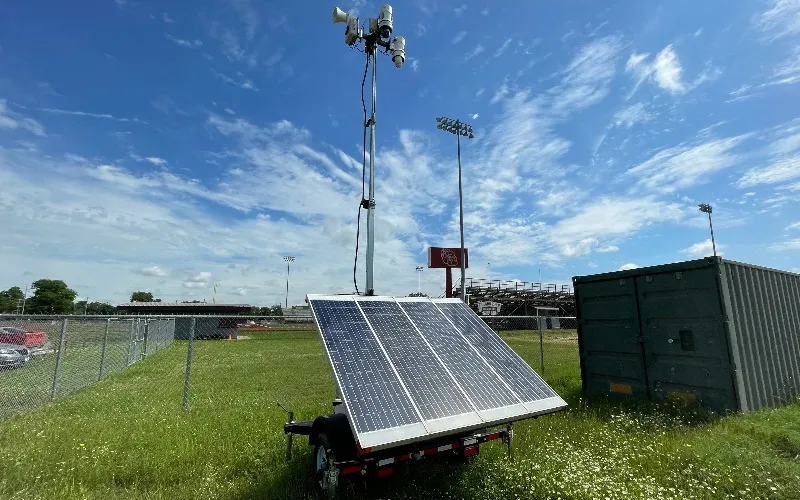
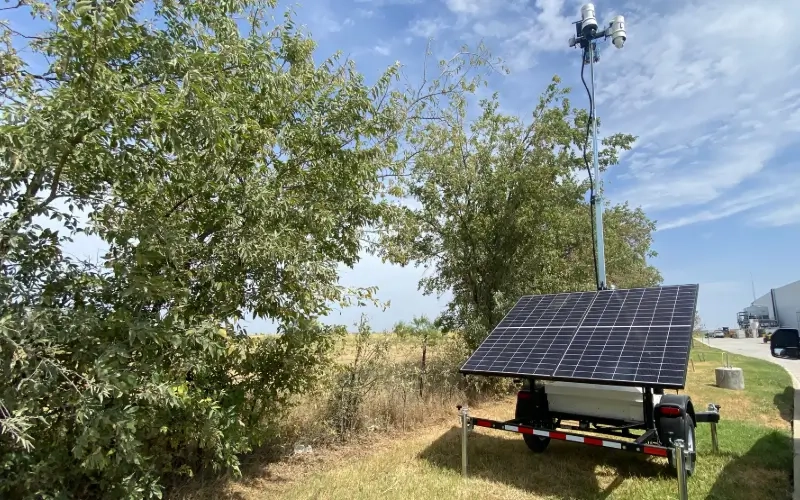
| Property crime | Passive recording and limited coverage allow theft to go undetected | High-visibility monitoring deters opportunistic theft and identifies incidents in real time, especially through our 20-ft Solar Surveillance Trailers |
| Burglary and unlawful entry | Fixed systems struggle to cover all access points and leave blind spots | Flexible deployment improves coverage around buildings, entrances, parking lots and vulnerable areas |
| Sexual violence | Incidents occur in low-visibility zones with delayed discovery, often only established once reported | Increased visibility in key areas supports deterrence and faster response when concerns arise, aimed to prevent crime before it escalates |
| Hate crimes and bias-motivated incidents | Limited monitoring during events or peak periods, and during the night | Scalable surveillance supports safer public spaces and improved incident documentation |
| Vehicle crime | Car parks and perimeter areas lack consistent and appropriate oversight | Monitored coverage of parking areas helps deter theft, vandalism, and unauthorized activity |
Read More:
Building a Future-Ready Campus Safety Strategy
For campus leaders, preparation means investing in an effective approach that offers visibility, early intervention, and adaptability.
With our surveillance solutions, WCCTV supports this by helping institutions identify high-risk areas, detect risks sooner, and reduce reliance upon guards, which are both less effective and more expensive.
By aligning your security strategy with the realities of campus life in 2026, educational institutions can go beyond simply reacting to incidents after they’ve escalated or happened, and instead create a safer, more resilient environment for students, staff, and visitors.
Learn how our School Safety Funding Guide helps institutions secure funding for smarter prevention strategies.
A Checklist for Campus Staff and Students to Protect Themselves
Strengthening security measures is a central responsibility for educational institutions to implement, however, individual awareness also plays a large role in reducing risk on campus.
Small, proactive actions can help staff and students stay safe, protecting personal belongings, vehicles, and themselves to create a more secure campus environment.
Below we’ve created a checklist that highlights simple steps that can be incorporated into the everyday routine of staff and students:
-
Stay aware of your surroundings, especially at night and during quieter periods
-
Stick to well-lit routes and avoid shortcuts through isolated areas, at night, and new spaces
-
Keep valuables close and never leave items unattended in public spaces or vehicles
-
Lock any doors, windows, bikes, and vehicles whenever you leave them, even for short periods of time
-
Park in well-lit locations where possible and take any valuables with you when leaving your vehicle
-
Save any campus safety hotlines and emergency contacts on your phone
-
Report suspicious behavior or incidents witnessed quickly, even if they seem minor
-
Feedback any safety concerns to relevant campus personnel
-
Where possible and safe to do so, remove yourself from any situations where you feel unsafe
-
When leaving your property, ensure no items are left on display and lock your windows and doors
-
Aim to plan routes in advance and use routes your familiar with if possible
By adopting these simple practices, staff and students can reduce their own exposure to risk and support wider campus safety efforts. Combine this with effective institutional security measures, this will create a safer learning and working environment for everyone.
A Safer 2026 Requires Earlier, Smarter Prevention
Crime tactics are developing and campus crime is everchanging, making managing the complexities of such issues more difficult than ever before.
The heavy reliance on reactive measures is no longer enough to protect your campus, especially with institutional expansions taking place across various universities.
In 2026, safer environments represent proactive prevention which means identifying risks early, monitoring activity more effectively, and responding before incidents escalate.
Advanced technologies like our Mobile Surveillance Trailers and Pole Cameras give campuses the flexibility to protect those high-risk locations like public parks, parking lots, and campus homes, improve on-site visibility across open spaces, and support security teams with real-time intelligence.
By combining smarter prevention with adaptable surveillance solutions, institutions are able to reduce risk, and protect students, staff, and the local communities, keeping you one step ahead of any emerging threats.
Request a site review: Identify high-risk areas at your campus and get tailored recommendations using WCCTV surveillance solutions.