Most road programs lose efficiency in small, compounding ways: crews waiting because materials went to the wrong laydown yard, dust complaints with no real-time data to verify what happened, equipment disappearing overnight, or safety reports reaching infrastructure teams days after an incident.
Across multiple worksites and daily operations, these inefficiencies add up quickly, particularly when teams are managing live traffic, subcontractors, tight schedules, and increasing environmental requirements.
So, what does efficiency actually look like in 2027? Pushing crews to do more isn't the answer. Better visibility, less manual work, and catching issues early enough to act on them are.
This roads and transportation efficiency checklist covers 6 areas to review as you plan for the new year, from project planning and work zone safety to environmental responsibilities, site security, and connected project data that gives teams a clearer view across all transportation operations.
Step #1: Start With a Clear Operational Efficiency Plan
A clear transportation project efficiency plan helps teams deliver road and infrastructure work safely, on schedule, and within budget while making effective use of labor, equipment, materials, and project information. McKinsey reports on large construction projects list weak organization, inadequate communication, and contractual misunderstandings among the issues behind poor productivity outcomes.
Your plan for 2027 should:
- Define project milestones, constraints, and delivery targets for each phase
- Identify critical-path activities (dependent sequence tasks) and who owns them
- Set clear responsibilities across contractors and internal teams in writing
- Map likely bottlenecks before work begins, such as utility relocations, permits, power supply, etc
- Agree on realistic, measurable KPIs (and how progress is reported)
- Identify which information needs to reach project leaders immediately
- Establish clear communication channels for updates and emergencies
Good project planning also defines what needs attention now versus what can wait until later. That becomes especially important when project leaders are overseeing multiple crews or sites and can't be everywhere at once. The more clearly priorities and reporting lines are set upfront, the easier it is to spot delays early and keep work on schedule.
Checklist
☐ Define delivery targets and constraints
☐ Identify critical-path activities
☐ Assign responsibilities
☐ Set realistic KPIs
☐ Identify likely bottlenecks
Step #2: Make Worker Safety Part of the Complete Strategy
In the U.S., 1,462 fatal occupational injuries occurred on road construction sites between 2011 and 2022, with nearly 70% among construction industry workers.
With the Occupational Safety and Health Administration (OSHA) enforcing workplace safety regulations, traffic and highway projects must account for worker risks (e.g., hazards from passing vehicles, distracted drivers, limited visibility) from the outset. This includes ensuring workers have and use appropriate personal protective equipment (PPE), such as hard hats and hi-vis clothing, in line with OSHA standards.
Serious incidents don’t just harm people; they can stop work, trigger an investigation, disrupt schedules, and expose contractors and project owners to legal and financial consequences.
Your safety review should cover:
- Work zone setup and traffic management: Are high-risk areas clearly marked, separated from traffic, and easy for crews to navigate safely?
- Contractor procedures: Are all contractors working to the same safety requirements, and are those procedures being followed consistently?
- Equipment and vehicle movement: Are vehicle routes, equipment operating areas, and pedestrian zones clearly defined?
- Incident reporting and emergency response: Can incidents be reported quickly, and do the right people know what action to take?
- Night, blind-spot, and low-visibility operations: Where are visibility risks highest, how are they being monitored, and do workers understand the appropriate response processes?
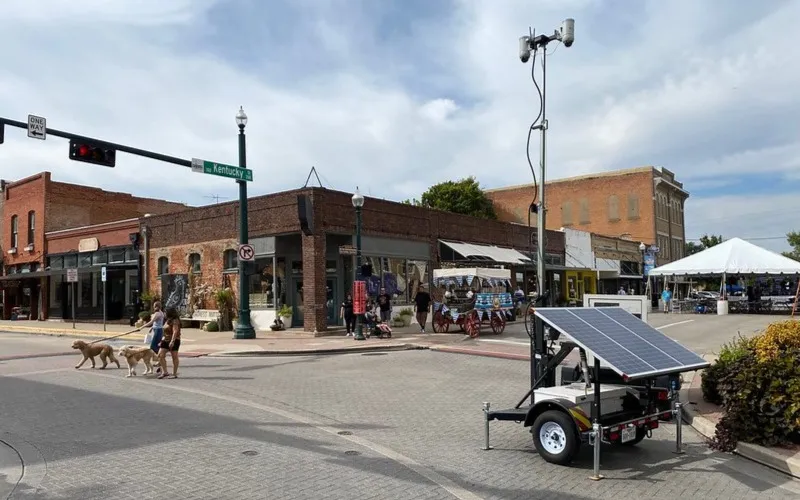
Mobile solar surveillance trailers with AI-powered PPE detection (add-on) help site teams identify workers who are missing essential protective equipment, such as hard hats and high-vis gear. Combined with connected sensors, near-360° infrared night vision PTZ cameras, and remote monitoring, they can provide additional visibility around temporary or changing work zones, particularly where permanent infrastructure isn't available or practical.
IoT-based weather monitoring stations can also alert teams to hazardous conditions such as lightning strikes, heavy rain, extreme heat, and strong winds, helping them respond faster to potential risks before they harm workers.
Checklist
☐ Review work-zone risks (e.g., weather disruption)
☐ Confirm traffic-management procedures and vehicle movement
☐ Maintain incident reporting
☐ Ensure sites have adequate oversight and appropriate PPE for all workers
Read more:
Step #3: Reduce Environmental and Regulatory Risk
Environmental requirements can be easily overlooked when the focus is on keeping a highway or traffic project moving. However, dust from earthworks, noise from road construction, runoff carrying sediment into nearby waterways, and pollution from construction materials and equipment can all create compliance risks. These issues can trigger complaints, disrupt schedules, or lead to severe penalties if environmental requirements aren't met.
Traffic projects must also comply with applicable U.S. work zone regulations. The Federal Highway Administration's (FHWA) Work Zone Safety and Mobility Rule (Subpart J) and Temporary Traffic Control Devices Rule (Subpart K) establish requirements for managing work zone impacts and traffic control on Federal-aid highway projects. Together, they help project teams plan for traffic disruption, implement appropriate traffic control measures, and protect workers and road users.
Your 2027 plan should account for:
- Environmental impact and reporting: Identify potential sources of dust, noise, air pollution, contaminated runoff, and other impacts on surrounding communities and ecosystems.
- Traffic control and work zone compliance: Ensure temporary traffic control measures, signage, and layout meet applicable standards.
- Waste and spill management: Have clear procedures for construction waste, fuel, chemicals, and accidental spills.
- Regulatory documentation: Keep accurate records of site conditions, inspections, monitoring results, incidents, and corrective action to demonstrate environmental and workplace due diligence.
Continuous environmental monitoring can reduce the manual work involved in collecting and reviewing site data. IoT-based sensors can be mounted on surveillance trailers to continuously track conditions such as air quality, noise, and weather. Systems send automatic alerts when readings exceed predefined thresholds, while storing up to 180,000 timestamped logs for trend analysis and review.
Checklist
☐ Identify applicable environmental and work zone requirements
☐ Monitor environmental (air, noise, weather, runoff) risks
☐ Maintain required traffic-related and environmental permit records
☐ Automate data collection where practical
☐ Review alerts and trends, inspection results, and incident reports
Step #4: Protect Equipment, Materials, and Temporary Worksites
A transportation project doesn't stop being vulnerable just because the workforce has gone home. In fact, the scale of the problem is significant: the U.S. construction industry loses an estimated $300M to $1B worth of heavy equipment each year.
Equipment, materials, tools, and fuel can be left exposed in compounds, blind spots, temporary sites, and storage areas. Vandalism, unauthorized access, and after-hours activity can also damage equipment, disrupt schedules, and leave crews dealing with avoidable delays.
When a project stretches across multiple locations, installing fixed systems at every site isn't always practical or cost-effective. Mobile surveillance can provide flexible coverage that moves with a project and integrates with our cloud-based management platform to give teams better visibility and control.
Depending on your site's needs, the following solutions can help protect assets and coordinate security across multiple locations:
- Flexible coverage: Solar Surveillance Trailers and temporary security cameras provide mobile monitoring for remote sites, storage compounds, and temporary road closures.
- Smart Detection Systems: AI-powered systems can flag intrusions, missing PPE, and early signs of smoke and fire across traffic schemes in real-time.
- Vehicle monitoring: Add-on License Plate Recognition (LPR) technology tracks, timestamps, and records vehicle movements to help pinpoint suspicious activity.
- Verified alerts and response: Live video monitoring enables trained operators to verify alerts, issue audio warnings, or escalate incidents when necessary.
- Centralized management: Cloud-based monitoring provides visibility across multiple traffic-related projects, supports faster decision-making, and streamlines incident reporting.
Checklist
☐ Assess theft and vandalism risks
☐ Implement protection measures for assets, equipment, fuel, copper, and materials
☐ Review after-hours activity (intruders, vehicles, smoke/fire warning from hotworks or vandalism)
☐ Monitor temporary worksites remotely
Read more:
Step #5: Replace Manual Reporting Where Possible
Traditionally, roads and transportation project reporting has relied on manual inspections, spreadsheet updates, email threads, and handwritten incident logs. That may work at a single site, but when directors oversee portfolio-wide reporting across dispersed teams and locations, these methods are difficult to manage.
A FMI and PlanGrid survey of nearly 600 U.S. construction leaders found that employees lose around 14 hours per person each week on non-optimal activities such as searching for project data and resolving conflicts.
Smarter monitoring methods, including AI-powered detection, can reduce some of this time-consuming manual work by automatically collecting data as operations run. This gives directors more time to focus on issues that actually move projects forward, rather than spending hours pulling information together from different sites and vendors.
AI capabilities provide teams with more useful project information such as:
- Flagging unusual behavior in real-time
- Summarizing incident logs, timestamps, and sensor data
- Identifying recurring incidents or crime patterns across sites
- Turning large volumes of data into actionable insights
The goal is to spend less time gathering and sorting information, while making accurate, accessible records available when needed. Centralized reporting helps teams respond to regulatory requirements, provide evidence for insurance claims, and retrieve incident records quickly during audits and investigations.
Checklist
☐ Reduce manual data entry by bringing camera footage and incident logs into one central platform
☐ Standardize reporting of incidents and safety events to support compliance and insurance requirements
☐ Automatically generate reports when defined events occur
☐ Use AI detection and search tools to help reduce administrative work
Read more:
Step #6: Consolidate Project Data in One Place
On a large transportation program, project information can quickly spread across different teams and systems. Security has camera footage, environmental teams have sensor data, incident footage arrives by email, and equipment is tracked somewhere else. That fragmentation can make it harder to get a "big picture view" of what's happening across project portfolios.
A connected project system can bring this information together, giving project leaders overseeing multiple sites a clearer view across road network sites and making it easier to spot issues, compare conditions and performance metrics, and act without chasing information from multiple teams. Real-time data can reduce manual work and travel times by up to 45%, helping teams make faster decisions and allocate resources efficiently.
Your 2027 review should have:
- Centralized project information: Can road teams access key security, safety, environmental, and operational data from one place?
- Real-time alerts: Are important incidents or changes flagged automatically, rather than waiting for someone to manually review a report?
- Cross-system data: Can information from security, safety, environmental, and project oversight be viewed together?
- Automated reporting: Can reports be generated from live project data instead of being compiled manually?
- Multi-site visibility: Can directors see what's happening across different transportation projects and locations without logging into multiple systems?
This is where cloud-based platforms can make a practical difference, bringing live and recorded video, AI alerts, and multi-site oversight into one place. Environmental, PPE monitoring, and vehicle-related readings can also live in the same central hub, giving teams more context when reviewing what happened.
Checklist
☐ Connect relevant systems to reduce manual work
☐ Centralize project information, alerts, environmental data, etc
☐ Give leaders remote, multi-site visibility through cloud platforms
☐ Review data across projects rather than in isolation
Road and Transportation Efficiency Starts With Better Visibility
A roads and transportation efficiency checklist comes down to finding where time, resources, and visibility are being lost across a project and making practical improvements.
For 2027, that means tighter planning, stronger worker protection, better environmental oversight, more control over equipment and temporary worksites, and reducing the manual reporting load. Connecting project information can also give directors a more complete view across dispersed sites, helping them identify issues earlier and use their teams and resources more effectively.
The goal of transportation project efficiency is simple: less time spent chasing information, fewer avoidable disruptions, and more capacity to keep road projects moving. If you're looking for greater efficiency on your next roads and transportation project, get in touch with our team today.

