
As construction projects grow in complexity, treating safety, security, and environmental risks as separate functions creates compliance blind spots and operational inefficiencies.
What construction superintendents need to manage operations more effectively are proven solutions that unify key responsibilities under one system. When site surveillance, AI safety detection, and environmental tracking are combined into a centralized platform, project leaders work smarter, not harder.
Our comprehensive guide explores the challenges superintendents face every day, from coordinating subcontractors to enforcing safety compliance and dealing with unpredictable environmental factors. We explain how intelligent jobsite visibility using cloud-based tools helps superintendents maintain control of even the most complex projects while working fewer hours.
Jobsite Challenges for Construction Superintendents
Let's explore the real and ongoing challenges that project managers and superintendents face on construction sites daily.
Safety hazards
Based on recent studies, workplace safety is cited as a top-3 challenge by industry leaders, along with material costs and labor shortages. On average, 150,000 people are injured on US jobsites every year, reflecting how dangerous the sector is. Common safety concerns superintendents must contend with include:
-
Falls: Falls are the leading cause of death in the construction field, accounting for over a third of all industry fatalities. Even on a basic build, crews work at heights, making falls an ever-present risk. In 2023, 421 out of 1,075 deaths (39.2%) were due to falls, slips, and trips.
-
PPE use: Although the use of proper personal protective equipment is a fundamental safety protocol in the workplace, 54% of construction leaders say that inconsistent PPE wear remains a challenge on jobsites.
When workers don't wear the required high-visibility vests, safety goggles, hearing protection, safety boots, gloves, and hard hats, there is a higher likelihood of injuries from "struck-by" or "caught in/between" accidents.
- Struck by and caught in or between dangers: With so many vehicles, heavy machines, power tools, and operating equipment employed on construction projects, struck-by and caught-between accidents are hard to avoid.
Caught-in or between incidents occur when body parts get caught in machinery or workers are crushed between equipment or collapsing structures. Struck-by events refer to employees being hit by vehicles, equipment, or machinery. Training programs on risks and prevention, and wearing appropriate PPE, help to limit these incidents.
- Fires and explosions: Thousands of jobsite fires cause several fatalities and millions of dollars in property and asset damage every year. Explosions that require immediate site evacuation and result in project delays are another real danger.
These events are often preventable if crew members follow safety procedures. This includes proper storage of combustibles, careful handling of hazardous substances, and safe hot work.
- Heat exposure: Every year, sweltering conditions and high humidity cause heat-related illnesses among building crews. Conditions such as exhaustion, dehydration, and heat stroke are especially prevalent in the hotter southern states in summer.
Besides the direct physical toll, heat exhaustion also compromises workers' judgment and abilities, leading to errors and accidents, e.g., dropping tools/materials on crew members below or falling into a moving machine part.
Environmental risk factors
Construction activities produce near-constant noise and a wide range of potentially harmful air pollutants.
-
Jobsite noise is a health risk to everyone exposed to high sound levels without proper protection. Temporary discomforts include short-term hearing loss, tinnitus, and ear pressure. The more severe effect is permanent hearing loss, caused by incremental damage to sensitive structures in the inner ear. Excessive jobsite noise is also considered a health hazard to the surrounding neighborhood.
-
On a typical build, various airborne contaminants, like dust/ particulate matter, chemical fumes, volatile organic compounds (VOCs), carbon monoxide (CO), and silica dust, can be harmful to employees and the local community.
Project managers and site superintendents have an obligation to responsibly control building noise and airborne pollutants to safeguard their crews and the public.
Regulatory compliance
Keeping workplaces safe for employees and the surrounding area is more than best practice; it's the law. OSHA, EPA, and state/local authorities govern construction processes via a raft of regulations:
-
OSHA's Subpart M regulations make fall protection equipment (guardrails, safety nets, harnesses) mandatory when working at heights of 6 ft+ above a lower level.
-
OSHA's PPE standards (29 CFR 1926.95-106) require all employers to provide protective equipment for employees and ensure it's designed safely and fits properly.
-
OSHA safety standard 52 sets occupational noise limits that workers can legally be exposed to. EPA agencies can act against contractors that subject neighbors to distressing noise "pollution".
-
OSHA's Subpart Z establishes permissible exposure limits that define the maximum levels of air pollution workers can legally encounter, and the EPA/state/local environmental standards must also be followed.
-
OSHA's NEP for Heat-Related Hazards expects contractors to have a formal heat-illness prevention plan in place. When temperatures become unsafe (generally when the heat index rises above 80°F), employers must schedule water and rest breaks for construction crews. As heat intensifies, reduced labor hours may be a necessary safety precaution.
OSHA conducts nearly 35,000 inspections a year, and since construction projects are deemed a high-risk workplace, the regulator oversees jobsites closely. In 2025, OSHA recorded nearly 2,000 eye and face protection violations, where crews were exposed to flying particles, chemicals, and radiation without goggles, shields, etc. Inspectors also cited nearly 7,000 fall prevention violations.
Regulatory penalties:
The penalties for non-compliance with environmental and safety regulations can be severe.
OSHA penalties start at $16,550 per serious violation and rise to $165,514 for willful and/ or repeated transgressions. If officials are dissatisfied with compliance standards, the regulator can impose a stop-work order, causing delays and jeopardizing project performance. In some cases, ignoring OSHA's rules can lead to criminal charges.
Fines for EPA noise and air quality violations are usually established by local ordinances. Penalties vary based on location and whether it's a first or repeat offense, with amounts ranging from under $500 to well over $10,000 per violation.
Subcontractor issues
Strong trade coordination and subcontractor management are vital to ensure the timely, satisfactory completion of the project.
If a subcontractor doesn't complete their job on time, it can delay every subsequent task on the build. When an electrical or demolition team arrives a day late or is understaffed, entire phases of the project are affected. Poor quality standards result in failed inspections and rework, threatening your timeline.
Subcontractor failures land on your desk regardless of who caused them. This is why verifying companies before assigning tasks and setting clear expectations upfront is non-negotiable.
Weather challenges
Natural disasters and unpredictable weather regularly cause severe disruptions to US construction projects. Strong winds endanger crane work and teams working at heights. Unexpected storms and flooding halt project progress in its tracks, and wet conditions underfoot usually slow operations when work resumes. If built structures are damaged, the rework costs and schedule implications can be enormous.
Dangerous sleet and icy conditions often require work rescheduling to protect both the crew and the project timeline. As mentioned, when temperatures soar, water and rest breaks become essential to avoid heat-related illnesses and accidents.
While weather can't be controlled, smart monitoring and planning help field leadership respond more effectively to threatening conditions.
Theft and security threats
Theft and unauthorized site access are major headaches for US construction management. Millions of dollars of materials, metals, tools, and equipment go missing from jobsites every week, often placing further strain on already tight schedules.
Superintendents get drawn into the investigations and stakeholder reporting that follow a significant theft or vandalism incident. Besides the awkward discussions these investigations entail, they pull you away from managing the build itself.
The project schedule is frequently held up while stolen or damaged equipment is replaced or repaired, and there may be regulatory consequences, too. OSHA requires field leadership to maintain safe working environments and control unauthorized access to active work zones. If a trespasser enters a restricted area or is injured on-site, project owners may face unexpected liabilities and increased regulatory scrutiny.
Read more:
Features of a Smart Jobsite in the Construction Industry
Modern superintendents are taking control of their jobsites with tech-enabled monitoring solutions that automate oversight and reduce manual admin.
A smart jobsite uses AI-powered surveillance and risk detection to give leaders real-time visibility into workplace conditions, crew activities, and project progress. Continuous data and AI insights help you proactively manage operations and mitigate unforeseen challenges.
The building blocks of today's smart jobsite are:
-
Mobile surveillance
-
AI safety detection
-
Environmental monitoring
-
Centralized reporting
Intelligent mobile surveillance
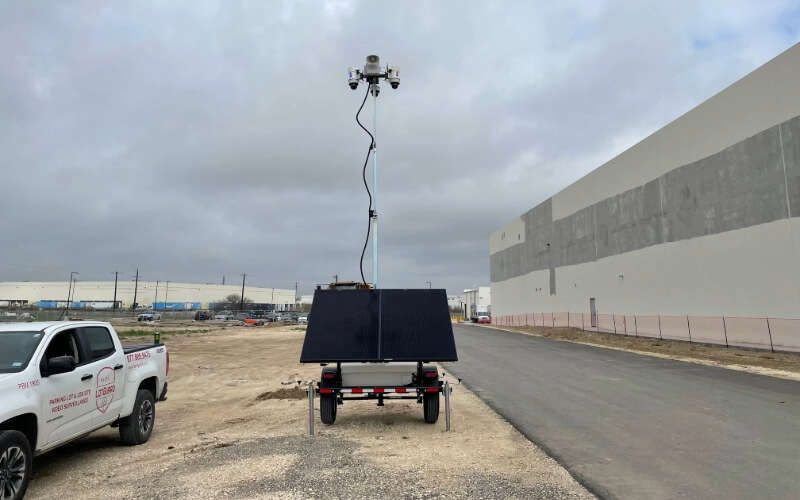
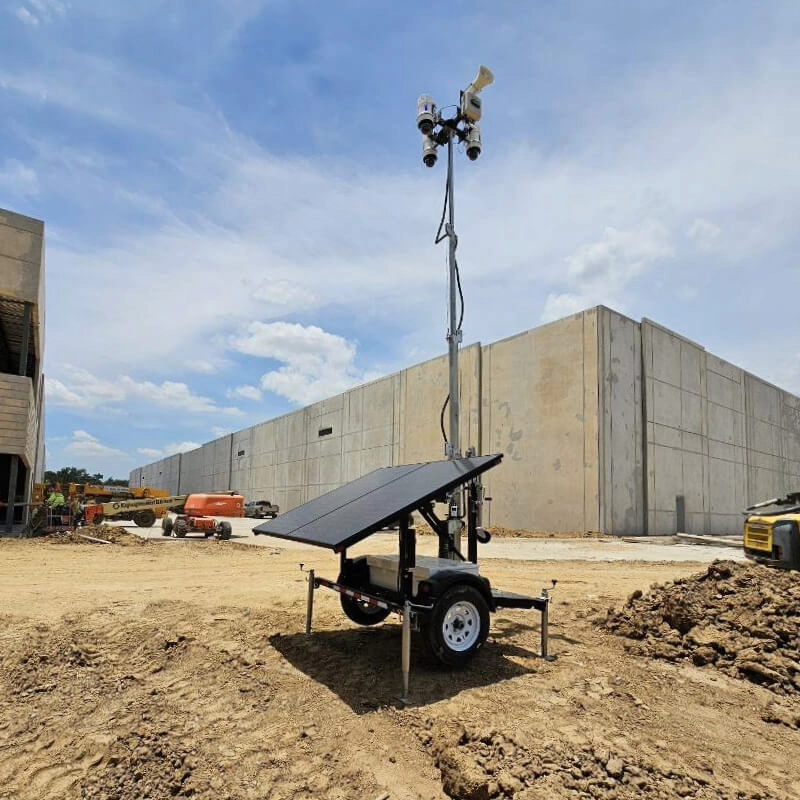
High-definition PTZ (Pan-Tilt-Zoom) cameras and environmental sensors track events and capture project data in real time. Because construction sites are evolving, largely temporary environments, the surveillance system is deployed on flexible, mobile equipment such as pole installations and Mobile Solar Surveillance Trailers.
Our mobile trailers are fully-contained units that can be moved in minutes as your project footprint and coverage requirements change. There's no need for separate power and setup for each mounted sensor/camera, as the system is powered by solar energy and fuel cell batteries.
AI-driven safety detection
Intelligent surveillance cameras use machine learning and AI-video analytics to "read" jobsite activities and safety conditions 24/7.
AI recognizes safety risks and breaches (e.g., a fire or unauthorized access) and triggers warnings, notifying you in real-time so that you can take corrective action before threats jeopardize operations. To avoid wasting managerial time, video analytics are trained to eliminate false alarms.
For instance, our Smoke and Fire Detection systems alert you quickly to the early signs of genuine smoke or flames, but don't unnecessarily notify you of normal diesel smoke or steam.
Environmental monitoring
Environmental monitoring sensors with connected cameras track a wide range of environmental and weather variables that can impact your site and crews. For instance:
-
Our Noise Monitoring Sensors measure jobsite sound levels to protect employees' hearing and avoid ordinance violations that could threaten work.
-
Air Quality Sensors monitor dust, chemical fumes, and other harmful emissions to ensure they don't exceed permissible limits or safety levels.
-
Weather Monitoring Stations continuously track weather conditions, including rain, wind, and location temperature, to protect the build and crew in extreme environments.
Smart environmental tracking systems automatically generate early alerts of risk conditions, allowing you to intervene proactively to prevent injury, loss, complaints, or regulatory investigations.
Centralized reporting
Smart surveillance and monitoring tools operate through mobile-friendly central platforms. The idea of a centralized system is to have all your relevant data and documentation in one place, eliminating the vendor sprawl of switching between multiple tools to manage safety and compliance.
Our cloud-based project management platform consolidates all surveillance feeds into organized dashboards in a user-friendly “control hub.” This allows you to see what's happening across your project without spending hours physically checking.
AI analytics applied to real-time data delivers actionable insights that help you make better, faster project and security decisions. With eyes on every square foot of the site, straight from your phone, you are better placed to address problems promptly, ensuring the project stays on course.
The platform stores timestamped records of all incidents backed by data and video evidence. When it comes to regulatory audits and stakeholder reporting, this level of detail is more convincing than even the most thorough daily reports.
Built with security and adaptability at its core, our platform is AES-256 encrypted and NDAA-compliant, and offers seamless cloud connectivity from anywhere. The system is flexible and scalable, making it suitable for one project or multiple build locations.
8 Smarter Jobsite Systems that Help Construction Superintendents
We highlight our market-leading monitoring and detection solutions, designed to make project management simpler and more effective.
1. PPE Detection and Monitoring
Personal protective equipment (PPE) detection continuously scans jobsites to verify in real time that every worker in monitored zones is wearing the required safety gear.
When a worker enters a monitored zone without correct PPE, the system:
-
Captures and time stamps the incident, and creates a video clip
-
Alerts the relevant manager and can also issue a live voice warning, reminding employees about PPE rules
As the superintendent, you can intervene quickly to address the situation and keep workflows moving. The violation is logged through our dedicated cloud platform, providing a record of the event and the corrective steps taken.
By acting pre-emptively to address missing protective gear, you avoid penalties while keeping your workplace safe and compliant. Ongoing checks and enforcement tell crews and subcontractors that safety regulations and quality control are non-negotiable.
2. Smoke and Fire Detection
Advanced fire detection setups employ high-definition cameras and AI to scan jobsites 24/7 for early signs of smoke or flames. This smart detection system quickly and accurately recognizes fire indicators, like flickering light, smoke trails, color and movement patterns, and heat signatures.
When a fire indicator is pinpointed, the system instantly generates:
-
An alert to your response crew and/or fire department
-
A timestamped image of the threat
-
Access to a video clip to help responders understand the blaze's size and movement
The AI filters out false positives caused by dust, steam, or properly managed welding. The platform stores a record of all fire events for export, audits, and review.
3. Smart Intrusion Detection
Intrusion detection with AI analytics monitors your site perimeter and designated areas continuously without relying on human checks. It guards against:
-
Border breaches
-
Materials, tools, and equipment theft attempts
-
Unauthorized access to restricted zones
-
Loitering and vandalism
Fully-managed and easily deployable surveillance cameras use AI to detect suspicious behavior and trigger immediate warnings.
Advanced analytics distinguish real threats from potential false triggers, such as passing wildlife, weather, debris, and blowing tarps, and retain logs and video evidence for reporting and investigations.
4. Live Video Monitoring
As part of our managed security services, live monitoring connects surveillance cameras to a remote control center where operators monitor site safety and security 24/7. They take immediate actions in response to suspicious or unauthorized activities, including:
-
Activating strobe lights
-
Bringing a keyholder or law enforcement to the scene
Live monitoring is effective at stopping crime in its tracks and encourages a culture of better compliance. The system also logs every incident, so you can easily review and retrieve reports for audits, insurance claims, security reviews, or law enforcement inquiries.
5. Air Quality Sensors
IoT air quality sensors and connected cameras continuously track air quality conditions and trigger immediate alerts before pollutant thresholds or safety levels are breached. Our precision sensors measure:
-
Dust and PM1, PM2.5, PM10 particulate matter
-
Volatile organic compounds (VOCs)
-
Chemical fumes
-
Carbon dioxide (CO₂)
-
Carbon monoxide (CO)
IoT sensors capture thousands of data points every hour, and if air quality becomes unhealthy, swift notification allows you to pause or adjust operations and resolve the issue.
6. Noise Monitoring Sensors
Our advanced Noise Monitoring Sensors and cameras can be deployed quickly to monitor site sound levels across ranges of:
-
30-130 Decibels
-
20Hz to 12.5kHz Frequency
These devices track decibel levels on your jobsites against set limits, triggering near-instant alerts (under 3 seconds) before thresholds are exceeded. Immediate warning allows the on-site team to respond before issues escalate into safety risks or complaints.
Recording every fluctuation in real-time provides a comprehensive view of exposure patterns and problem areas; for example, spikes from blasting or heavy machinery operations outside permitted hours.
Incidents are timestamped and stored so that you can quickly retrieve the necessary records for compliance audits, reviews/investigations, ESG reporting, or trend analysis.
7. Weather Monitoring Stations
Site-specific climate monitoring helps superintendents plan around weather risks to protect teams and sites, avoiding schedule and budget overruns. Advanced weather monitoring tools provide minute-by-minute data on conditions affecting your location, including:
-
Temperatures
-
Winds (speed and directions)
-
Humidity
-
Rainfall
-
Dewpoint
Warnings when conditions are unsafe help construction managers stay ahead of nature's challenges by enabling proactive rescheduling and workload adjustments to minimize unpredictable delays.
8. License Plate Recognition (LPR)
License Plate Recognition (LPR) is an automated system that logs all vehicles entering and exiting your site, day and night. AI-assisted imaging can easily identify license plate details, make, model, and color at over 500 feet. Besides strengthening access control, LPR helps with:
-
Theft prevention
-
Vehicle and operator accountability
-
Traffic flow to smooth site logistics
-
Vehicle safety on site
-
Material delivery tracking
LPR supports your site security plan and also assists investigations (it can flag stolen vehicles). A complete log of vehicle movements provides a solid audit trail for reporting and compliance purposes.
The Advantages of Smarter Jobsites
Whether you're an experienced site manager or new to the superintendent role, smart safety and environmental monitoring offers tremendous benefits.
Here's a summary of the main advantages for contractors and key leaders.
|
Project and Business Benefits |
Wins for Superintendents |
|
Improved Worker Safety and Lower Incident Costs: Real-time intervention prevents incidents (injuries, theft, fire) from occurring or escalating, protecting people and assets. |
Fewer injuries and costly delays, reduced insurance claims, and less time spent on incident reporting or asset replacement. |
|
Improved Productivity and Efficiency: Automation handles continuous monitoring, freeing up management and crews to work on more productive tasks. |
More time for strategic oversight instead of routine inspections; less manual reporting and logging allow field managers to focus on project delivery. |
|
Stronger Compliance and Simplified Audits: Automated reporting generates solid evidence of compliance that is easily accessible and hard to dispute. |
Complete timestamped audit trails at your fingertips, faster responses to regulators, and less stress proving due diligence during inspections. |
|
Better Quality Data: Systems capture accurate, real-time safety metrics across the site, improving intel and decision-making. |
Reliable insights enable you to spot patterns early, intervene quickly, and demonstrate proactive leadership. |
|
Improved Reporting and Proactive Communication: Centralized dashboards and automated reports keep the leadership structure and stakeholders informed and on the same page. |
Clear communication with crews and management means fewer misunderstandings, while fast, reliable updates inform better decisions. |
|
Less Admin and Manual Workload: Automation reduces paperwork, manual logs, and repetitive compliance tasks. |
A lower admin burden reduces workload stresses and creates more space for effective leadership and team management. |
Switch to Smarter Oversight for Your Projects Moving Forward
The future of construction leadership and project success is about managing jobsites more efficiently by integrating automated monitoring tools into your operations. It's now possible to combine surveillance, site security, safety oversight, and project management environmental tracking into one intuitive reporting platform.
This smart integrated solution dramatically cuts manual workloads and ensures small issues are contained before they escalate. Compliance becomes simpler, productivity rises, and a stronger safety culture takes hold.
Before starting a new construction project, reach out and let's discuss an intelligent jobsite framework for your operations.

