
Copper theft is draining hundreds of millions from California's cities, utilities, businesses, and residents every year, and the crime is still on the rise. According to CNN, AT&T reported 2,200 copper theft incidents across the state in 2024, a significant increase from just 71 in 2021.
Streetlights go dark, traffic signals stop working, jobsites lose materials overnight, and entire neighborhoods can go without phone or internet service for days. However, the surge of copper wire theft isn't random. Rising commodity prices have turned any unattended infrastructure into an easy, low-risk target. Additionally, organized resale networks make it simple to convert stolen copper wire into fast cash.
This article breaks down why copper theft is rising across the state and what the law is doing about it. It will also cover who is most affected by these crimes and how businesses and public agencies can respond.
Why Copper Theft is Rising Across California
Copper prices have climbed sharply in recent years. But that increase has turned ordinary wiring into a lucrative target for thieves.
Between June and December of 2024 alone, the telecom industry reported nearly 6,000 incidents of copper theft and vandalism nationwide. Roughly one-third of those, around 1,805 incidents, happened in California, according to the California Department of Justice.
AT&T's figures reflect the same pattern, with the company reporting losses exceeding $60 million nationwide in a single year.
Still, stolen copper rarely stays in one place for long. Detectives have found that illegal buyers sometimes set up temporary scales on the street to weigh stolen metal on the spot, letting thieves convert copper into cash within minutes with no documentation trail.
Read more:
Who Copper Thieves Target and Why
Some of the most frequent targets for copper wire theft in California include:
-
Underground manholes
-
Utility poles
-
Broadband lines
-
Streetlights
-
Traffic signals
Construction jobsites carry their own unique exposures. This is because wiring, grounding cables, exposed piping, and electrical materials often sit unattended overnight or over weekends. That risk is part of why a jobsite security plan needs to account for material theft, and not just the theft of equipment and tools.
Vacant properties are also at risk, since empty buildings can be stripped of copper pipes, HVAC units, and wiring for weeks before anyone notices. This makes vacant property security a growing priority for owners and property managers alike.
Business leaders across the state have similarly pushed for stronger enforcement as the losses stack up, particularly around California construction jobsites, where copper theft can delay inspections and add unplanned costs to already tight schedules.
The Financial, Operational, and Safety Toll of Copper Theft
Copper theft costs communities and businesses far more than the value of the stolen copper materials.
According to Los Angeles County Supervisor Kathryn Barger, since 2020, the city of Los Angeles alone has spent more than $100 million repairing damage tied to copper and metal theft.
Additionally, more than 32,000 streetlight repair requests are still outstanding across LA, with many of them linked directly to copper wire theft.
Delays for construction projects
Jobsites that lose grounding cable, wiring, electrical materials, and other equipment to theft don't only lose the value of the metal. Instead, replacement orders take time to arrive, and inspections that depend on completed electrical work often get pushed back as a result.
As EV charging infrastructure becomes more common on jobsites and commercial properties alike, it's proving just as exposed. Cable theft has grown widespread enough that CISA has issued a cross-sector alert on the issue, and repair costs for a single damaged charger can exceed $8,000, before factoring in the lost use of the equipment while it's offline.
Nationally, the U.S. Department of Energy estimates copper theft costs American businesses roughly $1 billion a year, with construction materials among the most frequently targeted categories.
Contractors are frequently left to absorb the costs from this theft that were never in the original budget or covered by standard equipment insurance.
Public safety risks
Darkened streets and dead traffic signals aren't just inconvenient; they change how people are able to move around their neighborhoods. In Encino, thieves left several streetlights out of commission on a single block, and residents told CBS News that darkened sidewalks have forced them to rethink how they walk at night with elderly family members.
According to CBS San Francisco, in Oakland, repeated copper theft of a signal's electrical box left one intersection without working traffic lights for months, with the city ultimately replacing the signal with four-way stop signs rather than keep repairing it.
Outages like these also strain 911 and emergency communications when the same copper networks carry landline and alarm signals.
Repair and replacement costs
A single copper theft incident can carry a hefty repair bill that extends beyond power outages or the material's resale value. On the Sixth Street Bridge in Los Angeles, thieves stole 38,000 feet of copper wire worth about $11,000. The resulting repair cost the city an estimated $2.5 million.
That kind of repeated repair cost is now pushing cities toward bigger capital decisions. Los Angeles is asking property owners to approve a $125 million plan to replace more than 200,000 streetlights, many with solar fixtures that remove the copper wiring thieves rely on.
Business and service disruptions
Telecommunications outages caused by copper theft are rarely contained to a single line. According to a story from CNN in 2025, thieves pried open a manhole near Los Angeles' Exposition Park and cut hundreds of pounds of copper wire from an AT&T facility. This effectively cut phone service for hundreds of customers at once.
AT&T has since resorted to sealing some of its access points with concrete after repeated break-ins at the same sites, showing how often these outages tend to repeat once a location has already been targeted.
Vacant properties as targets
Empty buildings give thieves something active jobsites don't: time. With no daily foot traffic to interrupt them, crews can return to the same vacant property repeatedly, stripping it in stages rather than in a single overnight hit.
Rooftop HVAC units and condensers are a frequent target, with thieves cutting out copper coils and line sets. That damage typically costs 3–4 times more to repair than the copper removed was ever worth.
But the theft often doesn't stop at the roof. Interior plumbing, electrical wiring, and even structural fixtures can be pulled from the walls over the course of several visits, especially in properties that sit vacant for months at a time.
By the time an owner or property manager notices, the damage is frequently extensive enough that repair costs outweigh the property's remaining value, making vacant property security a priority long before a sale, renovation, or new tenant is on the table.
California's Legal Response to Copper Theft
California treats the theft of copper materials as a serious offense, and recent legislation has raised the stakes even further for both thieves and the dealers who buy from them.
Under Penal Code Section 487j, stealing copper materials valued at more than $950 may result in a grand theft charge. Grand theft of copper materials is considered a wobbler offense, allowing prosecutors to charge either a misdemeanor or a felony based on the circumstances of the case.
A misdemeanor conviction can result in 1 year in county jail, while a felony conviction can bring a fine of up to $10,000 and a longer prison term. Convicted copper thieves are also required to pay restitution covering the market value of the stolen copper and the cost of repairs.
Scrap dealers also face their own set of rules. California law generally requires a 3-day wait before dealers can pay sellers for nonferrous metals like copper, giving law enforcement time to check for stolen material before cash changes hands.
Assembly Bill 476, signed by Governor Newsom in October 2025 and in effect since January 1, 2026, has extended these requirements. Junk dealers must now verify a seller's identity and confirm lawful ownership of the materials before buying them, and it's illegal to possess certain scrap items. This includes parts from streetlights and traffic signals, without documentation.
Fines for related violations have also increased, with penalties for knowingly purchasing stolen metal now reaching $10,000, according to Assemblymember Mark Gonzalez's office.
Protecting Property and Infrastructure from Copper Theft in California
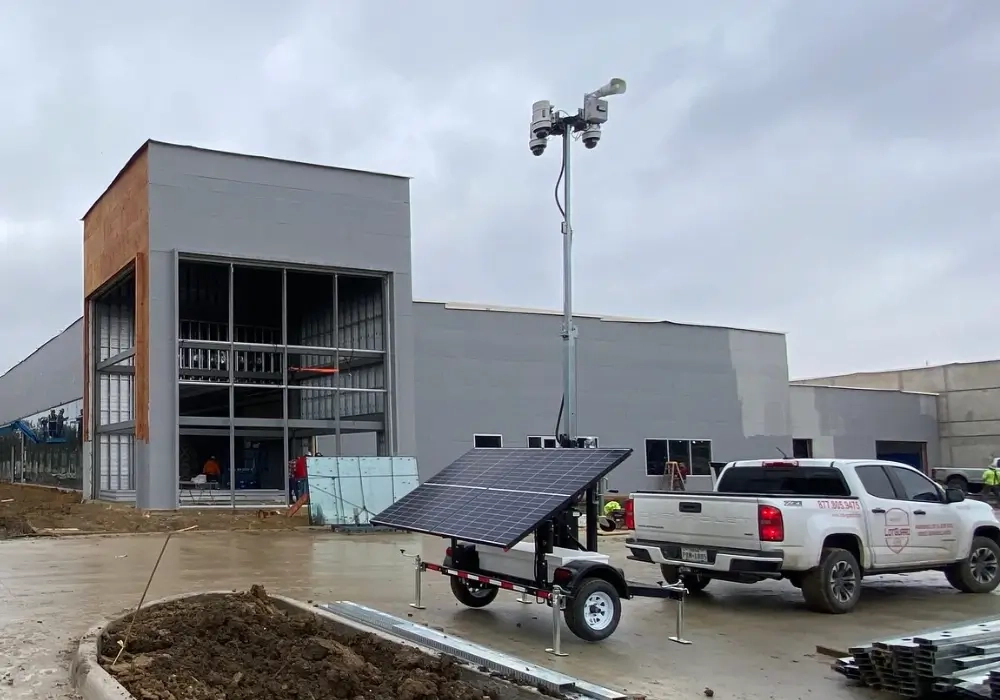
Reducing copper theft risk starts with knowing where equipment and materials are most exposed and then putting the right monitoring in place before thieves arrive.
Reducing copper theft risk starts with knowing where equipment and materials are most exposed and then putting the right monitoring in place before thieves arrive. Different sites carry different risks, and effective protection usually combines more than one layer of coverage.
Here's how the main categories of surveillance technology map to the environments and threats most relevant to copper theft:
|
Solution |
Key Benefits and Features |
Best Deployment Environments |
|
What it does: Rapidly deployable, solar-powered units that give sites and material stockpiles constant, real-time visibility after hours, when copper theft is most likely to happen. |
|
|
|
What it does: Analytics-driven detection built for substations, streetlight depots, and other public infrastructure sites, combining intrusion detection with broader environmental monitoring. |
|
|
|
What it does: Trained operators watch live feeds 24/7 and respond the moment something unusual happens, rather than reviewing footage after a theft has already occurred. |
|
|
|
What it does: Camera units that mount to existing infrastructure, giving cities and utilities constant coverage of the exact assets copper thieves target most. |
|
|
|
License Plate Recognition (LPR) solutions What it does: An add-on to our existing surveillance that reads license plates and flags vehicles of interest around jobsites, utility yards, recycling facilities, and staging areas. |
|
|
Each of our solutions connects back to our cloud-based management platform, so footage, alerts, reporting, and audit history from every location sit in one place instead of scattered across separate systems.
That matters most when an incident happens across multiple locations at once, or when a security team needs to hand clear evidence to law enforcement or an insurer without digging through separate logins.
This is especially true against organized copper theft, which rarely stops at a single location. The same crews that strip a jobsite overnight frequently move on to a streetlight corridor or utility yard nearby. They also often return to a site or other sites managed by the same company once they have been identified as an easy target.
A connected platform makes that pattern visible. Security teams can pull activity from multiple cameras and sites into one dashboard, spot the same vehicle or individual reappearing at different locations, and flag repeat behavior before it escalates into a bigger loss.
That same connected view makes it easier to act on what's found, too. Trend data across sites can highlight which locations are being targeted most often, and when, helping teams prioritize patrols or additional coverage where it's actually needed rather than spreading resources evenly across every site.
When an incident does happen, having footage, timestamps, and alert history already centralized means a security team can put together a clear, complete incident report and hand it to law enforcement or an insurer, rather than piecing evidence together from separate systems after the fact.
Our platform gives security and operations teams:
-
A single dashboard to view live and recorded footage across every monitored area.
-
Centralized alert history that makes it easier to spot repeat activity at the same location.
-
Simplified reporting that can be shared directly with insurance companies or police.
-
Remote access from any device, so decisions don't depend on someone reaching a physical control room.
Staying Ahead of California's Copper Theft Problem
Copper theft in California has changed from an occasional nuisance into an organized, high-volume crime that targets jobsites and public infrastructure alike. Commodity prices aren't falling, either, and the underground resale networks that move stolen copper out of state are well-established, so the incentive for thieves isn't going anywhere.
New laws and legislation will help to close some of the gaps that allow for stolen copper wire to disappear into the scrap market, but enforcement takes time to catch up with a crime this fast-moving. In the meantime, the sites that fare best are the ones monitored before a theft occurs.
That is where proactive surveillance makes the biggest difference. If you want to build a monitoring plan suited to your site or facility, contact us today.

