
Reduce infrastructure crime by up to
0%
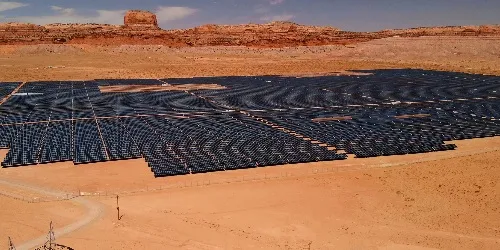
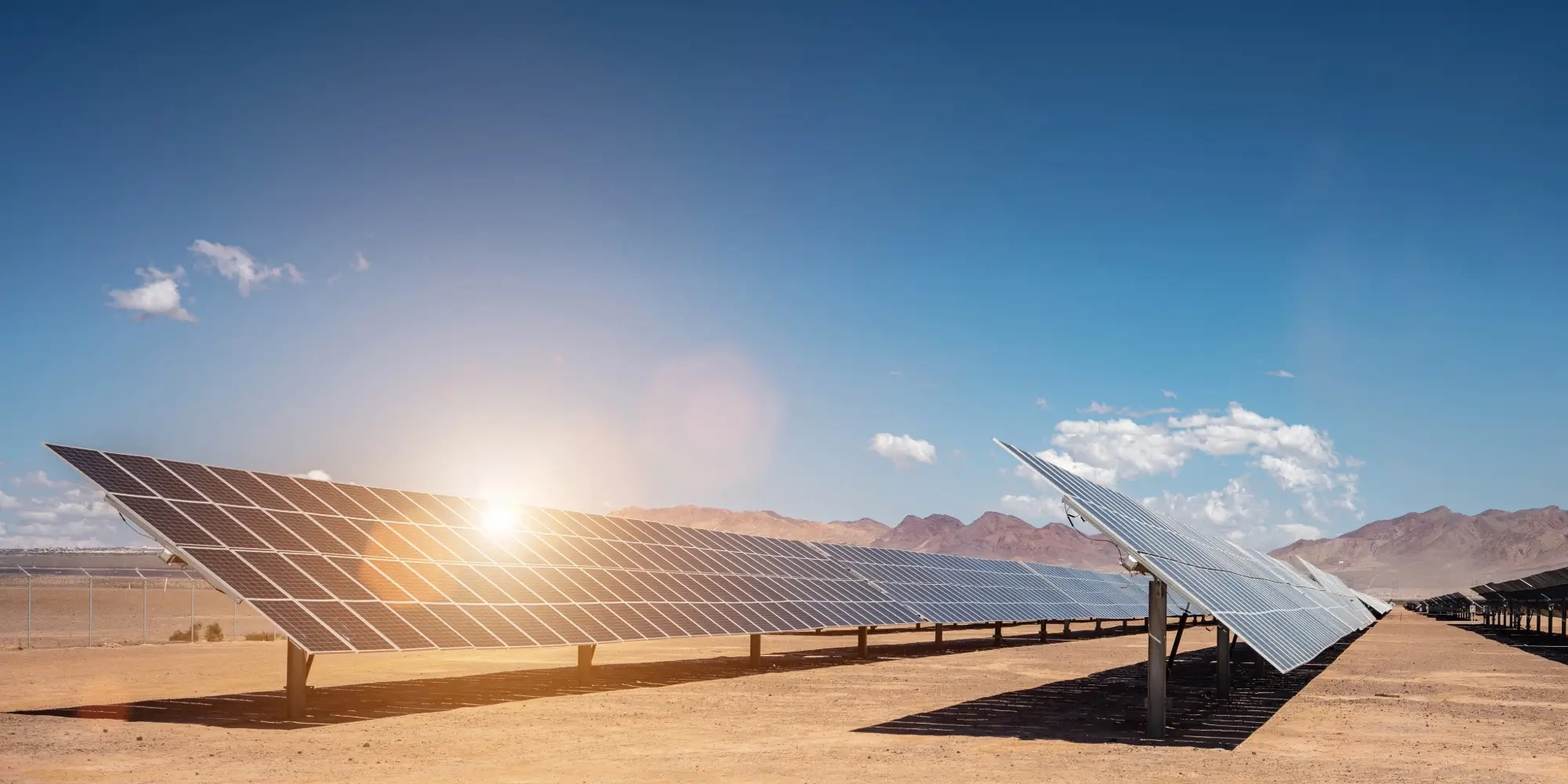
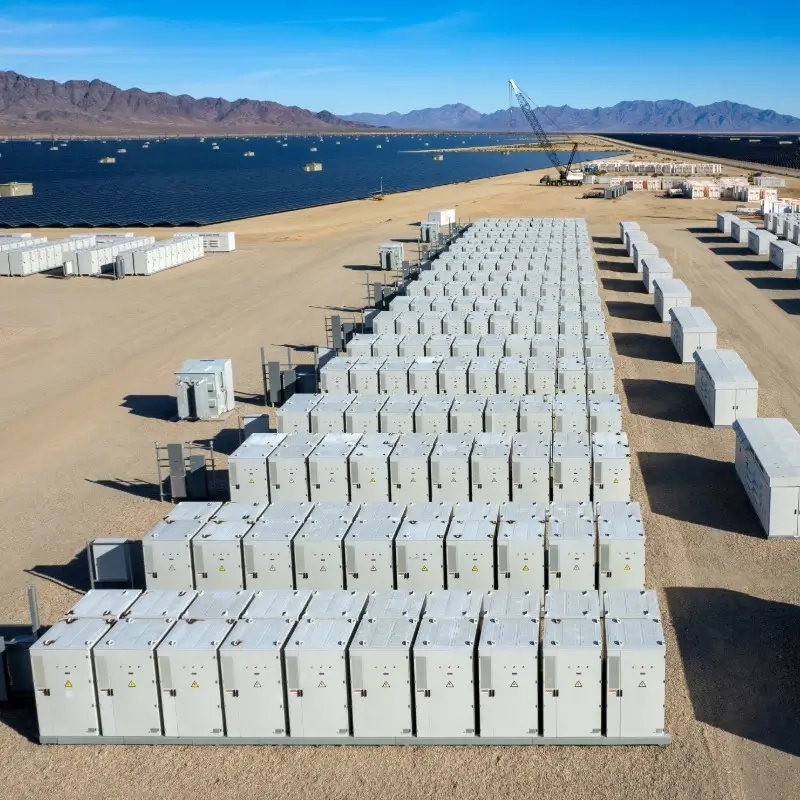
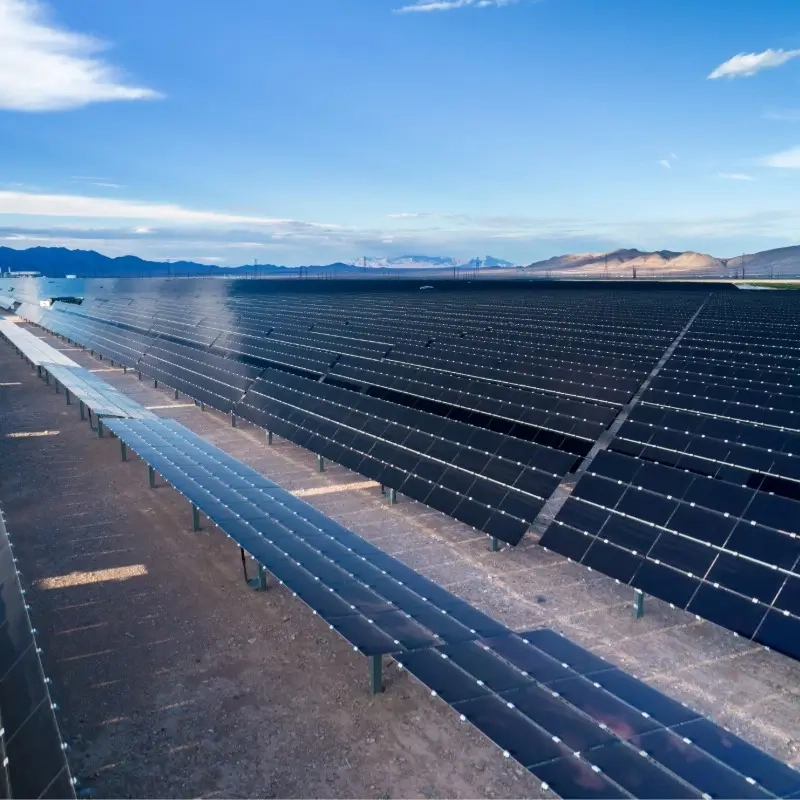
Solar farms across California face security challenges driven by scale, location, and asset value. Large sites stretch across open land with long fence lines, exposed cabling, and limited on site presence. That makes them targets for theft, vandalism, and trespass after hours.
Risk hotspots often sit near major solar regions in Kern County and Bakersfield, the Central Valley near Fresno, and desert corridors in Riverside, San Bernardino, and Imperial counties, where remote access roads and highways can speed entry and exit. Copper theft, panel damage, and unauthorized access can trigger downtime and safety issues.
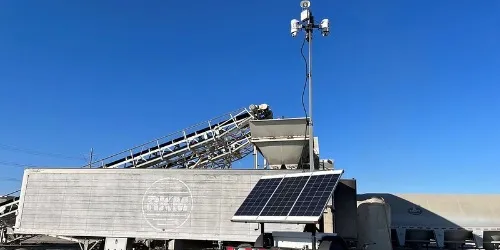
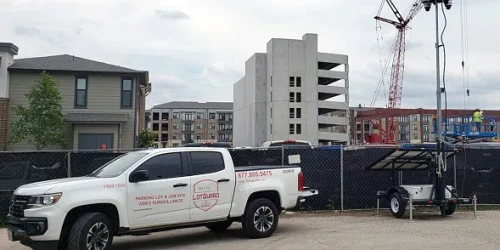
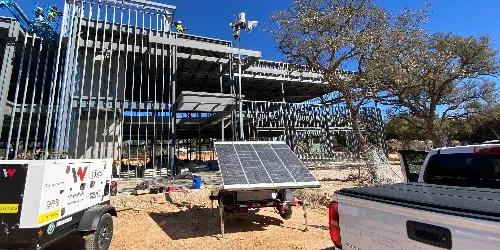
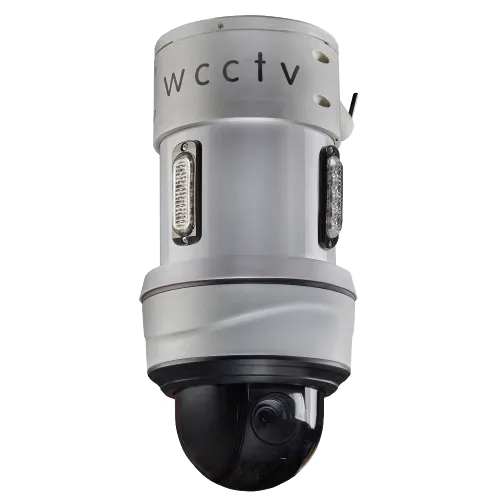
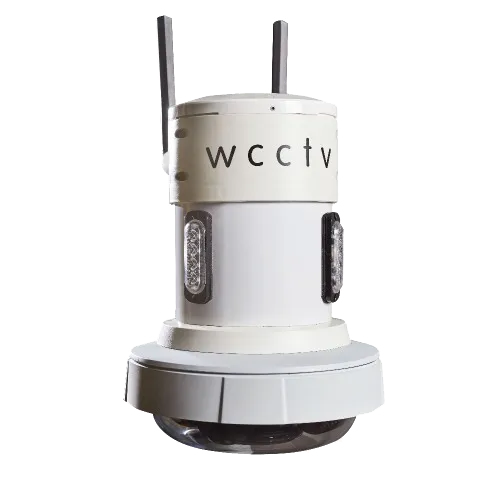
WCCTV helps reduce these risks with mobile surveillance systems that work without fixed power or Internet. Solar powered trailers and pole cameras provide wide area coverage, AI driven detection, and live monitoring with audio intervention to stop incidents in real time.
Why Solar Farms Remain Hard to Secure
California’s solar farms operate across vast, exposed landscapes that are difficult to secure using traditional methods. Long perimeter lines and limited staffing create opportunity for theft, vandalism, and unauthorized entry, particularly after dark.
Risk is common across the Central Valley, Inland Empire, and desert regions where sites are near highways and remote service roads. Copper cabling, inverters, and panels remain prime targets due to resale value, and a single incident can cause downtime and repairs.
Environmental conditions add further pressure. Wildfire risk, extreme heat, and dust make fixed infrastructure unreliable and complicate guard-based security.
Common challenges include:
Mobile, actively monitored surveillance provides a more reliable way to secure California solar farms without permanent infrastructure.
Security Designed for Remote Infrastructure
WCCTV secures solar farms across California with mobile surveillance systems built for critical infrastructure. The focus is on preventing incidents in real time, not reviewing footage after damage has been done. This approach combines autonomous hardware, intelligent detection, and live monitored response.
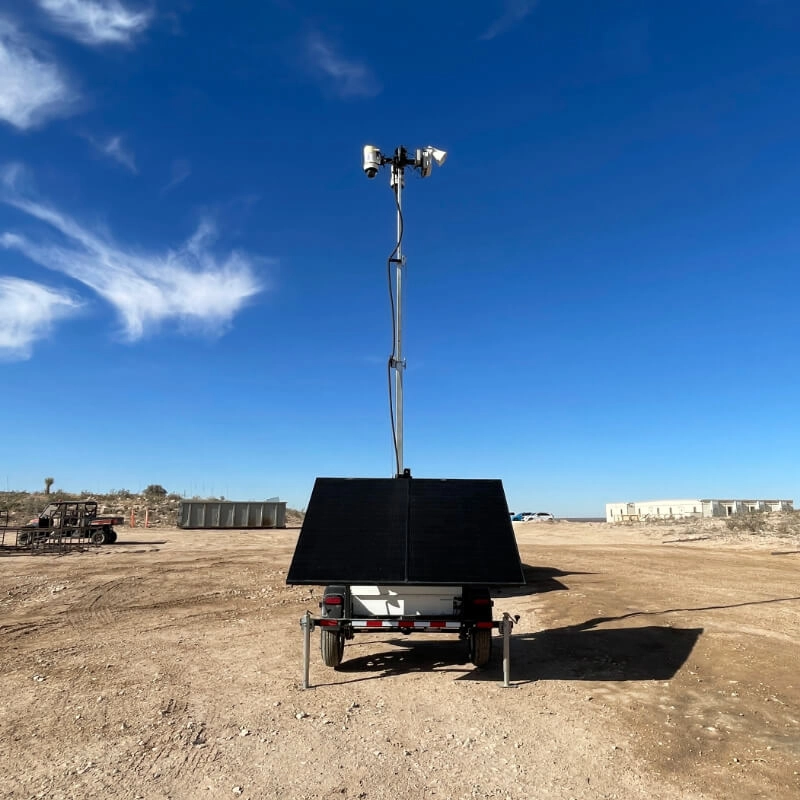
Solar powered surveillance trailers and pole mounted cameras deploy without fixed power or Internet, making them well suited to desert, rural, and off grid locations. Systems provide coverage across perimeters, access roads, inverter stations, and storage areas, with the flexibility to reposition as layouts change.
AI driven video analytics detect genuine threats such as trespass and vehicle movement while filtering out wildlife and environmental activity. When a verified alert occurs, live monitoring professionals assess the situation and issue audio warnings to deter intruders or escalate as needed.
How WCCTV protects California solar farms:
Security That Prevents Costly Disruption

Solar powered systems operate without reliance on grid power or site utilities. This allows surveillance to remain active across remote and off grid solar farms, even in locations where permanent infrastructure is unavailable or impractical.
Highly visible cameras and elevated mounting act as a clear warning to would be intruders. The presence of monitored surveillance helps deter theft and trespass before incidents occur, reducing risk without relying on fencing alone.

AI driven video analytics identify real threats such as trespass, loitering, and vehicle activity. The system filters out wildlife and environmental movement, helping monitoring teams focus only on verified security risks.

Mobile trailers and pole mounted cameras can be repositioned as site layouts change. This flexibility supports phased construction, expanding operations, or shifting risk areas without the need for new infrastructure.

Mobile surveillance reduces reliance on physical guards and costly fixed systems. This delivers consistent protection at a lower long term cost, helping energy operators control security spend across large sites.

Installation, connectivity, monitoring, maintenance, and support are all handled as part of a single managed service. This removes operational burden from internal teams while ensuring reliable site protection.

Verified alerts are assessed by trained monitoring professionals who respond in real time. Audio warnings can be issued directly on site to deter intruders before theft or damage occurs.

Flexible rental plans support short term construction phases or long term operational security. This allows solar farms to scale protection without committing to permanent ownership.
All equipment meets NDAA compliance requirements, ensuring suitability for critical infrastructure projects and alignment with federal procurement and security standards.
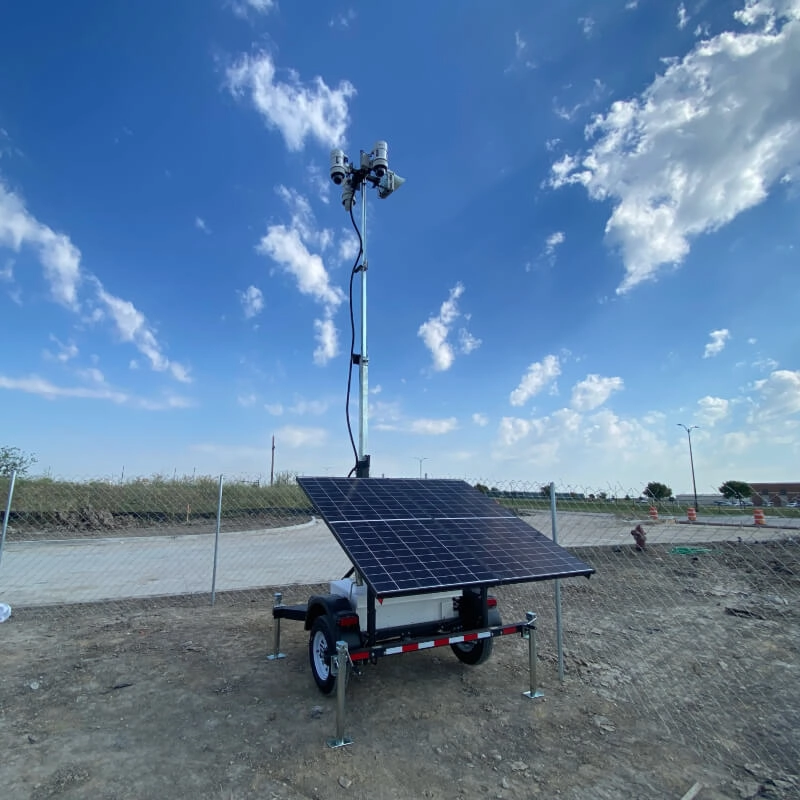
Standalone Security for Remote Sites
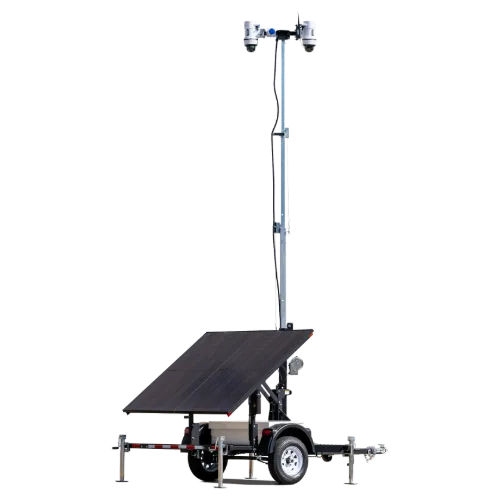
WCCTV’s solar surveillance trailers deliver autonomous, wide area security designed specifically for large solar farm environments. Powered by integrated solar panels and battery storage, trailers operate independently of grid power while providing continuous coverage across exposed assets.
Elevated camera masts increase visibility and deterrence across open terrain, while cellular connectivity enables real time monitoring without fixed Internet. Trailers deploy quickly and can be repositioned as site layouts, access routes, or risk areas change.
Key capabilities and outcomes include:
When paired with live monitoring and AI detection, trailers support real time intervention through audio warnings and escalation, helping reduce theft, prevent damage, and maintain uptime across California solar farms.
Targeted Coverage for High Risk Areas
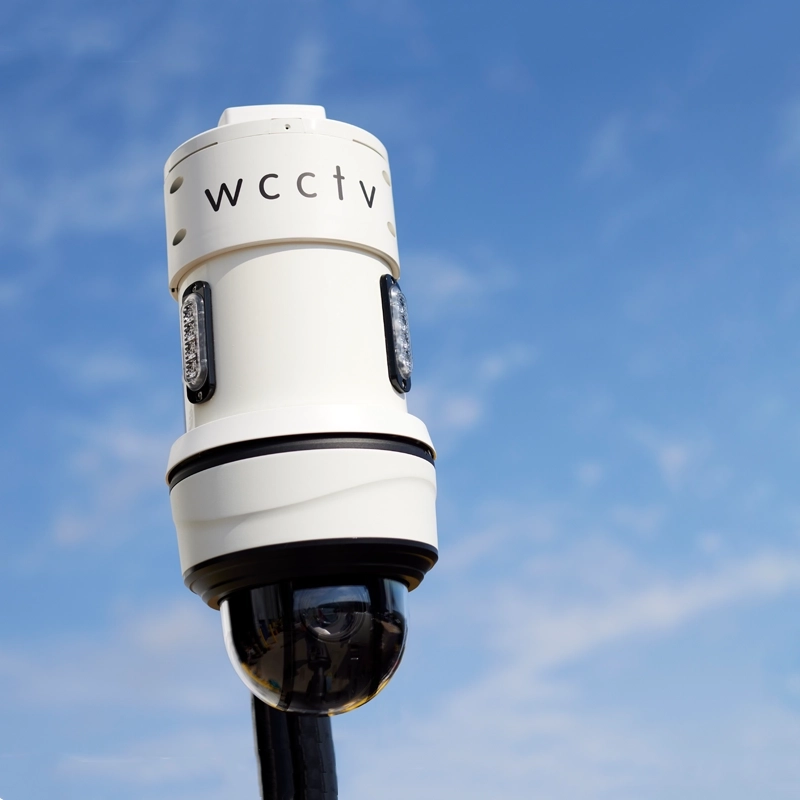
WCCTV’s pole mounted cameras provide focused security coverage for specific risk areas across solar farm sites. These compact systems deliver the same intelligent detection and live monitoring capability as trailers, but with a smaller footprint suited to targeted deployment.
Pole cameras integrate HD video, AI based detection, and cellular connectivity to secure areas such as access gates, inverter stations, substations, and equipment storage zones. They install quickly on existing structures or dedicated poles and support flexible placement where trailers are not required.
Key capabilities and outcomes include:
Pole cameras close coverage gaps, improve visibility around sensitive assets, and support a layered security approach across California solar farms.
The Right Coverage for Every Risk Area
Smarter Detection Across Open Terrain
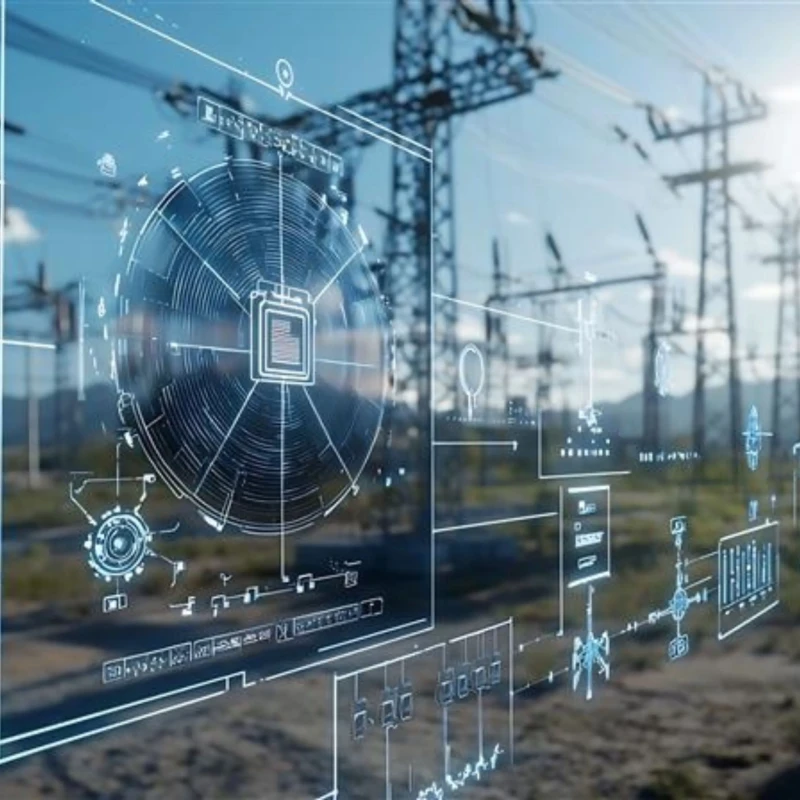
Solar farms present unique detection challenges. Large open layouts, wildlife movement, shifting light conditions, and environmental factors can overwhelm basic motion based systems with false alerts. AI driven detection is critical to identifying real threats without constant noise.
WCCTV systems use AI video analytics to identify behavior that signals risk, such as trespass, loitering, and vehicle movement in restricted zones. The technology filters out irrelevant activity including animals, blowing debris, and changing light, allowing monitoring teams to focus only on verified incidents.
This intelligent approach improves response speed and reduces unnecessary intervention across large sites.
Key AI capabilities include:
AI detection helps solar farm operators maintain control, improve response, and reduce disruption across California’s most exposed energy sites.
Active Response for Remote Energy Sites
Recording incidents after the fact does little to protect solar farms from theft, damage, or downtime. Live video monitoring turns surveillance into an active security measure by enabling real time intervention when a threat occurs.
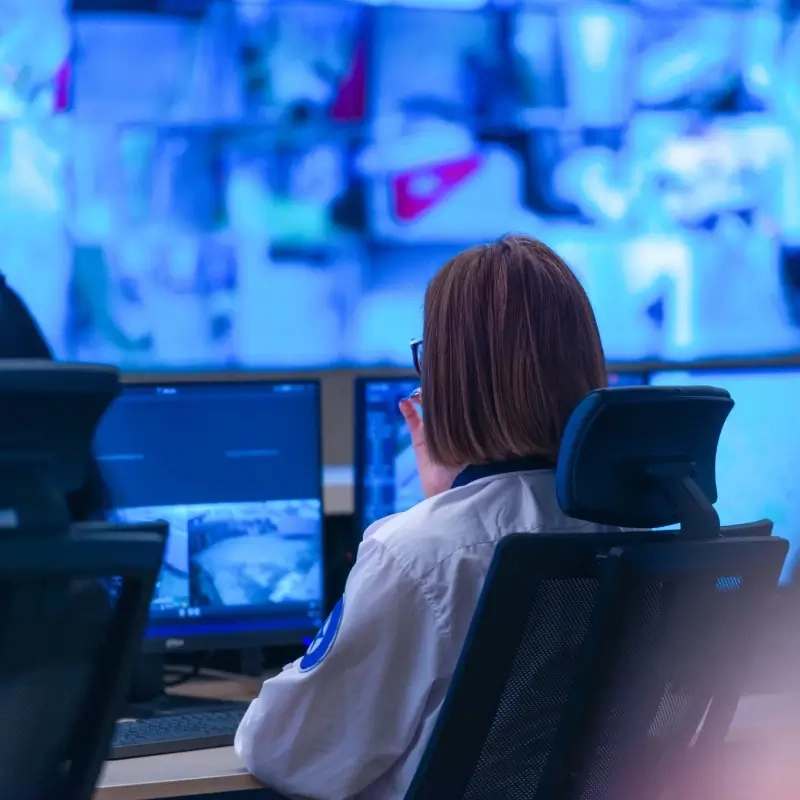
When AI detection identifies suspicious activity, an alert is sent instantly to trained monitoring professionals. Operators connect to live cameraa, assess the situation, and take immediate action. This can include issuing an audio warning through speakers, contacting guards, or escalating to law enforcement.
This real time response helps stop incidents before crimes escalate. Our service provides:
Live video monitoring helps California solar operators protect assets, reduce downtime, and maintain control across remote sites.
On the Ground Across California
WCCTV supports solar farms across California with mobile surveillance systems designed for large, remote energy sites. From desert installations to Central Valley developments, our systems deploy quickly, operate without fixed power or Internet, and are backed by live monitoring and a fully managed service.
Projects face their highest exposure during solar farm construction in California, before fixed assets are fully established. Open layouts and staged materials increase risk during early phases. WCCTV provides mobile security that supports construction phases and can remain in place as sites transition into operation.
We support solar farms across key regions, including:
With proven experience securing critical energy infrastructure, WCCTV delivers reliable solar farm security wherever your assets are located.
The Cost of Solar Farm Crime in California
Solar farms contain high-value materials that attract opportunistic and organised theft. Remote sites with long perimeter lines and limited on-site presence make it easier for offenders to remove panels, wiring, and electrical components, and leave before detection.
These patterns highlight that losses go far beyond the value of stolen materials and can impact output, safety, and long term profitability.
Security Without Operational Burden
Securing a solar farm should not require internal teams to manage equipment, monitor alerts, or coordinate multiple vendors. WCCTV delivers a fully managed service that handles every part of your security deployment, from initial setup through daily operation.
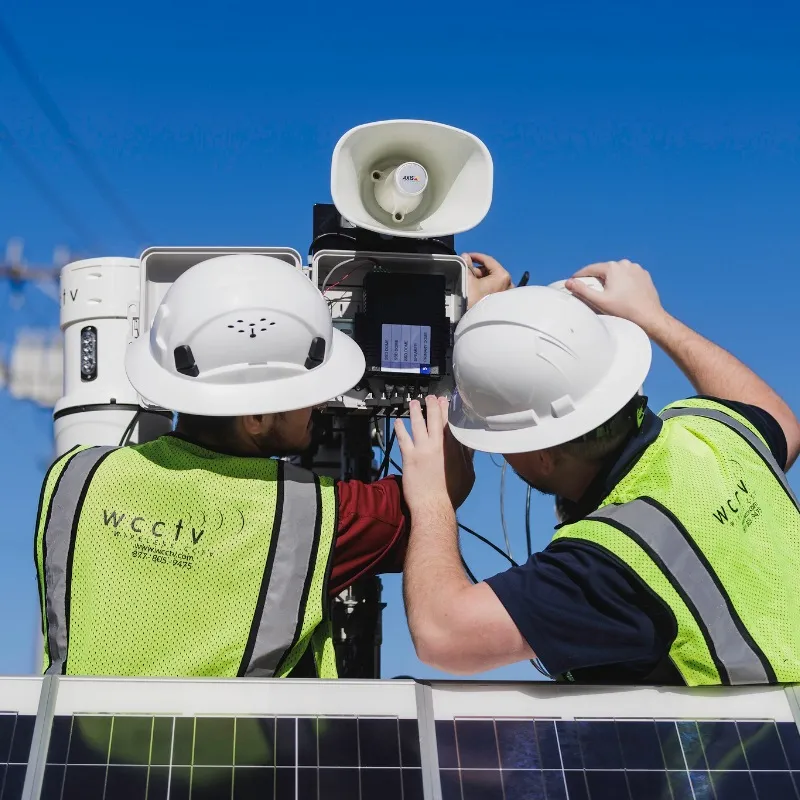
Systems are installed by experienced technicians and configured to match your site layout and risk profile. Once live, surveillance units are monitored by trained professionals and supported by ongoing maintenance and remote diagnostics to ensure consistent performance across remote locations.
What the managed service includes:
This approach gives solar operators reliable protection without adding workload, helping teams stay focused on energy production rather than security management.
Contact us
A more flexible and convenient solution to your security and surveillance challenges is just a step away. Get in touch with our security experts and let us know how we can help.
How Are Solar Farms in California Commonly Targeted by Thieves?
Solar farms are often targeted for copper cabling, electrical components, and panels due to their resale value and remote locations. Theft typically occurs after dark or during low activity periods, with offenders exploiting long perimeter lines, limited visibility, and delayed response times to remove assets quickly.
What Makes Solar Farm Security in California More Challenging Than Other Sites?
California solar farms are frequently located in remote desert or rural areas with no fixed power or Internet. Large site footprints, environmental conditions, and minimal on site staffing make traditional cameras and guard patrols difficult to deploy effectively across the entire facility.
Can Mobile Surveillance Be Used During Solar Farm Construction in California?
Mobile surveillance systems are well suited for solar farm construction in California, where layouts change frequently and permanent infrastructure is not yet in place. Systems can be deployed during early build out, repositioned as work progresses, and remain in use once the site becomes operational.
How Does Live Video Monitoring Help Prevent Solar Farm Theft?
Live video monitoring enables real time response when suspicious activity is detected. Trained monitoring professionals assess verified alerts, issue audio warnings to intruders, and escalate incidents when needed, helping stop theft and damage before assets are removed or compromised.
Are Mobile Solar Farm Security Systems Compliant With Federal Requirements?
Solar farm security systems supplied by WCCTV meet NDAA compliance requirements, making them suitable for critical infrastructure projects. This ensures equipment aligns with federal standards while supporting secure deployment across energy facilities.
From the Blog