The construction industry is one of the most heavily regulated sectors in the economy. From OSHA safety protocols and EPA environmental regulations to local noise ordinances, firms must grapple with a complex web of laws.
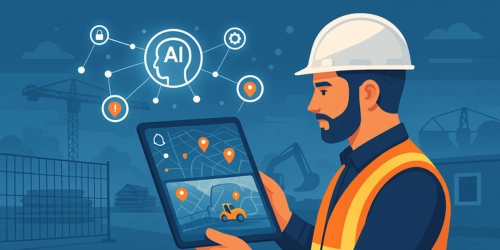
Yet, some construction firms succeed in creating robustly safe and compliant project jobsites, avoiding hazards, fines, and keeping regulators happy. How? By implementing smart monitoring systems.
Smart monitoring systems detect non-compliance early, issue immediate alerts, and then produce audit-ready documentation to satisfy inspectors.
Read on as our team breaks down all you need to know about smart compliance monitoring and how it can boost performance in your construction business.
The Compliance Challenges in US Construction
Managing the complex set of rules and regulations governing construction can sometimes feel like negotiating a minefield. Regulatory compliance impacts all areas of your workplace, from environmental conditions to safety training.
Here's a snapshot of the major federal and local laws contractors can't afford to ignore:
| Regulatory body | Key safety regulations and compliance requirements |
| OSHA (Occupational Safety and Health Administration) | • PPE: Enforces wearing of protective gear (helmets, gloves, eye protection). • Hazard communication: Requires worker education on chemical hazards with labels and safety data sheets. • Scaffolding safety: Ensures scaffolds are properly built, maintained, and inspected. • Respiratory protection: Requires respirators for dust, fumes, and vapors. • Fall prevention: Prescribes guardrails, nets, or fall arrest systems for work at heights. |
| EPA (Environmental Protection Agency) | • Clean Water Act (CWA): Enforces control of stormwater runoff, preventing pollutants from entering waterways. • Clean Air Act (CAA): Limits emissions from construction equipment and operations. • Toxic Substances Control Act (TSCA): Regulates the use and disposal of hazardous materials like asbestos and lead. |
| Local/State regulations | Building codes, zoning laws, permits, and state-specific safety/environmental rules. |
| CPRA (California Privacy Rights Act) | Requires protection of employee and client data, with strict privacy and disclosure rules (applicable to California). |
| NDAA (National Defense Authorization Act) | Restricts the use of certain foreign-made technologies/materials in federally funded projects. |
Read more: The Overlap of CPRA, OSHA, and Federal Rules
The costs of non-compliance
Construction firms that are complacent about security and safety protocols face numerous penalties and costs:
-
OSHA fines range from $16,550 to $165,000 per violation. For context, Jasper Contractors Inc. was penalized over $280,000 for flouting OSHA compliance, including fall protection and PPE rules over 7 years. The Secretary of Labor v. Juan G. Quevedo-Garcia, a limited liability company, was hit with approximately $2 million in workplace safety penalties.
-
EPA fines up to $66,712 per day for Clean Water Act (CWA) violations.
-
CPRA fines can easily exceed $1 million in large-scale incidents because each affected party can count as a separate violation.
-
Fires cause an average of $370 million in property damage annually and lead to serious injuries and fatalities, according to National Fire Protection Association (NFPA) statistics.
-
Theft costs the sector billions in stolen assets and work disruptions every year.
Read more:
-
7 Costly Compliance Mistakes US Construction Firms Can't Afford
-
Construction Jobsite Compliance Failures and Lessons Learned
Smart Monitoring Explained: How It Upgrades Compliance and Safety Protocols in Construction
Future-focused construction firms have embraced smart monitoring to manage compliance more effectively, boosting ROIs and minimizing punitive costs.
Smart compliance tracking is a unified approach to security and safety monitoring. It integrates cutting-edge technologies and includes these 4 key features:
-
Automation: On construction projects, a smart compliance system automatically monitors and reports on safety hazards, environmental conditions, and overall adherence to jobsite regulations. It improves workplace safety by moving away from legacy systems (like human checks and manual data collection), which are slow and flawed by errors and inconsistencies.
-
AI-powered analytics: A smart monitoring system uses machine learning and AI-video analytics to monitor, analyze, and document jobsite activities in real-time. AI tools recognize safety standard breaches and risks (e.g., fires or unauthorized access) and issue instant alerts.
-
Unified information: Smart compliance consolidates all project data into a single interface, making it easy for project managers and team leaders to view and act on the information. This is a major improvement on separate, disconnected systems that often have costly information gaps.
-
Cloud-based: These safety management systems usually run on cloud platforms. Cloud services are flexible, secure, and easily accessible from anywhere with an internet connection. Plus, capacity can be seamlessly scaled to include a new project.
Our smart, cloud-based Stellifii platform is an environmental and safety monitoring solution that enables construction companies to manage their regulatory and safety risks from a central dashboard. Stellifii consolidates all critical project data into a single hub, providing construction managers with real-time visibility into:
-
Jobsite security and intrusion detection
-
Fire and smoke detection
-
Safety compliance
-
PPE compliance
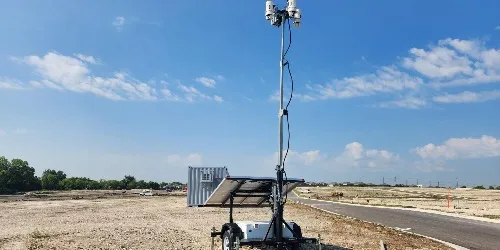
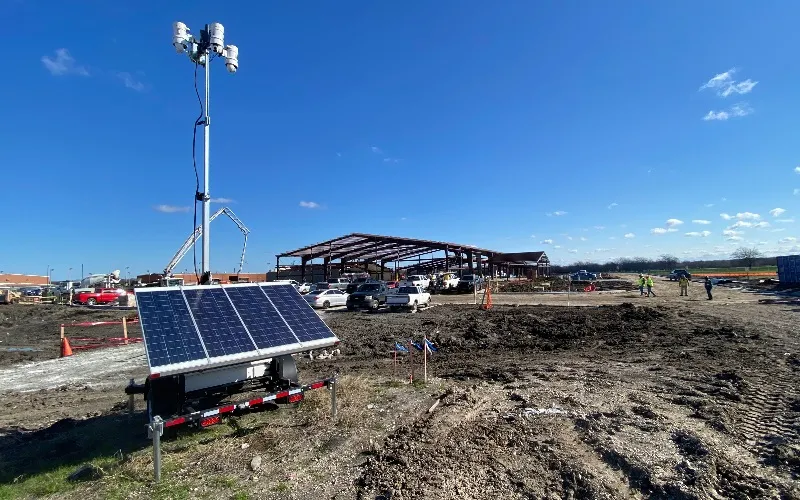
All project data is captured via our high-definition Pole Cameras, Temporary Security Cameras, and Mobile Surveillance Trailers. These create a 24/7 compliance tracking system that never sleeps or loses focus. When breaches are spotted, the system triggers warnings with timestamped evidence, creating a log of the incident and a record of the corrective action.
Read more:
-
The Rise of Smart Construction Jobsites: How Tech Is Transforming the Industry
-
Why Smart Surveillance Systems Are the Future of Business Security
3 Overall Benefits of Smart Compliance Monitoring
Let's look at 3 broad benefits that construction companies achieve by implementing smart monitoring on their jobsites:
1. Fewer violations through automated alerts
A recent JJ Keller study found that nearly 40% of construction industry leaders lack a proactive security plan and regulatory compliance strategy for safety. A reactive approach means you are mostly recording failure rather than preventing it; you're always a few steps behind.
By contrast, smart compliance is powerfully proactive, aiming to reduce risks and costs by tackling safety incidents before they escalate into disasters.
-
Real-time alerts for incidents, such as a perimeter intrusion or noise spikes, are sent immediately to the appropriate manager or compliance officer.
-
Proactively planned reactions reduce thefts, safety incidents, and environmental violations dramatically.
Read more: Top Strategies for Ensuring Jobsite Safety
2. Fast automated reporting
When compliance is reactive and manual, teams waste hours collecting data, analyzing it, writing reports, and preparing for audits. Smart compliance supercharges all these tasks, saving countless hours:
-
Immediate notifications: Fast, automated notifications empower you to launch a rapid response, resolve the issue without delay, and limit the fallout.
-
Automated reports and logs: When a site safety breach occurs (e.g., breach of scaffolding safety protocols), the system provides a timestamped report, often including a video clip, and logs the incident accurately. The result? Incident reporting time is cut from hours to a minute or two.
Read more: How Digital Tools Ease Audit Prep and Cut Reporting Time in Half for Your Jobsite
3. Evidence-backed audits
One of the key features of automated tracking is a reliable record of compliance documentation. A smart system helps you:
-
Stay audit-ready: Instead of searching scattered files for records, compliance teams can pull comprehensive reports on environmental compliance, PPE adherence, and security checks at the touch of a button. Simply put, all your "regulatory ducks are in a row" when inspectors call (even if they ask for historical data from 3 years ago).
-
Resolve disputes: If an inspector investigates an environmental complaint, such as excessive dust, you can quickly produce a timestamped sensor reading linked to video confirmation. This will hopefully prove that you were fully compliant at the time, settling the issue.
-
Demonstrate due diligence: Proactive monitoring of compliance risks shows authorities that you are taking these responsibilities and risk management seriously.
9 Smart Monitoring Technologies Making a Difference in Construction and Their Benefits
Let's drill into how smart monitoring benefits every risk area across all your construction projects and its benefits for the construction industry.
1. PPE Monitoring and construction safety compliance
AI-powered video analytics track and document when employees fail to wear proper personal protective equipment, such as goggles, safety boots, and high-visibility vests.
Benefit: This proactive oversight and enforcement reduces accidents, injuries, fines, and legal liabilities resulting from crew members not wearing PPE.
2. Noise Monitoring
Continuous measuring of jobsite sound levels against thresholds ensures compliance with local noise limits. Our advanced noise sensors measure across ranges of 30-130 decibels (dB) and frequencies of 20Hz to 12.5kHz.
Benefit: By respecting and controlling this sensitive aspect, you avoid complaints, fines, and potentially harming workers' hearing.
3. Air Quality Monitoring
Intelligent air quality sensors continuously measure dust, particulate matter (PM2.5/PM10), and other potentially harmful emissions. This is crucial in an environment where, according to the CDC, over 12,000 US workers die each year from occupational respiratory diseases caused by hazardous airborne exposure.
Benefit: Based on preset thresholds, you can catch violations early and generate alerts and action steps. This provides evidence of environmental responsibility to EPA and state regulators, minimizing penalties for air quality violations.
Read more: Air Quality Data Management: Turning Sensor Data Into Actionable Insights for Jobsites
4. Weather Monitoring
Weather monitoring stations track extreme conditions such as high/low temperatures, strong winds, rainfall, humidity, and storm indicators that pose present and impending dangers.
Benefit: The system protects your crew and jobsite by triggering work stoppages when necessary, avoiding fines and Department of Labor censure for unsafe working. Smart monitoring also enables you to manage schedules around weather events to avoid delays and demonstrates responsible risk management to stakeholders.
5. Smoke and Fire Detection
Intelligent cameras with AI-powered video analytics spot the early signs of smoke or flames. These systems respond faster than traditional detectors, which often only sound the alarm after a large smoke or high heat build-up. By this time, flames may have engulfed part of the building or thousands of dollars' worth of equipment and materials.
After detecting a fire threat, the system sends an immediate alert to your designated contact or responsible team. The notification includes a timestamped snapshot, a video clip, and the precise location of the flames.
Benefit: Smart fire detection limits worker injuries, deaths, and legal liabilities, as well as motivating lower insurance premiums.
Read more: The Benefits of Smoke and Fire Detection on Jobsites
6. Intrusion Detection
Smart detection systems with intrusion monitoring deploy cameras and video analytics to detect perimeter breaches and unauthorized individuals in restricted areas.
Benefit:
-
This vigilant real-time "watchdog" protects assets and guards against theft by raising prompt alerts of security incidents. It supplies detailed, timestamped evidence for internal and external investigations.
-
The security footage can also be repurposed into a marketing-friendly Time Lapse video, showcasing the project's development in an engaging reel.
7. Live Video Monitoring
Live video monitoring deploys surveillance cameras connected to control centers where operators monitor site safety and security 24/7. They can take immediate actions in response to dangerous/unauthorized activities, with interventions such as:
-
Live audio voice-down warnings/challenges
-
Activating strobe lights
-
Dispatching a mobile security crew
-
Notifying emergency services/legal enforcement when needed
Benefit: Live monitoring aims to stop crime in its tracks and encourages a culture of better compliance. The system also logs every incident, so you can easily review and retrieve data for audits, insurance claims, security reviews, or law enforcement inquiries.
8. License Plate Recognition (LPR)
License Plate Recognition is an automated system that tracks and logs all vehicles entering and exiting the jobsite (or multiple sites). LPR captures vital details, including license plate numbers, vehicle make, model, and color, even in low light or poor weather conditions.
Benefit: This improves access control security and assists post-incident investigations.
9. Cloud-Based EMS Platform
Construction leaders can manage all of the above with Stellifii. Site safety, environmental, and security data all flow into the platform's central dashboard. Operational and compliance managers can view vital information from their offices, vehicles, or homes.
Real-time data and AI analytics deliver high-value, actionable insights that help leaders make better, faster project and security decisions.
Stellifii is end-to-end AES-256 encrypted to protect sensitive worker data, making it fully compliant with CPRA. It is also NDAA‑compliant, so it can be used on federal contracts.
Read more:
How Smart Monitoring Helps Contractors to Grow
By using smart technology platforms to manage complex regulatory and safety standards, compliance teams can do more with less. Firms can expand their oversight substantially without adding to headcount.
Successful deployment of a smart platform accelerates operational and competitive advantages that support scaling:
-
Stakeholder reporting: You can now present reliable documentation to all stakeholders (owners, clients, and authorities), proving that safety measures and legal requirements are firmly embedded in your operations. This inspires stakeholder confidence and can attract investment.
-
Operational efficiencies: By eliminating manual workloads, you streamline operations and engage your teams more productively. As an example of these gains, many firms have reduced their security costs by 88% by adopting smarter security platforms. This saving can be redirected toward business development.
-
Revenue and growth opportunities: Strong project management and performance enhance your reputation as a reliable partner. This helps open the door to lucrative new contracts.
Read more:
Get Smarter about Compliance Tracking
Smart monitoring platforms like Stellifii go beyond existing project management systems by bridging the gap between compliance, operations, and owners.
Integrating all the risk management areas and making everything easier for everyone brings executives, project managers, and compliance teams onto the same page and united around project success.
To discover how Stellifii can drive compliance and safety successfully on your next project, connect with us today.