Construction leaders in charge of multiple projects can face dire consequences due to gaps in oversight. Stolen or vandalized equipment at one site can cause an immediate halt in operations, while a serious accident at another might lead to the project being shut down by OSHA regulators.
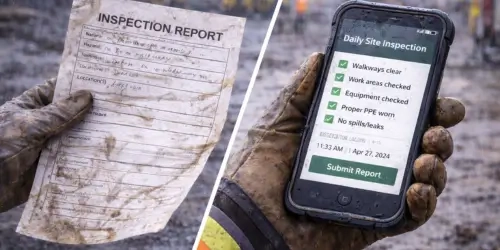
If your management strategy involves juggling disconnected tools, spreadsheet reporting, chasing updates, and traveling for hours to conduct physical work inspections, you likely always feel a few steps behind, and the problems and challenges only multiply as you take on more projects.
Unifying security, environmental, and safety monitoring is a practical solution that helps leaders regain control. This streamlined approach connects surveillance and monitoring systems from all jobsites into a single platform, greatly expanding and strengthening oversight while simplifying it at the same time.
Our article breaks down this smart, streamlined strategy, highlighting modern safety, security, and environmental tracking tools that provide valuable real-time visibility and a consistent standard across every location.
The Weaknesses of Fragmented Monitoring and Security Systems
Many construction companies still operate multiple different safety and security systems across their projects.
Surveillance cameras may be installed at one location while security guards patrol another. Environmental data is haphazardly collected and kept in scattered files, while safety reporting involves manual processes and spreadsheets. The result is a patchwork of information and disjointed communications.
The weaknesses of this approach include:
-
Hours wasted searching disconnected systems to understand the "big picture".
-
Inconsistent reporting formats and security protocols make meaningful project comparisons difficult.
-
Delayed updates and inconsistent, incomplete, or outdated information delay critical decisions and potentially stall progress.
-
You need to continuously visit jobsites to check conditions and verify information.
When each jobsite operates with its own systems and processes, it's incredibly difficult to keep track of conditions on the ground, and the information produced raises valid concerns: Can data be trusted and reliably used? Or is it too outdated, subjective, inaccurate, and thinly detailed to have any use?
A 2025 industry study found that only 48% of leaders are even somewhat confident that they run safe and compliant workplaces. This concerning stat highlights the need for effective, practical platforms to ensure safe construction sites. Unified security and monitoring systems have become the go-to solution for leaders needing strong, real-time information to manage multiple projects successfully.
Read more: The Hidden Costs of Legacy Systems on Modern Construction Jobsites
What is a Unified Security and Jobsite Monitoring System?
A unified, or "centralized", monitoring solution is a connected system built around:
-
Smart surveillance
-
AI-driven analytics
-
Platform integration
These components create a single point of control for live multi-site management.
Smart surveillance
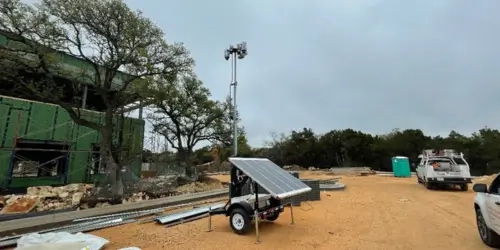
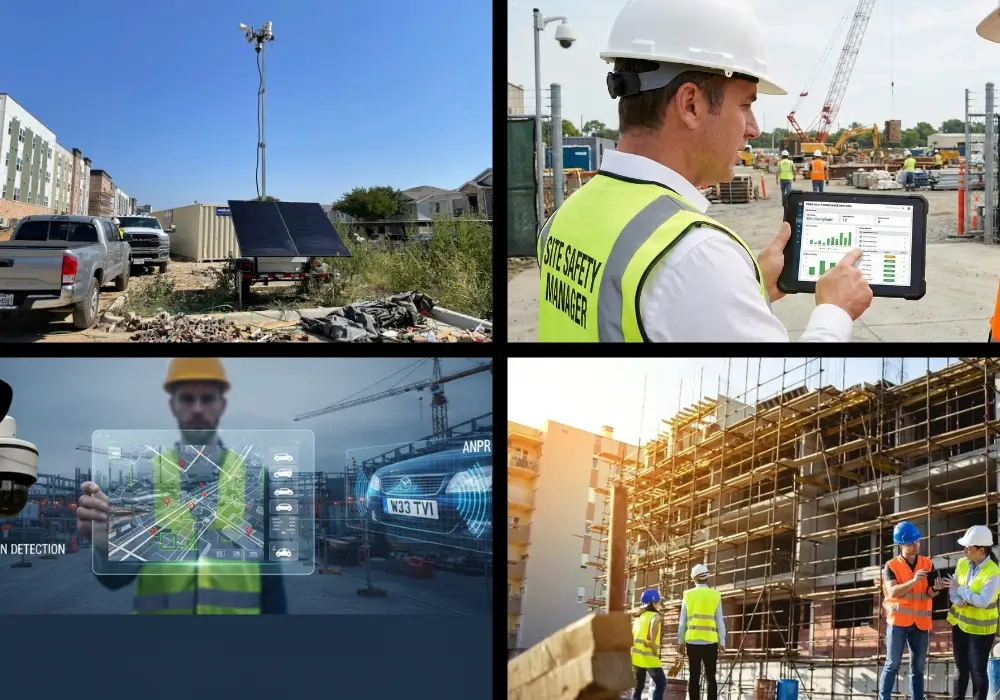
At the core of the system is a smart surveillance network. This includes high-definition cameras, advanced sensors, and rapid-deployment units such as our Mobile Surveillance Trailers. These versatile trailers are designed for use on remote or evolving construction sites, and you get:
-
Fast setup without permanent infrastructure
-
Wide-area coverage for large and complex environments
-
Built-in cellular connectivity for real-time remote access
Security surveillance forms the foundation for broader monitoring, capturing not just security events, but also access control, work activities, safety risks, and environmental factors.
AI-powered analytics
A surveillance system monitoring multiple locations generates a sizeable amount of raw data. For this data to have value, it must be transformed into insights that leaders can use to drive results. This is done by AI-powered analytics using machine learning algorithms.
AI analytics over surveillance feeds are capable of remarkably accurate jobsite risk detection. Trained on tens of thousands of video examples, analytics identify and flag key events, such as:
-
Unauthorized access and perimeter breaches
-
Unsafe behaviors and PPE non-compliance
-
Vehicle and equipment movement
-
Smoke and fire indicators
AI recognizes hazards faster and more consistently than human monitoring and also reduces false alarms by filtering out harmless disturbances such as weather, shadows, debris, and blowing tarps, sheeting, or branches.
When a potential threat is identified, PMs/Security Operators receive immediate alerts, allowing them to prioritize and respond accordingly.
In summary: Surveillance captures the activity; AI highlights what matters and immediately raises alerts.
Integrated platform connecting data streams
Sitting above surveillance and analytics is the unified platform that brings all data streams into a single, structured view. Our smart management platform, Stellifii, integrates video insights with other monitoring systems, including:
-
Environmental sensors (dust, particulate matter, CO₂, CO, jobsite noise)
-
Safety and incident reporting tools (PPE use, fire risks)
-
Access control and site activity logs
Stellifii is a cloud-based system that leverages cloud connectivity to give users access to project dashboards from any remote location with an internet connection. This level of integration creates a comprehensive and reliable view of each jobsite.
Without being physically present, managers can:
-
Track worrying dust levels in a busy work zone via video
-
Cross-check a safety alert against jobsite activity
-
Verify an incident report with timestamped footage
This smart approach largely eliminates the problems that come with jumping between systems or sending endless emails/texts to request vital info.
Every event, from a compliance failure to a heat hazard incident, is logged with timestamped evidence. This accurate, real-time information empowers better, faster decision-making across all projects. It also provides managers with a reliable, audit-ready record of all events to prove due diligence and compliance to inspectors.
Read more:
Modern Security Solutions for Multi-Site Operations
With theft, vandalism, and disruptions linked to these activities costing US construction firms over a billion dollars annually, managing security day and night must be a top priority on any project.
Our intelligent surveillance solutions are designed for multi-site security management. Here's a high-level summary of how technology-enabled oversight protects your valuable materials, metal, equipment, and other assets 24/7.
| Security System | What It Does | Operational Benefits |
| Intrusion Detection |
Uses cameras and video analytics for precise threat detection, including perimeter breaches and unauthorized access (eliminating false positives like wildlife and weather). Sends near-immediate alerts of threats to your designated contact and remote monitoring partners.Suitable for temporary or semi-permanent environments. The system retains detailed, timestamped evidence of incidents. |
Protects assets and deters trespassing without employing security guards. Detailed reports demonstrate proactive security measures and provide evidence for investigations and insurance requirements. |
| Live Video Monitoring | AI-driven surveillance cameras are connected to a professional control center. Specialist operators receive alerts of unauthorized activities, check the feed, and take immediate action, including:
|
Stops crime and theft before it happens. Prevents losses and reduces insurance claims (90% of intruders leave after a voice-down challenge from a remote monitoring officer). |
| License Plate Recognition | Accurately reads vehicle speeds and distances using AI-assisted imaging and logs every vehicle entering and exiting jobsites. |
Improves access control and blocks unauthorized vehicles. Creates accountability for worker attendance and encourages safer driving. Strengthens security protocols, supports investigations, and provides transparent audit trails for compliance. |
Read more: The Future of Construction Security: From Guards to AI-Powered Smart Systems
Integrated Environmental Monitoring and Security
IoT-based sensors with connected cameras provide real-time jobsite data needed to demonstrate OSHA and EPA compliance while protecting crews from excessive noise, air contaminants, and weather risks.
Here is an overview of the environmental monitoring tools and their capabilities:
|
Sensor Type |
What It Does |
Operational Benefits |
|
Monitors airborne pollutants and toxic gases. Provide continuous readings of dust, particulate matter (PM1, PM2.5, PM10), CO₂, CO, and VOCs. Connected cameras link readings to conditions and activities on jobsites |
Helps control jobsite air pollutants within legal and safety levels (Permissible Exposure Limits). Protects crews and the surrounding community; prevents regulatory actions that might disrupt operations. Provides evidence of controls and due diligence to OSHA and other audits. |
|
|
Records decibel readings across all active locations, picking up both prolonged noise exposure and sharp spikes caused by heavy machinery or blasting operations. The system captures thousands of individual data points to maintain a high degree of accuracy. |
Helps avoid OSHA violations of noise limits on projects. (OSHA Subpart D (1926.52). Protects workers' hearing and the company from community complaints or regulatory scrutiny. |
|
|
Continuously monitors and detects dangerous heat, cold, winds (speed and direction), humidity levels, and rainfall that can affect safety and performance. Logs relevant readings and alerts (with supporting video) to justify weather-related work stoppages to stakeholders. |
Enables managers to adjust activities and schedules around weather events to avoid:
Can be an early warning of materials or performance problems. |
Read more: Air Quality Data Management: Turning Sensor Data Into Actionable Insights for Jobsites
Safety Monitoring and Security
Modern smart detection systems play a vital role in monitoring unsafe jobsite activities and conditions, including PPE non-compliance and smoke/fire hazards.
Here's an overview.
|
Safety System |
What It Does |
Operational Benefits |
|
Uses analytics to track and automatically flag when crews fail to wear the required personal protective equipment, such as:
The system can issue live audio warnings to employees not wearing appropriate gear. Logs all incidents with timestamped video evidence. |
Enforces PPE safety protocols in real time to reduce risks, accidents, injuries, and claims. Demonstrates proactive oversight and protects the company from regulatory fines and other liabilities. |
|
|
AI-powered cameras recognize the early signatures of smoke and fires and send instant alerts to designated teams and/or emergency services. Fire incidents are logged and documented with linked video footage. |
Enables rapid responses to fire dangers, limiting damage and harm. Supports lower insurance costs. Documentation can prove responsible, rapid reactions and limit liability claims. |
Read more: Why Video Analytics is Best for Smoke and Fire Detection
6 Major Advantages of a Unified Monitoring Strategy
So what does this unified approach actually look like in practice? Here's a rundown of 6 key benefits of unified security and monitoring in multi-site operations.
1. Consistent reporting across every project
With all data flowing through one platform, reporting is standardized and consistent across all locations. Every jobsite uses the same formats and processes, making it easier to:
-
Compare performance
-
Track trends
-
Manage compliance
-
Report meaningfully to stakeholders
Consistency reduces confusion and debate about whose data is correct or most valid. It significantly cuts the time spent reconciling conflicting updates or compiling reports from subjective (human) testimonies.
Overall, this approach provides a clear, reliable picture of progress and risk that everyone can trust and understand.
2. Less tool-switching
It's estimated that switching between multiple apps (vendor sprawl) and searching for information wastes 10% of the work week.
A centralized platform with consolidated, organized information substantially reduces this inefficiency and frustration. Instead of juggling several tools to patch together updates, all the information you need is presented in an easy-to-consume consolidated view.
This saves time for both construction and office teams and reduces errors and duplication. Crucially, it allows managers to make quicker, informed decisions, confident that their actions are based on reliable inputs.
3. Reduced travel time and cost
Live monitoring with real-time alerts reduces the need for PMs to visit jobsites to check on performance and compliance, chase updates, or verify reports.
When project managers have complete remote visibility and control, they can view and act on specific site conditions from wherever they are. This cuts the time and costs of travel, allowing leaders to focus on higher-value activities such as:
-
Strategic planning
-
Workflow and cost analyses
-
Security and safety reviews
-
Prioritizing critical risks
4. Flexibility and scalability
As the number of active jobsites you manage increases, unified cloud-based systems can scale with you.
-
Additional cameras and sensors are quickly and easily rolled out across new projects
-
Surveillance feeds are seamlessly added to the central platform
Cloud storage is highly elastic and can be scaled up or down in line with business needs. This flexibility and easy scaling allow project managers to maintain confident control and visibility, whether managing 2 jobsites or 10+.
5. Greater efficiency and justified ROIs
Unified monitoring delivers cost savings and efficiencies in several areas:
-
Less administration and travel
-
Fewer vendor licenses
-
Lower incident rates due to faster responses
-
Fewer manual workloads and greater productivity
-
Potential headcount savings
-
Smarter resource allocations
As an example of efficiency gains, many firms have reduced their security costs by 88% through streamlined security management.
Consolidation also provides a clearer audit trail of activity and decisions, helping justify investments and prove measurable returns to stakeholders. On top of that, a track record of solid project performances builds your reputation in the market and can attract new contracts and other opportunities.
6. Stronger cybersecurity protection
While most construction companies prioritize security at physical sites, it's also vital to secure their online assets.
Over 60 billion records have been exposed to cyber breaches in the last 20 years (averaging 3 billion a year). In the construction/engineering sector, 21.5% of firms experienced a cybersecurity incident in the past year, with 40% of those incidents causing work disruptions.
Given the real dangers of cyberattacks, high-level data security measures are critical.
Many construction firms store sensitive data on multiple platforms, systems, apps, and mobile devices. This information might include sensitive:
-
Project plans
-
Employee records
-
Accounts/budgets
-
Client and vendor details
-
Transactional and proprietary information
Safeguarding these records in a central unified platform is a smart move because it reduces the number of "attack surfaces" that hackers and criminals can exploit. Fewer entry points are easier to defend with proper cybersecurity and access management controls/software.
In this context, Stellifii uses AES-256 end-to-end encryption, and the infrastructure is NDAA-compliant, meaning your project data is protected by high-grade cybersecurity standards that keep logs secure.
Read more: Day in the Life of a Connected Site
Gain Control By Managing Security and Monitoring Centrally
Modern platforms that integrate security, environmental, and safety monitoring are a proven and practical solution to gain control over complex, fast-moving projects.
By eliminating inefficiencies and providing deep, actionable insights into all your work environments, unified platforms help project leaders move from reactive problem-solving to confident, data-driven management.
If you're looking to reduce operational chaos and achieve reporting consistency and control across multiple locations, speak to us today about unified security and safety monitoring.