Construction leaders work hard to meet every compliance regulation that comes their way. However, many still struggle to meet the regulatory obligations of the construction industry due to outdated methods and inefficient reporting processes.
In this article, we break down the 5 main ways manual processes increase legal exposure for construction firms and their jobsites. We also show how smart monitoring and automated reporting systems can enhance operational efficiency, close compliance gaps, reduce human error, and provide audit-ready documentation, even when managing multiple projects.
The 5 Risks of Manual Reporting in Construction Compliance
Manual reporting through legacy systems exposes US construction firms to several risks that can lead to jobsite compliance failures.
Here's what you need to know about each one:
Risk #1: Inconsistent or incomplete data capture
Besides being time-consuming and an administrative burden, manual data entry and collection on paper records and Excel sheets can lead to typos, duplicate data, missing fields, and version control errors.
The problem is that when jobsites have multiple project managers or site inspectors, the chances of errors and lapses occurring often increase. One party may overlook important information, enter the wrong figures, record something differently, skip a key form field during manual data entry, or be completely unaware that an issue has occurred.
These mistakes can accumulate across multiple reports, creating a chain reaction of inaccuracies that affect the reliability of the data you've collected, as well as safety, compliance, and operational decisions.
Legal risk
Construction teams are required to maintain complete logs of work-related injuries and illnesses, fatalities, and hazardous substance records for at least 5 years. If any of these records are incomplete or inconsistent, they would violate OSHA, EPA, and federal safety expectations.
For example, OSHA inspectors consider poor records a sign of non-compliance, and this can lead to financial penalties. OSHA citations can range from $16,550 per violation for serious or other-than-serious violations to $165,514 per violation for repeat or willful violations. On top of this, misreporting can also increase your company’s liability in the event of accidents, worker injuries, and legal disputes.
Prevention path
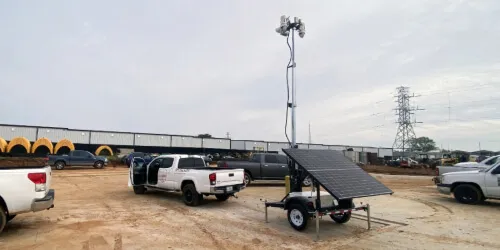
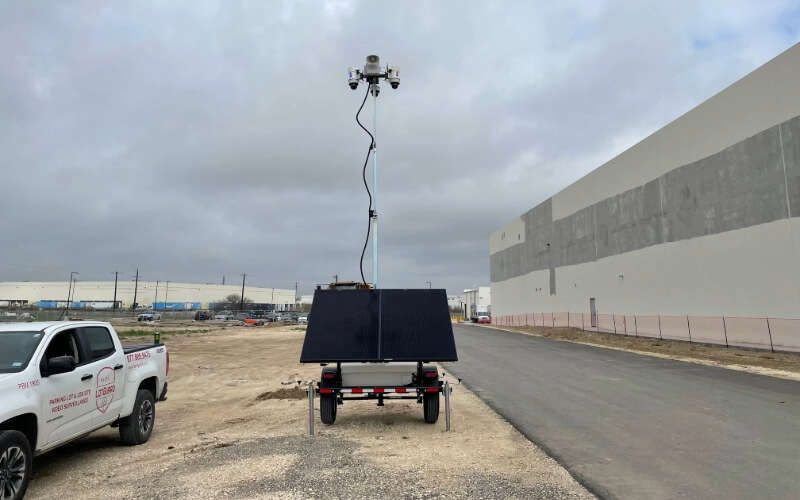
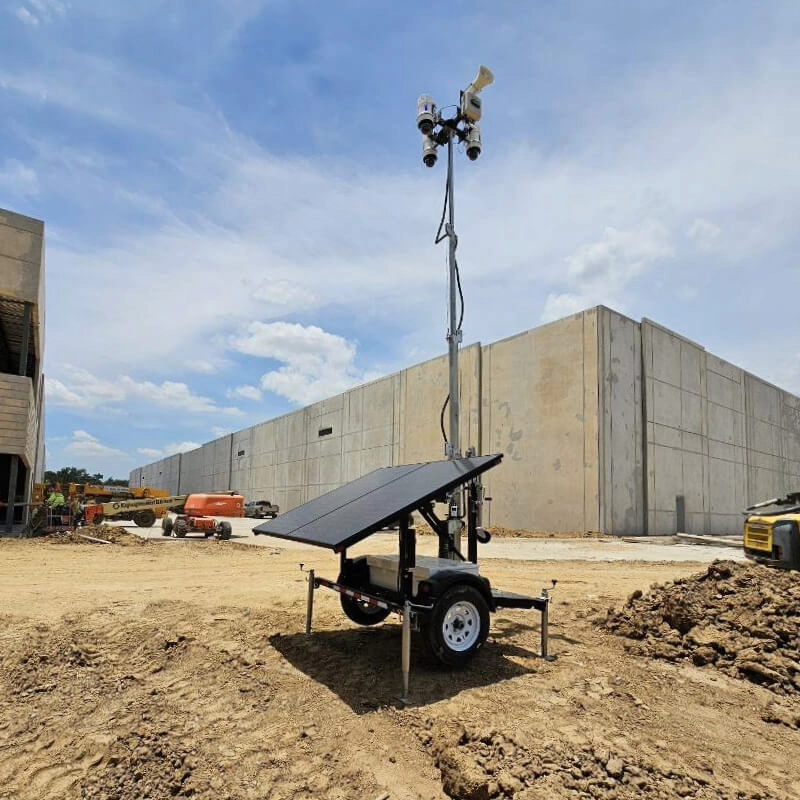
Instead of spending hours collecting and verifying jobsite data, you can use cloud-based platforms, like Stellifii, which connects to our Mobile Solar Surveillance Trailers, Pole Cameras, smart detection systems, LPR technology, Time Lapse Video, and Environmental Sensors into a single unit.
Stellifii simplifies the data collection process by automatically logging site incidents, fire hazards, safety violations (like PPE non-compliance), vehicle entry/exit, and environmental conditions (air quality, noise, weather) in real-time, so you always have complete data logs to prove due diligence and compliance.
Risk #2: Delayed incident and near-miss documentation
Construction jobsites are busy places, with many activities on the go. With this being said, it's not unusual for incidents and near-misses to go unrecorded for hours or days as teams rely on handwritten notes, phone calls, paper forms, or memory to document such events.
Manual incident reporting increases the risk that someone forgets key details or reports an event long after conditions have changed. These delays and partial documentation make it harder to rely on any raw data collected, as critical information like what triggered the event and how it was addressed gets lost along the way.
This also weakens overall construction jobsite security, as delayed or missing reports make it harder to spot patterns, prevent repeat incidents, or respond to risks in real-time.
Legal risk
Construction companies that use manual methods expose themselves to regulatory penalties for late or inaccurate records that don't provide real-time data or capture the full details of their everyday operations.
OSHA requires that work-related incidents, occupational injuries, and safety protocols be properly documented within specific timelines to prove due diligence. Inspectors may consider your firm non-compliant for failing to record incidents properly.
Delays also make it difficult for your company to defend itself during claims or litigation because there is no immediate record or verifiable evidence of what actually happened. This can result in citations, higher workers’ compensation costs, inflated project costs due to delays, and increased liability exposure.
Prevention path
With smarter compliance, you say goodbye to the stress of inefficient manual tracking and switch to a digital system that reduces reporting delays. Instead of waiting for manual submissions, Stellifii records events as they happen, giving you instant access to live video, historical data, and alerts in real-time. This makes it easier to prove and maintain compliance even when navigating stricter regulations, ensuring you never miss an incident or compliance report again.
Read more: Stellifii: Our New Smart Platform Transforming Surveillance, Safety, and Compliance
Risk #3: No reliable audit trail or change history
Manual reporting means you have to deal with the increased risk of lost or inconsistent records. Paper logs, spreadsheets, and email threads make it difficult to track who recorded what information, when it was entered, or whether any changes were made afterward.
Legal risk
Without a clear audit trail, it's difficult to prove that your company performed inspections and safety checks, or that incidents were recorded, reported, and responded to on time. This lack of comprehensive evidence means that you may receive citations during audits and inspections and be exposed to liability claims.
It also increases the chances of failing regulatory inspection if you cannot produce continuous monitoring logs or show a complete record of your compliance activity throughout the duration of your project.
Prevention path
Stellifii provides you with time-stamped logs, a searchable database, and secure AES256-encrypted storage. Events and issues picked up by our surveillance cameras and sensors are stored in our NDAA-compliant cloud, allowing you to instantly generate reports that are aligned with OSHA, EPA, and state-specific formats, all without having to do any last-minute reformatting.
Read more: How Digital Tools Ease Audit Prep and Cut Reporting Time in Half for Your Jobsite
Risk #4: Version-control failures and lost documentation
Relying on paper files and other manual documentation makes it difficult to keep track of the most current version of reports and safety documents. Different construction teams or supervisors may update different copies, leading to multiple versions of the same form floating around the jobsite.
This leaves everyone confused about which document is the "official" one and makes it especially difficult during inspections, audits, or internal reviews. Besides making it hard to prove your compliance levels, teams may also make decisions based on the wrong document, which can have unintended consequences.
For example, suppose a supervisor updates the fire-hazard guidelines for a jobsite based on recent weather monitoring data, but workers are still using an outdated report that shows normal conditions. In that case, they may continue high-risk tasks without the extra precautions required, increasing the chance of a fire hazard occurring on-site.
Legal risk
Working with outdated or conflicting documents tells OSHA inspectors and other regulatory bodies that your construction firm has failed to maintain accurate and up-to-date safety records. They can consider it a form of poor oversight, which can lead to penalties and increased scrutiny. Also, if an incident occurs from workers using outdated safety or environmental documents, your firm may face lawsuits since there's no proof that proper procedures were communicated or enforced.
Prevention path
The solution is to switch to an automated system that eliminates cases of outdated or conflicting documents. Stellifii comes with version control built into the platform. Your team always works from a single, up-to-date record, and all changes to inspection logs, incident reports, and safety data are synced in real-time to the cloud, letting you easily access them when you need them most.
Risk 5: Limited visibility across multiple jobsites
When compliance leaders rely on manual reporting, they only get updates when someone submits a form, sends a photo, or makes a call. This creates blind spots across active construction projects, especially when teams are spread across different locations. Without real-time visibility, you can't quickly detect emerging issues like equipment misuse, environmental hazards, jobsite intrusions, or unsafe work practices.
Manual updates also vary from site to site, making it difficult to compare performance, spot patterns, or understand which projects are falling behind on safety and compliance tasks.
Legal risk
Limited visibility increases the chances of violations going unnoticed until an inspector points them out. If an OSHA or EPA inspection happens during one of these blind spots, your firm may be penalized for hazards or non-compliant practices you simply didn’t know were happening. This could expose you to legal or financial risks, especially if the issue has been ongoing without documentation or corrective action.
Prevention path
With Stellifii, you have a real-time view of every jobsite from one dashboard. This way, you can identify issues early, take corrective action faster, and maintain a consistent compliance standard across your entire project portfolio from day one.
Read more: 7 Costly Compliance Mistakes US Construction Firms Can't Afford
Reduce Legal Exposure Across Your Jobsites with WCCTV
The US construction industry faces many significant challenges, with documentation gaps and wasted hours from manual workflows being among the major ones.
Get better control and visibility into your entire business by switching to a digital tool that centralizes data, automates reporting, and gives you real-time insights across all working zones.
With a centralized system like Stellifii, real-time visibility into critical updates and audit-ready documentation becomes the norm. This remote monitoring tool also supports better decision-making across every phase of your construction projects.
The impact is real and immediate for project teams: better accuracy, improved efficiency, faster response to incidents, and stronger compliance, not to mention the cost savings that you enjoy from avoiding fines, executing safer projects, and reducing time spent on manual administrative tasks.
Contact us today to see how Stellifii can improve the reporting process for your present and future projects and help your teams stay ahead of risk and deliver safer, more efficient jobsites.