Exposed to high regulatory requirements, construction jobsites face rising daily scrutiny from auditing bodies like OSHA and liability risks. Non-compliance leads to financial penalties, legal claims, and even stop-work notices.
Mobile surveillance offers real-time monitoring, alerts, and documentation that help compliance teams prevent on-site incidents and personal liability claims, ensuring they maintain audit-readiness across all their jobsites.
We’ve outlined how adopting mobile surveillance systems strengthens safety and security compliance on your jobsite whilst reducing operational risks.
The Current Safety Challenge on Construction Jobsites
Construction still remains one of the most dangerous industries, if not the most dangerous injuries, with over 1,000 fatal occupational injuries caused each year in the USA.
Out of this figure, 65% were caused by falls. However, this is not the only health and safety concern that compliance teams are left to manage, with issues like third-party risks, machinery incidents, and incorrect PPE.
Despite strong on-site protocols, gaps in visibility and documentation continue to be a key driver in contributing to risks that could easily be prevented.
Understanding the full extent of the health and safety landscape of today within construction, compliance leaders are able to invest in resources, ensure efficient deployment, and prevent injuries on-site.
We’ve outlined the primary challenges shaping construction jobsite safety, and why this is:
-
Limited real-time visibility - Jobsites are everchanging, yet most safety monitoring relies on periodic walkthroughs, with critical risks only appearing during inspections.
-
Rising regulatory scrutiny and liability exposure - Regulatory bodies are increasing their enforcement around fall protection, equipment operations, and site access. However, most construction jobsites still use inconsistent, inaccurate manual reporting.
-
Manual, fragmented incident documentation - Paper-based logs and reporting, spreadsheets, and fragmented systems creates gaps that undermine investigations, corrective actions, and audit readiness.
-
High accident rates due to dynamic, changing environments - When you merge subcontract turnover, complex machinery, elevated work, and weather-related hazards together, minor issues can escalate quickly.
-
Delayed hazard detection - Unsafe behaviors, missing PPE, and improper site entry often go unnoticed, especially when only sporadic checks are taking place.
-
Complicated multi-vendor and contractor oversight - With teams constantly changing and third-party vendors involved, maintaining compliance across the board is difficult.
-
Breakdown in communications across large and multi-sites - Safety officers, compliance teams, and contractors may not all receive updates at the same time, especially when relying on manual escalation and in-person communication.
-
Lack of data-backed, time-stamped evidence - During disputes or investigations, firms will often struggle to produce verifiable records, in turn, increasing their exposure to fines, claims, and work stoppages.
-
Cultural resistance to safety protocol changes - Project speed will often surpass compliance, leading to inconsistencies with enforcement which can weaken safety culture and accountability.
-
Scaling difficulty across multiple sites - Construction firms tend to manage multiple sites, but this comes with its difficulties. Maintaining consistent safety standards when scaling can become increasingly more complex without centralized visibility tools in place.
These modern day construction jobsite challenges often start small and will go unseen due to the fragmented systems and limited visibility provided through traditional security measures.
Without real-time visibility and 24/7 monitoring, construction jobsite safety is forced to be reactive rather than proactive, with most only realizing an issue has occurred after the incident has actually taken place.
This is where mobile surveillance steps in to support, offering real-time visibility and proactive monitoring, they are an effective tool for enhancing jobsite health and safety and crime prevention.
What Mobile Surveillance Means for Construction
Mobile surveillance generally refers to portable monitoring systems that are designed to deliver real-time visibility across construction jobsite environments.
Compared to traditional security methods, mobile surveillance systems are built to adapt to the changing conditions on a jobsite, helping maintain safety and compliance at the same time.
By combining live video monitoring, remote connectivity, and secure evidence gathering and data storage, mobile surveillance enables compliance teams and jobsite managers to monitor activity, identify hazards safety, and document incidents as they happen.
Defining Mobile Surveillance
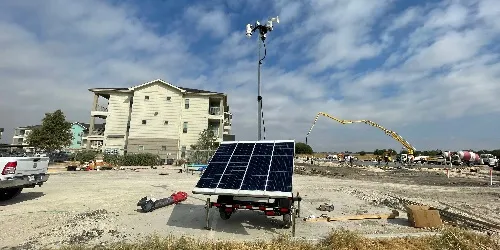
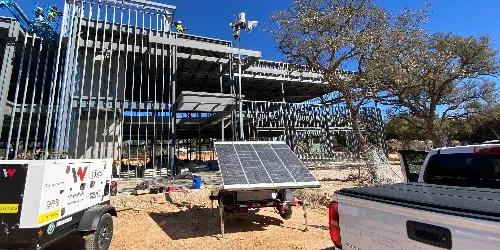
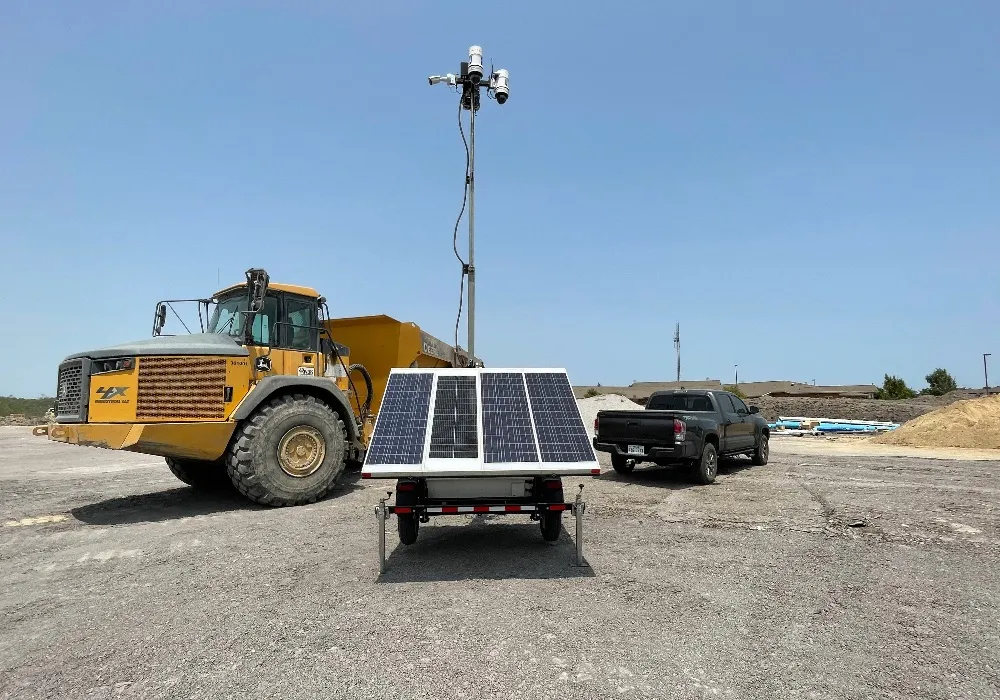
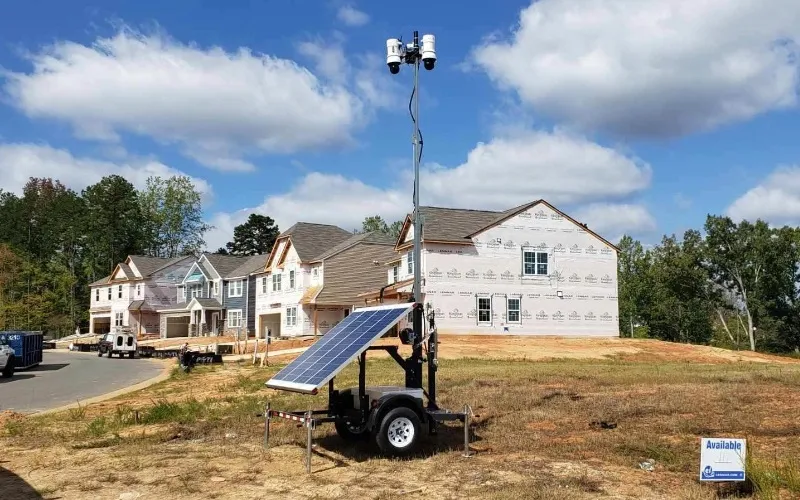
Mobile surveillance systems are self-contained units that can be installed, relocated, and scaled without the need for permanent infrastructure, power, or internet.
Typically, there are key features involved with mobile surveillance systems, including PTZ IR cameras, remote monitoring services, cellular connectivity, cloud-based platform, and alternative powering options.
For construction teams, this means continuous oversight without creating operational disruption caused when systems become reliant upon fixed power and broadband connection.
Compliance leaders and site managers are provided immediate coverage into activity across all jobsites, along with time-stamped evidence to support incident investigations, audits, and regulatory reporting.
How it Differs From Fixed Surveillance
Fixed systems are designed for permanent infrastructure and facilities where risks and hazards often present themselves in the same locations and environments rarely change.
However, this doesn’t match the description of construction jobsites. Often with temporary environments, changing layouts, and high volumes of third-party visitors, fixed cameras are an expensive option, and provide little flexibility.
This results in traditional methods being ineffective at preventing non-compliance and injuries as it still pushes teams to be reactive rather than proactive with on-site health and safety.
Whereas, mobile surveillance offers complete flexibility with both the system itself and contract length, with some manufacturers providing rental agreements that can be adjusted to your jobsite’s needs.
Units can be repositioned as jobsite development takes place or threats emerge, moved between projects, and scaled up or down depending on risk levels and number of jobsites requiring surveillance.
Their agile design ensures coverage can keep pace with jobsite changes whilst maintaining consistent documentation for incidents or near misses, giving managers all-round oversight on jobsite health and safety.
The result being a monitoring approach that is tailored to the unique requirements of construction jobsites, providing proactive safety insight rather than static, limited coverage offered by fixed systems.
Key Ways Mobile Surveillance Improves Jobsite Safety
Mobile surveillance goes beyond capturing events nowadays, it plays a proactive role in enhancing jobsite health and safety when deployed correctly. Helping identify risks, enforce standards, and protect workers, these systems provide consistent visibility across jobsites.
For compliance teams, mobile surveillance transforms their way of working, supporting proactive safety management rather than reactive incident response.
We’ve broken down the 7 key ways mobile surveillance improves jobsite safety, and how systems can be easily scaled across multiple locations through one centralized platform.
Real-time Threat Detection and Response
Mobile surveillance enables continuous, high-quality monitoring of a jobsite including any blind spots. This allows safety and compliance teams to identify risks as they emerge, not after they’ve occurred.
Unsafe behaviors, restricted-area intrusions, developing third-party incidents can all be addressed immediately through the use of mobile surveillance. Combining advanced camera technology, AI video analytics, and remote monitoring, systems can quickly identify threats in an instant.
Real-time alerts help to inform managers of the developing incident or non-compliance taking place, so that corrective action can be implemented at that time, helping ensure safety then and in the long-term.
This reduces the likelihood of injuries and operational disruption, supporting faster intervention before risks can escalate.
Prevents Unauthorized Access
Unauthorized access remains a major safety and liability concern on construction jobsites, and mobile surveillance helps monitor entry points, blind spots, perimeter breaches, and after hours activity.
Smart construction systems that combine both surveillance cameras with smart detection systems use AI detection to identify threats early, escalate the alert, deploy audio and visual deterrence, and gather a full incident report to follow-up.
Using historical information to establish jobsite patterns, delivery times, and regular authorized personnel to help prevent false triggers.
This technology helps reduce the risk of accidents involving untrained individuals and those without knowledge of the jobsite layout, strengthening the overall control for site managers and compliance teams. In turn, lowering liability claims that impact individuals personally and the wider company.
Read More: The Convergence of AI and Security: What’s Coming Next for Smart Systems
Supports PPE Compliance and Jobsite Safety Rules
PPE protects on-the-ground workers from safety hazards on construction jobsites, like poor air quality, machinery risks, and harsh weather conditions. Therefore, it’s essential this is maintained consistently for everyone’s sake.
For large or multi-site contractor jobsites, mobile surveillance provides visibility into whether workers are following safety procedures, including wearing helmets in high-risk areas, high-vis clothing, and protective equipment.
Smart surveillance systems like Stellifii can also integrate PPE detection which monitors workers, sending real-time alerts when incorrect or a lack of PPE is found. This allows site managers to intervene in the moment and for compliance leaders to enhance processes and workplace culture as a whole.
As well as this, mobile surveillance helps to capture any incidents, storing them in a secure cloud-based platform, along with a timestamp to support investigations, training, corrective action, and audits.
Related Articles:
-
Construction Jobsite Compliance Failures and Lessons Learned
-
How AI-Video Analytics for PPE, Fire, and Smoke Detection Ensures Overall Jobsite Safety
Improving Traffic and Plant Safety
In the everyday of construction jobsites, the use of heavy machinery, vehicle movement, and pedestrian safety frequently occurs in close proximity. Mobile surveillance monitors traffic flow, equipment operation, and plant movements, identifying any unsafe patterns or behaviors.
This insight supports better planning, clearer transport and delivery routes, and safer interactions amongst workers, machinery and third-party visitors.
Proactive Prevention Through Early Risk Detection
Unlike guards and fixed systems, which often rely on reactive incident response, mobile surveillance enables teams to spot early warning signs like poor PPE, congestion, unsafe stacking of materials, or unsafe behaviors.
By addressing issues early, this helps to prevent injuries, operational downtime, and costly investigations.
The best form of prevention is through early detection, and mobile surveillance perfectly combines remote monitoring, AI-detection, and real-time alerts to provide site managers with the opportunity for fast intervention and immediate corrective action.
Better Control of Site Conditions
Site conditions play a large role in keeping projects on schedule and workers safe, from cluttered work areas to environmental hazards, a small change can significantly impact a jobsite.
Mobile surveillance provides visibility into how conditions are changing throughout the workday, as well as after hours, allowing for timely corrective action to be taken to protect the jobsite, workers, and third-party visitors.
The use of smart technology with mobile surveillance systems help to predict and monitor harsh weather conditions, keep track of air quality to keep within thresholds, and remain compliant with noise regulations.
By gathering real-time jobsite information, work can be adjusted to ensure better safety. For example, where high winds or rain is established, jobsites can suspend crane activity until weather conditions improve.
Improved Worker Health
Beyond the immediate, visible safety risks, smart mobile surveillance systems contribute to better worker health by supporting safer work practices for the long-term.
Poor air quality caused by CO2, dust, and particulate matter can cause respiratory issues, excessive noise can pollute local areas, and harsh weather conditions increase the risk of on-site incidents.
Through the smart technology of mobile surveillance, environmental monitoring tools (air quality, weather, noise) can be fed into a singular platform to provide both complete jobsite overview and site condition insights.
In turn, this reduces exposure to hazards, improves compliance, and ensures quicker responses to site condition issues, creating a healthier, more controlled jobsite for workers. From lower absenteeisms and improved overall wellbeing to fewer incidents and early retirements.
Related Articles:
-
Air Quality Data Management: Turning Sensor Data Into Actionable Insights for Jobsites
-
Integrating Environmental Monitoring Sensors on Construction Jobsites
Integrating Mobile Surveillance into Your Jobsite Safety Strategy
Mobile surveillance is most effective when incorporated into an already established jobsite safety strategy, rather than replacing it.
When integrated seamlessly into your plan, it strengthens oversight, accountability, and real-time insight needed to manage construction jobsites’ dynamic environments.
Below provides a step-by-step guide on how to integrate mobile surveillance into your jobsite’s safety strategy:
-
Start with risk mapping - Prioritize those high-risk areas like access points, plant routes, elevated work areas, material laydowns.
-
Define what a ‘good’ construction jobsite looks like for you - Set clear goals on PPE compliance, traffic safety, intrusion prevention, and incident response time.
-
Embed into your daily routine - Use real-time alerts and footage within toolbox talks, handovers, and walkthroughs.
-
Create an escalation plan - Decide on who will be contacted, what triggers action, ans target response time.
-
Standardize documentation - Tie time-stamped footage to incident reports, corrective actions, and audit files.
-
Clarify access and governance - Control who views footage, how long it’s retained for, and how data is secured.
-
Train workers and contractors - Make any expectations and safety procedures clear, consistent, and applied across everyone in the business.
-
Review trends monthly - Track repeat hazards, near-misses, and hotspots, then adjust the coverage and control of your security measures.
-
Scale across your sites - Use consistent reporting formats so that leaders can get comparable, board-ready insights.
Integration is central to bettering jobsite health and safety, ensuring measurable compliance and risk reduction across large and multi-sites.
The next step is to make sure technology itself can meet the demands of complex construction environments, and this starts with understanding the features that truly matter in this.
Related Articles:
-
What Does System Integration Really Mean and Why Does It Matter?
-
A Day in the Life of a Connected Site: What Integrated Security Looks Like in Action
Core Features to Look for in Mobile Surveillance Solutions for Construction
Choosing the right mobile surveillance system is critical to achieving real safety improvements on construction jobsites. However, not all solutions are built the same, and cannot always handle the pace, risks, and regulatory requirements held by the industry.
Here are the essential features to look for when evaluating mobile surveillance solutions:
| Core Feature | What It Does | How It Supports Jobsite Health and Safety |
| Live Video Monitoring | Provides real-time visibility of all site activity from any location, on any device. | Provides the immediate identification of any unsafe behaviors, hazards, and developing incidents, allowing for faster intervention. Also, lowers the risk of false alarms. |
| Remote Access and Alerts | Send notifications to both site managers and compliance leaders, and remote monitoring centers. | Reduces response times and prevents escalations of safety incidents, especially at night. |
| Flexible, Rapid Deployment | Enables systems to be installed and relocated with ease as the site evolves or to a completely new jobsite in itself. | Ensures high-risk zones remain covered as work changes and new threats emerge, maintaining consistent oversight. |
| PTZ IR Cameras | Captures clear, detailed footage, even in complete darkness. Providing near-360 degree coverage designed for all terrains. | Improves incident investigations, supports accurate analysis of root-causes, and enhances corrective action. |
| Time-Stamped Recording | Automatically logs events with date, time markers, and surveillance footage. | Creates reliable, auditable records for safety reviews, insurance claims, regulatory inspections, and liability claims. |
| Secure Cloud Storage | Stores footage and data securely with controlled access. | Protects sensitive information whilst ensuring records remain easily retrievable for audits and investigations. |
| Environmental and Condition Monitoring | Monitors site conditions like air quality, weather, and noise. | Helps identify environmental risks that could impact worker health and on-site safety before any incidents can occur, in the short- and long-term. |
| Perimeter and Access Monitoring | Tracks site entry points and unauthorized access. | Prevents untrained individuals from entering your jobsite and potentially injuring themselves in high-risk locations. In turn, reducing accidents and liability claims. |
| Centralized Dashboard | Consolidates surveillance video feeds, alerts, and reports into a singular platform. | Simplifies oversight for safety and compliance teams managing multiple sites providing one view to all locations. |
| Smart Detection (smoke and fire, intrusion, PPE, and LPR) | Monitors for smoke and fire signs, intruders, PPE non-compliance, and vehicles. | Prevents fires on-site, intruders which endangers workers, safety risks, and any unauthorized vehicles that pose dangers to a jobsite. |
| Scalability Across Projects | Supports deployment across multiple jobsites. | Enables consistent safety standards and reporting without increasing administrative burden. |
Put Health and Safety First at Your Jobsite With WCCTV
Construction jobsites change on a regular basis, and safety risks can surface quickly due to this. Relying on periodic walkthroughs and manual reporting, it’s easy for hazards, non-compliance, or unauthorized access to slip through, creating risks to both workers and third-party visitors.
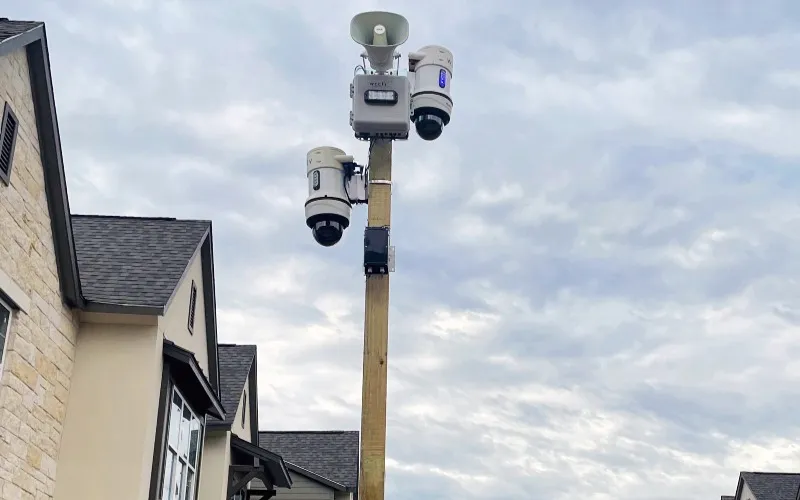
WCCTV aims to close those compliance gaps through our highly-advanced mobile surveillance solution and integrated platform, Stellifii. Their rapid deployment design allows them to be placed on most terrains and move as your jobsite evolves.
Our Surveillance Trailers provide real-time visibility, stronger perimeter control, and reliable, audit-ready documentation to support regulatory checks, investigations, and continuous jobsite improvement.
By integrating our solutions into your safety strategy, our team is on-hand to support faster incident response, reinforce compliance culture, and create a safer work environment for all.
Ready to strengthen jobsite safety with mobile surveillance trailers? Contact us to discuss your site needs and get a tailored recommendation.