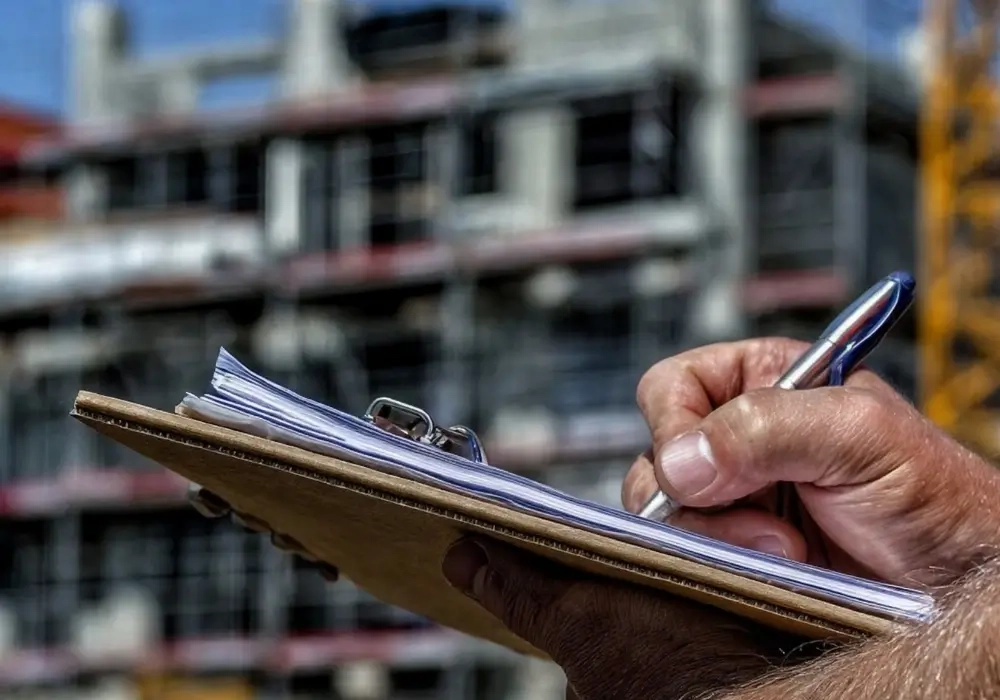
Construction company owners and senior jobsite managers have major safety and compliance responsibilities every day. And yet, according to a recent study, only 48% of leaders feel somewhat confident that their workers are consistently safe and compliant.
It's concerning that many compliance liabilities arise from communication and documentation gaps and preventable incidents. When a violation occurs on your watch, you can be held personally accountable and even sued in your private capacity.
This is why automated reporting solutions have become a key risk insurance in the industry. These systems close information gaps and provide solid evidence that you, as the responsible leader, exercised proper due diligence.
In this guide, we take a closer look at automated reporting tools and how they are a valuable investment to protect you and your construction teams from safety and compliance risks.
The High Business and Personal Costs of Compliance Violations in The Construction Sector
Companies face serious penalties for violating compliance and safety regulations on construction projects. For context, here are some of the high-stakes consequences :
-
OSHA fines range from $16,550 to $165,000 per violation.
-
EPA fines up to $66,712 per day for Clean Water Act (CWA) violations.
-
Up to 5 years in prison for NESHAP breaches. (NESHAP is the National Emission Standard for Hazardous Air Pollutants). Fines/sentences can double for second or subsequent convictions.
While regulators predominantly pursue the corporation rather than the individual, compliance officers and project managers can be held personally liable if they're found negligent or repeatedly guilty of lax controls.
-
In the Secretary of Labor v. Juan G. Quevedo-Garcia, the majority owner of a limited liability company was held personally liable for approximately $2 million in workplace safety penalties.
-
Legally, employees can sue managers/employers for grossly unsafe conditions, and owners can sue managers for blatantly failing in their compliance or jobsite security duties.
-
A General Contractor (GC) can be held accountable for subcontractors' safety and health violations on jobsites.
For both the business and the individual, the defense often hinges on the question: Can you prove that you exercised due diligence and reasonable care?
If you rely on legacy systems like paper logs, occasional jobsite visits, and grainy video (viewed long after the fact) to prove this, your defense is rather shaky. Outdated reporting systems with manual data entry let you down in virtually every way:
-
Reporting delays: An incident occurs, but the report is completed days later or forgotten altogether.
-
Questionable accuracy: A delay in documenting the event invariably compromises accuracy as memories fade.
-
Human error: Human error creeps in everywhere: missed inspections, lost data, inaccurate reporting, and incomplete logs. How often has a distracted officer failed to raise an alert about incorrect equipment usage, leading to an accident?
-
Unverifiable evidence: Your claim rests on witness testimony or incomplete data that is easily challenged in court.
Automated reporting eliminates these weaknesses by providing solid, evidence-backed information, so you can present a defensible record of the compliance actions taken in real time.
Read more: The Hidden Costs of Legacy Systems on Modern Construction Jobsites
What is Automated Reporting in Construction?
Automated reporting is a feature in AI-powered project management software that collects and presents jobsite data without requiring manual involvement. No more foremen completing forms or compliance managers compiling evidence after a scaffolding accident. The relevant information is now available at the push of a button.
An integrated and automated setup captures data from sensors, cameras, and monitoring devices continuously. For instance, it records the scaffolding incident in real-time and quickly provides an executive-level report, backed by the timestamped evidence.
Our Stellifii cloud-based platform is a powerful example of smart automation in action. It's an integrated monitoring and reporting solution combining surveillance, cloud-based audit trails, and automated reports in a centralized hub.
Clear dashboards and video evidence enable you to pull timestamped logs for virtually anything on-site (weather data, incident reports, intrusion alerts, etc.) and demonstrate due diligence with regulators at any time. In addition, AI-powered software delivers high-value, actionable insights to help you make better, faster project and security decisions.
Read more: The Rise of Smart Construction Jobsites: How Tech Is Transforming the Industry
How an Automated Reporting Tool Covers All Your Bases
The best automated systems generate comprehensive compliance reports across all your construction projects. They help you see the "bigger picture" and prove to regulators and the courts that you and your team took proper care to ensure worker safety, environmental compliance, and PPE adherence.
Here's how Stellifii and our smart detection systems and environmental sensors cover all your data collection and reporting bases.
| Project areas | What automated reporting delivers | Commercial and legal benefits |
| PPE Monitoring and Safety Compliance | Tracks and documents when crew fail to wear required protective gear or breach safety rules. | Shows proactive enforcement, reduces injury claims, and protects leaders from liability. |
| Noise Monitoring | Continuous measurement and reporting of construction jobsite sound levels. | Prevents regulatory fines/community complaints, defends against worker health claims, and proves compliance with noise limits. |
| Air Quality Monitoring | Automated detection of emissions and air quality breaches. | Provides evidence of environmental monitoring, avoids costly penalties, and strengthens ESG reporting. |
| Weather Monitoring | Real-time tracking of extreme conditions (temperature, heat, storms, rain, humidity). | Protects jobsite safety, limits downtime, and proves risk preparedness in audits. |
| Smoke and Fire Detection | Instant alerts and logged responses to fire hazards. | Reduces insurance premiums, provides rapid responses, and limits liability exposure. |
| Security Systems and Intrusion Detection | Automated unauthorized access/intrusion detection with incident logs. | Protects assets, demonstrates proactive safeguarding, and provides evidence in investigations. |
| Live Video Monitoring | AI-driven surveillance that detects suspicious behavior in real-time. | Prevents losses, reduces insurance claims, and stops crime before it happens. |
| License Plate Recognition (LPR) | Automated tracking of vehicles entering/exiting facilities. | Improves access control, supports investigations, and provides transparent audit trails for compliance. |
How Automation Insures Businesses and Leaders from Risk
According to US Bureau of Labor Statistics figures, around 20% of worker deaths in the US occur in the construction industry. Automated reporting is a type of insurance that mitigates the risks that cause these tragedies and the costs that come with them.
Concrete evidence to support your case
Smart systems document what happened, when it happened, and how your team responded.
For example, Stellifii can instantly link sensor data (like a noise hazard) with an alert and high-definition video clip, showing the location and source.
This process encapsulates:
-
Verifiable fact: A timestamped image or video clip record to ensure reporting accuracy. No more unreliable manual logs.
-
Rapid response: Alerts are sent instantly to operations and compliance teams, demonstrating your immediate reaction to the hazard.
-
Reduced liability: If an OSHA official or local authority questions the noise incident, your compliance leader can produce a report detailing the event, the automated alert, and your rapid, effective response.
Audit success in every area
Surveillance logs and incident reports sync automatically from every jobsite in real-time, allowing you to handle every type of inspection or query, including:
-
Proving your PPE enforcement to an OSHA official.
-
Showing continuous logs of dust and noise monitoring, alerts, and corrective steps to a municipal inspector.
-
Assuring stakeholders that alerts, jobsite shutdown, and safety procedures are in place to manage a storm risk.
-
Providing detailed fire alerts and response logs to fire investigators.
-
Producing logs of unauthorized access attempts, alerts, and Surveillance Trailer/Pole Camera data analysis for a full security review.
-
Presenting a client with a Time Lapse Video showcasing the progress tracking of projects.
SURVEILLANCE TRAILER PIC
Organized document management and faster reports
Stellifii consolidates all compliance documentation into a single interface. No more managing multiple applications, duplicate data entry, or scrambling through scattered files when you have audit-ready reports at your fingertips.
You can generally export reports up to 5X quicker than legacy systems and meet OSHA and EPA deadlines without a frantic admin dash, saving your team valuable time and stress.
Eliminating Human Error in the Reporting Process
A key feature of an automated system is that it reduces manual workloads for construction managers. Crucially, it also eliminates the human errors (and vendor sprawl) that flaw manual processes.
Here's a quick overview comparing the risks of relying on fallible humans vs. smart AI-powered reporting tools.
| Manual tracking of compliance | Automated compliance reporting |
| Construction teams manually fill out spreadsheets; they often gather data long after the fact. | Incident logs are automatically generated, supported by video verification. |
| You rely on staff memory or personal photos for evidence. | Automatic audit trails provide undisputed, cloud-stored, and timestamped evidence, including visual documentation. |
| Information is disorganized and requires hours/days of preparation. | Leaders have instant access to accurate, real-time data and detailed reports (on their mobile devices). |
| Training records are inconsistent, often misplaced, or incomplete. | Digital training records are centralized and automatically updated. |
| Corrective actions aren't taken due to poor communication and follow-up. | Automated alerts and workflows trigger immediate corrective actions. |
Read more:
-
Vendor Sprawl in Construction IT: Why Consolidated Monitoring Matters
-
Cloud vs. On-Premise: What Works Best for Jobsite Safety and Compliance
How Automated Reporting Boosts ROI: Key Benefits
The commercial case for an automated system is persuasive when you view it as an investment rather than a cost. It delivers measurable ROI by cutting operational expenses, keeping projects on track, reducing fines, and protecting business reputations.
-
Operational efficiencies: Automated reporting integrates multiple systems, bringing executives, project managers, and compliance teams onto the same page. As an example of savings from smart streamlining, many firms have reduced their security costs by over 88% by unifying security operations.
-
Boosts productivity: Compliance teams aren't bogged down by manual tasks. Instead, they are productively engaged in value-adding oversight.
-
Project success: Automated reporting supports real-time progress tracking and prevents safety incidents from disrupting work. On top of that, leaders can make informed decisions based on accurate data to control costs.
-
Shining company reputation: Responsible noise and hazard oversight improves the firm's image in the community and among clients.
-
Fewer legal liabilities: Diligent compliance management minimizes penalties and legal costs.
Read more: How Smart Monitoring Saves Construction Jobsites Money
Upgrade Project Reporting with Stellifii
Construction firms that integrate technology achieve greater project success through 24/7 monitoring and smart detection.
As part of this digital transformation, automated tools are improving compliance reporting by providing leaders with real‑time visibility and mobile access to up‑to‑date information. Project owners can now demonstrate due diligence in real-time. If an EPA agency requests an air quality log, it can be retrieved and provided in seconds.
Automated reporting serves as vital risk insurance. It enables leaders to defend legal claims with solid audit‑ready evidence, safeguarding both the business and accountable jobsite managers. And the ROI is clear: streamlined processes, safer workplaces, fewer fines, and more productive teams.
If you're ready to replace manual reporting with Stellifii's next-level safety, recording, and compliance system, reach out and let's chat.