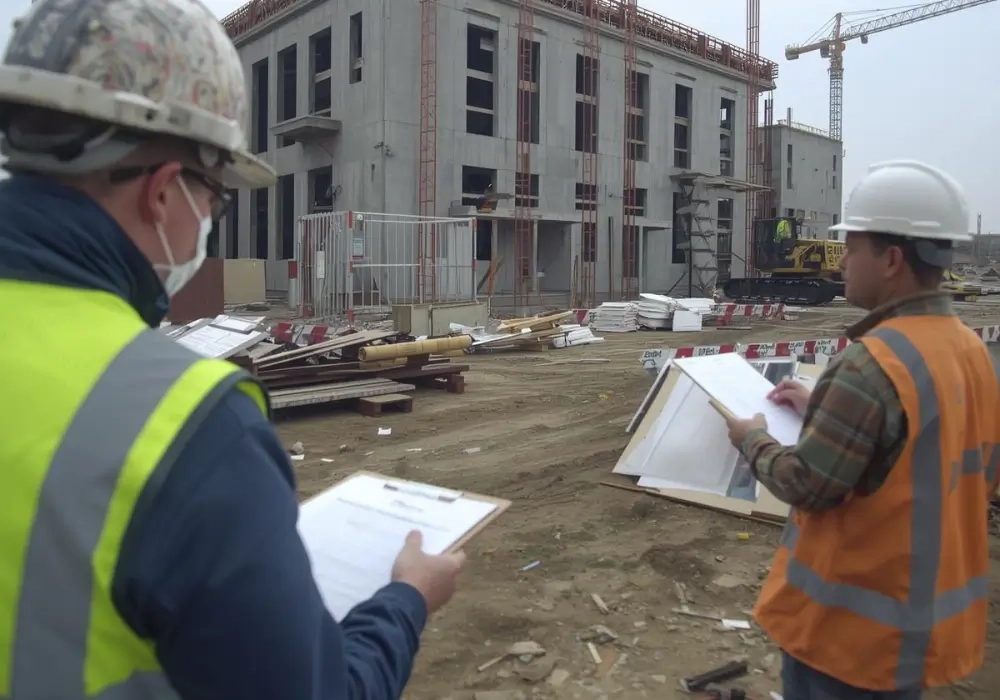
As a construction manager overseeing several jobsites, you likely spend much of your week traveling between locations to check on project performance. This road time is often seen as part of the job, but it's also one element of the larger cost of outdated manual reporting.
When reporting relies on site visits, spreadsheets, foreman updates, and email threads, the price mounts quickly. Time spent traveling and compiling updates are direct costs, while administrative overhead, inconsistent records, communication delays, and often unreliable project data create high indirect costs.
Automated monitoring and unified dashboards reduce the toll by capturing and consolidating jobsite data in real time. This gives leaders clear oversight across multiple locations without depending on error-prone manual processes.
To help you drive operational success (and fewer road miles), let's analyze the real price of outdated reporting and show how modern monitoring provides complete insight into emerging events, allowing you to prioritize your management time most effectively.
The Financial Impact of Manual Reporting: 7 Underestimated Costs
Based on research from PlanGrid and FMI, poor communication and unreliable project data cost the construction industry over $30 billion annually.
We highlight 7 critical areas where outdated reporting methods are likely to drain millions of dollars from US construction firms each year.
1. Spreadsheet errors
Spreadsheets, paper logs, and similar manual reporting processes are still widely used to manage inspections and updates on jobsites. The problem is, these fragmented manual systems are highly prone to human error. You've seen it all - typos, duplicate entries, missing fields, and version control confusion.
When several project managers (PMs) and supervisors contribute to the same document, inconsistencies multiply. One supervisor may record an issue differently from another, while someone else may overlook key information entirely.
A simple data entry error can compound across daily reports and progress logs and show an incorrect cost vs budget figure. Critical decisions about scheduling and procurement might be based on this misleading data, resulting in cost overruns
2. Admin overload
Manual reporting also creates a heavy administrative burden. Office teams spend hours consolidating field updates, correcting spreadsheet errors, and chasing missing information.
Coordinating simple changes can involve multiple phone calls. A foreman might call the office to report an issue, the office contacts the client, and eventually, after back-and-forth conversations, updates are logged in a spreadsheet.
By the time the information reaches everyone who needs it, it may be worthless.
3. Inconsistent project updates
Updates often happen at the end of long shifts, when crews are tired and focused on closing out the day. As mentioned, without standardized or automated reporting, two supervisors might document the same issue differently. Some reports may be detailed and timely, while others are delayed and lacking in necessary detail.
Inconsistency makes it hard for managers and support staff (including procurement and finance teams) to understand the job status and needs. When data arrives late or is incomplete, leaders waste time following up and double-checking.
They are sometimes forced to make decisions based on best guesses rather than hard evidence, which can lead to costly mistakes. For example, it's estimated that 26% of rework is due to poor communication between team members.
4. Poor stakeholder communications
Owners, lenders, inspectors, and other stakeholders require meaningful updates throughout every project. Manual processes produce basic reports that lack the detail or value that stakeholders expect.
After serious work disruptions or accidents, managers must account not only to the owner but also to regulators and insurers. If you are scrambling to pull together information from scattered files and different witnesses, your report will likely be delayed, inconsistent, subjective, and hard to rely on.
Slow, unreliable reporting harms your professional reputation and can expose the company to legal and regulatory liabilities. As the accountable manager, you may even face personal liability.
5. Lack of confidence in project data
When reporting involves manual data entry and human processes, it's harder to rely 100% on the information. If managers suspect that spreadsheets contain errors or missing information, they double-check figures or request additional updates.
Teams spend time verifying information instead of acting on data-backed insights. Leaders hesitate to make vital operational decisions because they're not confident that the information in front of them is reliable.
Over time, unreliable data impacts everything from scheduling adjustments to resource allocation. For context, poor data quality costs large organizations $12.9 million a year on average, according to 2020 research.
6. Travel costs and time
For project managers overseeing multiple projects, an undeniable cost of manual reporting is hours of lost productivity. Maintaining "eyes and ears" on every site requires constant traveling between locations. You may spend over half a day every week on the road. This pulls you away from higher-value tasks - e.g., implementing stronger cost control.
Hours off-site mean there are long periods when unsafe behaviors and conditions on a project go unchecked. Workers taking shortcuts and hazards being ignored increase the risk of incidents and accidents that can cause work stoppages and injury claims.
7. Legal and compliance costs
Weak records can also expose construction firms to regulatory and legal risks. Contractors are required to maintain detailed records of workplace injuries, illnesses, fatalities, and hazardous substance exposure for certain periods - often up to five years.
If this documentation is not well-maintained, you may breach OSHA and EPA regulations. Regulators often see poor recordkeeping as a sign of broader non-compliance.
OSHA penalties can be substantial, with fines of:
-
$16,550 per violation for serious or other-than-serious violations
-
Up to $165,514 per violation for repeat or willful violations
Inadequate compliance reporting also increases potential liabilities arising from accidents and worker injuries, because without proper records, it's harder to prove that you followed required safety procedures or that jobsite hazards were identified and addressed promptly.
Safety inspectors can shut down your entire project if you can't show that the site is operated responsibly.
Introducing Automated Monitoring and Unified Reports
For project managers overseeing multiple jobsites, automated monitoring and unified data dashboards have become indispensable tools.
Replacing manual processes with intelligent surveillance, automation, and AI-driven insights helps leaders and teams save hours each week and creates stronger data-backed reporting.
Here's a breakdown of the key building blocks of a modern monitoring system.
| Component | How It Works Across Multiple Jobsites |
| Intelligent Surveillance (cameras and sensors) | Surveillance systems work with networked HD cameras and IoT sensors that stream live data from every jobsite.PMs can remotely “see” conditions, with automated detection of potential incidents (e.g., unsafe scaffolding) and hazards (smoke, gas leaks) without needing to be physically present. |
| Automation | Tracked data from all jobsites is automatically compiled into standardized reports.Real-time alerts are pushed to the responsible managers, while PMs receive consolidated updates, ensuring issues are flagged instantly across the portfolio. |
| AI Analytics | Machine learning models analyze feeds from multiple jobsites simultaneously.They recognize anomalies (e.g., unauthorized access, fire hazards), identify patterns, and predict risks, giving PMs insight into potential incidents before they affect operations. |
| Central Platform | All site data, reports, and alerts are consolidated into unified dashboards to create a single “command center” view of projects.PMs and teams work from the same live information, eliminating silos and ensuring consistent decision-making across projects. |
Smart automated solutions capture data from every sensor and camera across all projects 24/7. For example, the system records a scaffolding incident and quickly alerts you to the situation. It also provides a timestamped report, backed by video evidence, that you can discuss with relevant teams and board members.
The lack of a common platform for all team members to share project data is consistently highlighted as a major cause of miscommunication and ineffective, delayed reporting in the construction industry.
Our Stellifii platform is designed to solve this problem, bringing smarter information and intelligence sharing to construction projects. It's an integrated monitoring and reporting solution combining surveillance, cloud-based audit trails, and automated reports in a centralized hub.
All project events and data are captured by PTZ (Pan-Tilt-Zoom) infrared cameras on Mobile Surveillance Trailers or temporary installations. This network creates a 24/7 job tracking system - your eyes and ears across locations, no matter how widely dispersed they are.
AI-powered analytics deliver actionable insights to help you coordinate teams and make better, faster project and security decisions. Clear dashboards and stored video evidence enable you to communicate transparently and completely with all stakeholders, even months after an incident.
Stellifii is end-to-end AES-256 encrypted to ensure robust data security and NDAA-compliant for deployment on federal contracts.
Related article: Stellifii: Our New Smart Platform Transforming Surveillance, Safety, and Compliance
7 Automated Tools That Improve Jobsite Monitoring and Reporting
Smart platforms support a host of digital tools that improve project management and reporting. We highlight our range of monitoring solutions that reduce the cost burden of manual workflows and legacy systems.
1. Environmental monitoring sensors
IoT-based environmental monitoring systems track real-time jobsite noise, air, and weather data via sensors and connected cameras. Continuous oversight ensures managers are fully informed of environmental factors that might threaten workflows and violate OSHA, EPA, or local regulations.
- Weather Monitoring Stations measure site-specific conditions, including temperature, wind speed and direction, humidity, and storm indicators that present dangers. The system protects your crew and company by notifying you when thresholds are close to or breach safety or legal levels - e.g., OSHA's Heat Hazards NEP.
Smart weather monitoring enables you to manage schedules around weather risks to avoid delays and demonstrate due diligence to stakeholders.
-
Air Quality Sensors measure particulate matter (PM1, PM2.5, PM10), CO₂, dust, and VOCs in real-time. They give live insights into changing conditions, helping you manage crew and public health risks to keep jobs moving.
-
Noise Monitoring Sensors measure a wide decibel (30-130 dB) and frequency (20Hz to 12.5kHz) range that complies with both OSHA and federal noise standards. By controlling site sound levels, you avoid complaints and compliance issues while protecting workers' hearing and timelines.
Read more:
-
How IoT Improves Both Safety and IT Overview on Construction Jobsites
-
Air Quality Data Management: Turning Sensor Data Into Actionable Insights for Jobsites
2. PPE Monitoring and Detection
AI-powered video analytics track and report when employees fail to wear proper personal protective equipment (hard hats, vests, face/eye/ear/foot protection). Advanced systems can issue a live warning to workers not following the PPE rules.
This proactive oversight and enforcement reduces accidents, injuries, fines, and legal liabilities.
Read more: AI for PPE, Fire, and Intrusion Safety
3. Smoke and Fire Detection
Cameras with AI-powered video analytics spot the early signs of smoke or flames. These systems respond faster than traditional detectors, which often only trigger an alarm after a large smoke or high heat accumulation.
Smart fire detection limits worker injuries and property/equipment damage, mitigating costly rework, legal liabilities, and attracting better insurance deals.
4. Security Systems and Intrusion Detection
Smart security and intrusion monitoring deploy cameras and video analytics to detect perimeter breaches and unauthorized access into restricted areas.
24/7 jobsite scanning protects valuable assets and guards against theft of costly materials and equipment. This platform raises near-immediate alerts of security threats and supplies detailed, timestamped documentation for internal and external investigations. A surveillance system serves as a platform for integration with wider digital tools (PPE, fire, environmental sensors, etc.)
Read more: The Future of Construction Security: From Guards to AI-Powered Smart Systems
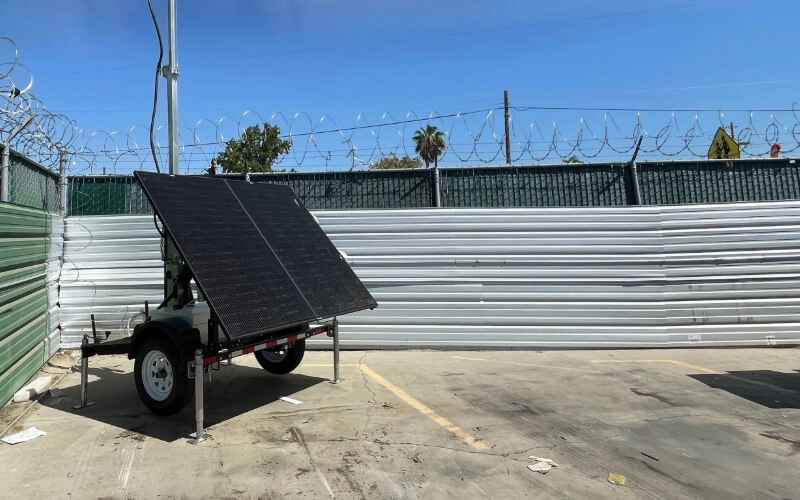
5. Live Video Monitoring
Our live video monitoring service connects surveillance cameras to a professional control center. Here, specialist operators receive alerts of unauthorized activities, check the feed, and take immediate action, including:
-
Live voice warnings/ challenges
-
Activating strobe lights
-
Dispatching a keyholder
Read more: Benefits of Remotely Monitoring Video Surveillance
6. License Plate Recognition (LPR)
License Plate Recognition is an automated system that tracks and logs all vehicles entering and exiting every jobsite. This enhances access control, accountability, responsible driving, and prevents theft.
Like the other solutions, the system logs all events, so you can easily review and retrieve data for audits, insurance claims, security reviews, or law enforcement.
The Cost Benefits of Centralized Reporting
Construction leaders can manage all of the above on Stellifii. Safety, environmental, and security data all flow into the platform's central dashboards, readily accessible via mobile and desktop. You and your teams can check up on any project from your office, vehicle, or any remote location with an internet connection
By replacing manual systems and haphazard updates with smart detection and centralized control, you significantly reduce the cost burdens we highlighted above:
-
Time-consuming administrative tasks become easier and faster as updates are accurately auto-generated. Time spent correcting errors is virtually eliminated, and employee productivity rises.
-
As a construction manager, you no longer need to spend hours and thousands of dollars travelling to inspect jobs and site conditions. Now live dashboards and alerts give you full remote visibility into project performance.
-
Stronger compliance tracking and documentation reduce regulatory risk, fines, and insurance It helps create a safer work culture and can give the organization a competitive edge in hiring and retaining quality staff.
-
When live data is captured directly into organized, unified dashboards, there is less debate about its validity. The result: Greater trust and confidence in the integrity of operational data across the organization.
-
Executive-ready reports at the push of a button ensure you are always prepared to engage stakeholders confidently about any issue on any project.
Besides these key benefits, the ROI of digitized reporting makes great sense. Cutting travel, insurance, and financial penalties achieves real cost efficiencies in administration and data management. Faster, smoother project delivery and safer work environments with fewer liabilities all help to improve ROI.
Some clients have reduced security costs by 88% by replacing on-site guards with all-seeing centralized security monitoring and intervention. Research suggests that moving from outdated methods and bringing AI-powered insights to organized data boosts work efficiency by nearly 40%.
Read more: How Can Construction Jobsites Adapt To Digital Transformation
Replace Manual Effort with Smart Reporting Today
Integrating digital monitoring into your daily operations achieves complete insight into every jobsite from your mobile app. Smart solutions improve operational efficiencies and build safer environments and more effective teams.
Professionals who inspire their teams and safeguard their company’s reputation and project budgets become respected and indispensable leaders.
If you're ready for a professional monitoring and reporting solution that supports business growth, contact us today. With over two decades of experience and valuable expertise in smart management systems, we'll help you find the best solution to accelerate success on future projects.