
Ensuring employees adhere to personal protective equipment (PPE) rules is one of construction superintendents' numerous responsibilities. But trying to enforce consistent safety practices across a large site, while juggling competing priorities and unexpected hazards, leaves leaders spread dangerously thin, increasing the likelihood of incidents and compliance failures.
This is why construction professionals have moved from manual compliance to AI-driven oversight to gain better control over busy, sprawling projects.
Mobile-friendly, automated tools give managers much greater insight into PPE compliance and other safety hazards, from any location and on any connected device.
To help you meet regulatory standards and reduce accident rates on your build, our article explains how AI detection automatically identifies missing safety gear and generates real-time alerts, while reducing your administrative workload.
Why Is PPE Enforcement Necessary on Jobsites?
20% of US worker fatalities occur in the construction industry, highlighting the importance of strong safety management protocols in this high-risk environment.
Enforcing proper PPE use on jobsites is critical to ensuring workplace safety and limiting accidents and downtime. It should be a top priority for project professionals, including superintendents, safety managers, and compliance officers.
Beyond protecting crews and avoiding disruptions due to workplace injuries, PPE compliance is a regulatory requirement. OSHA's PPE standards (29 CFR 1926.95-106) make safe, properly fitted protective equipment mandatory on building projects.
The reality, though, is that this safety regulation isn't always followed. In fact, over 50% of industry leaders say consistent PPE use is a challenge on their builds.
There are many reasons why crews fail to wear the required safety gear:
-
They remove PPE because it's uncomfortable (due to heat or ill-fitting gear)
-
Workers are rushing to complete an urgent task and overlook safety protocols
-
Subcontracting teams may not maintain the same safety standards as your own crew
-
Supply issues create a shortage of certain items, like fire-retardant safety vests
-
High heat, heavy work pressure, and alcohol/substance abuse can impair workers' judgment and lead to reckless behaviors, including safety violations
Given the challenges, clipboard inspections, training efforts, and walk-throughs aren't enough to consistently achieve PPE compliance. This is especially true on large, busy projects where crews are spread across multiple zones, and managers are stretched to capacity trying to meet high-pressure operational demands.
As construction firms digitize more of their processes, AI tools have become a key component of this transformation. Today, smart AI-powered PPE detection systems help superintendents enforce safety protocols way more consistently by replacing manual oversight with automated detection, instant alerts, and evidence-backed records.
Results from thousands of construction sites and scientific research highlight the growing effectiveness of AI PPE detection systems for improving project safety standards.
Read more:
What is an AI-Powered PPE System?
AI-powered PPE detection uses computer vision and AI video analytics to automatically identify whether workers are wearing the appropriate PPE.
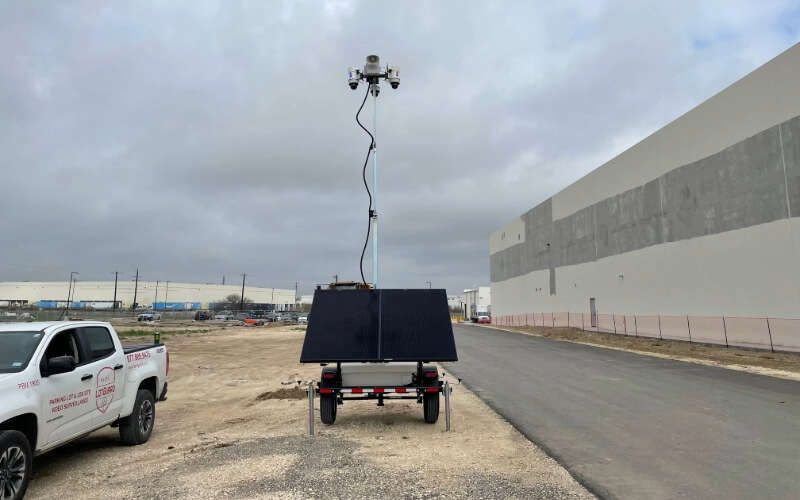
High-definition, weatherproof intelligent surveillance cameras are fixed to existing site infrastructure or mobile equipment, such as our Mobile Solar Surveillance Trailers. These trailers are solar-powered and fully mobile, so they can be conveniently located and moved to track PPE compliance across all work zones and project phases.
Cameras scan your jobsite in real time, and the system analyzes the live video feeds looking for anomalies. AI analytics use machine learning to recognize when workers aren't wearing protective equipment, such as:
-
High-visibility vests
-
Hard hats
-
Safety glasses
-
Hearing protection
-
Gloves
-
Safety footwear, including electrical hazard boots
-
Respiratory and face masks
When the system identifies missing equipment or improperly worn PPE, it sends an immediate alert to a designated manager. It can also issue a live audio warning to the non-compliant worker(s), actively reinforcing safety compliance and limiting accidents.
Each alert includes a timestamped image or video clip, and all PPE violations are logged, giving you strong evidence to use in worker safety meetings, compliance gap reviews, disciplinary proceedings, and regulatory inspections.
AI PPE Monitoring vs Traditional Oversight Methods
Automating manual processes has become a priority for US organizations, and the majority of firms automating their systems are incorporating AI tools to gain a competitive edge.
The table below shows how automated detection overcomes the drawbacks of manual PPE monitoring.
|
AI PPE Detection |
Legacy Systems/Traditional Oversight |
|
Proactive oversight: AI monitoring helps managers anticipate risks before they escalate. Proactive measures reduce accidents whilst raising compliance and overall safety culture. |
Reactive approach: Issues are often addressed only after incidents or non-compliance have already happened (existing systems tend to record rather than prevent accidents). |
|
Continuous monitoring: Real‑time detection operates continuously, flagging missing PPE instantly, which allows for proactive enforcement. |
Periodic checks: Safety inspections happen sporadically, exposing gaps where serious risks go unnoticed and unreported. |
|
Automated alerts: AI detects PPE violations objectively, ensuring consistent enforcement across the build, without exception. |
Human‑dependent oversight: Legacy systems rely heavily on inspectors and manual form‑filling, making them vulnerable to inconsistency and human error. |
|
Digital dashboards: Automated reporting delivers immediate insights and supports better decisions in the moment. |
Manual‑based reporting: Documentation is slow, fragmented, and harder to piece together into a big-picture view. |
How Does an AI-Powered Platform Help Managers with PPE Compliance?
Modern platforms with built-in AI help leaders ensure PPE compliance and enhance safety outcomes.
Our smart management platform captures PPE intel from every camera across your site(s) into a unified dashboard. Streamlining all feeds into our platform eliminates the inefficiencies and stress of searching for information in logs and scattered files.
Cloud connectivity lets you access a real-time PPE compliance overview from anywhere. Available on web and mobile app, you can track emerging events, whether you're traveling, training, or overseeing a quality inspection on the far side of the site.
The platform logs and stores all PPE incidents, reports, and surveillance footage, creating a digital audit trail of what occurred and how it was handled.
Storing this evidence using traditional methods (fragmented systems, physical files, local servers) can create compliance risks, while data is often lost, corrupted, or stolen. Our dedicated cloud-based platform is end-to-end AES-256 encrypted to protect all records, while cloud-connectivity ensures you can pull the relevant documentation for compliance inquiries with the push of a button.
Read more: Stellifii: Our New Smart Platform Transforming Surveillance, Safety, and Compliance
5 Smart AI and IoT Monitoring Systems for Modern Jobsites
Construction companies using one of our surveillance systems can integrate other smart tools to further strengthen workplace safety.
As with PPE monitoring, all video feeds are consolidated into our platform's unified dashboards, providing efficient, centralized control of environmental, security, fire, and other risks.
Here are 5 top AI-detection and environmental tracking systems deployed by construction companies across the US.
1. Security solutions
Our tech-enabled security and access control solutions include:
-
License Plate Recognition (LPR): LPR accurately reads vehicle details using AI-assisted imaging and logs every vehicle entering and exiting your perimeter (whether sites are temporary or semi-permanent). LPR creates accountability for driver behavior, confirms deliveries, and controls access and traffic flow.
-
Intrusion Detection Systems: Cameras with built-in AI analytics detect suspicious activity in real time, preventing unauthorized access, vandalism, and theft. This smart detection system triggers immediate alerts when it spots a threat and supplies detailed documentation for investigations and jobsite security
-
Our Live Video Monitoring service connects all camera feeds to a remote monitoring center where security professionals receive alerts and react immediately. This rapid response capability deters crime before it happens in up to 90% of cases (live monitoring is part of all our security offerings).
Read more:
2. Smoke and Fire Detection
Cameras with AI video analytics recognize the early signs of fire, filtering out false alarms like dust and diesel emissions. Proactive fire detection/prevention protects assets and safeguards workers in line with OSHA expectations that employers provide employees with a workplace free of recognized hazards.
3. Air Quality Monitoring
IoT-based air quality devices with connected cameras continuously measure dust, gases, and other harmful emissions, catching contaminants before they impact your workers' health and the surrounding neighborhood. This responsible environmental monitoring and control limits regulatory penalties, complaints, and work stoppages.
4. Noise Monitoring
Live monitoring of jobsite sound levels helps ensure compliance with local noise laws. Our IoT sensors and cameras measure sound across 30-130 Decibels and frequencies of 20Hz to 12.5kHz. By controlling noise hazards, you protect your crew's hearing and avoid complaints, fines, and enforced downtime.
5. Weather Monitoring
To help you plan effectively for weather risks, advanced monitoring stations track live environmental conditions (temperature, winds, humidity, rainfall, and dew point). Responsible leaders use this precise data to protect their crews from extreme weather and adjust workflows to minimize project disruptions.
6 Ways AI-Powered PPE Monitoring Enhances Workplace Safety and Compliance
We highlight 6 practical ways AI-based monitoring improves and simplifies compliance in US construction.
1. Builds safer jobsites through faster intervention
AI PPE tracking enables managers to act before risks escalate and cause loss or damage. With real‑time alerts, potential problems are intercepted and resolved quickly, protecting worker safety and project timelines.
The system’s near‑360° visibility closes blind spots and helps you oversee even the largest site with confidence. Cloud-connectivity means that wherever you are, you can monitor events on the ground and respond within seconds.
2. Generates valuable safety data
Through continuous monitoring and reporting, AI systems collect a treasure trove of data. This information not only supports PPE compliance but also highlights trends, such as recurring safety issues and high-risk areas.
Automated monitoring is more likely to record near misses, e.g., a worker without a high-visibility vest nearly being run over by a truck. This is important because close calls help inform better practices moving forward.
Project leaders use these insights to improve training, strengthen enforcement policies, assist OSHA audits, and make faster, data-driven decisions.
3. Assists with subcontractor management
If your new subcontractor's safety or supervisory standards don't match your own, they can quickly become a weak link, demanding closer oversight.
Visible PPE enforcement sends the message that protective gear rules apply to all on-site without exception, preventing new subcontractors from jeopardizing deadlines through unsafe behavior and regulatory violations.
With all incidents recorded, you have solid evidence to address subcontractors about non-compliance, avoiding "he said, she said" debates.
4. Reduces managers' admin and stress
Nearly 50% of US workers experience stress every day, and construction managers are among the highest-risk groups due to long hours and demanding responsibilities. Automated real-time tracking improves PPE detection and removes a tremendous admin burden.
Managers are freed from physical checks, spreadsheets, email threads, and report preparation. They don't have to worry about human errors or chasing delayed updates. Smart compliance tracking reduces stressful workload and allows leaders to focus on driving operational efficiency and project success.
5. Encourages safer behavior through consistent enforcement
Consistent, visible enforcement of proper PPE usage and other safety rules embeds best practices into everyday operations.
When the environment is well-managed, a culture of shared responsibility starts to develop. Crews hold themselves and each other accountable, and unsafe actions are corrected before they become bad habits.
The ultimate win is when crews actively champion safety, taking pride in minimizing workplace hazards, accidents, and compliance breaches.
6. Improves compliance through stronger checks and documentation
OSHA officials conduct around 35,000 jobsite inspections every year and can arrive at your gate unannounced at any time. AI tools generate timestamped safety records that help you stay inspection-ready and prepared for regulatory audits.
A digital audit trail proves proactive monitoring and enforcement of all PPE requirements. When you can demonstrate due diligence and safety protocols to authorities, you avoid consequences such as:
-
OSHA fines that can reach $165, 514 per violation
-
Enforced work stoppages due to questions around your compliance standards
-
Targeted OSHA inspections and disruptive investigations
Strengthen Jobsite Compliance With AI Detection Today
Offering real-time visibility, quick intervention, and auto-generated reports, AI-driven detection is the future of construction security and safety. Automated oversight of PPE usage boosts safety gear adherence while cutting down on admin.
Managing other compliance areas with AI solutions strengthens all site safety practices, reducing accidents, work stoppages, injuries, fines, and legal liabilities.
Don't let PPE slips, an unexpected fire, or environmental hazards compromise your next project. Contact us today to see how our smart detection systems can protect your workers and business.

