AI is reshaping how organizations are choosing to approach their security, from proactive threat detection to prompt incident responses. However, understanding how AI truly serves these needs and the critical role this plays in enhancing site protection.
With such vast technological advancements, the use of AI holds common misconceptions due to its growth within the industry, and companies, at times, will utilize this term as a buzzword to improve customers’ view on their service.
Hence the need for this guide, helping to clearly break down what AI-powered surveillance truly is, the benefits it offers, and what to watch out for before adopting it as part of your security approach.
What Is AI-Powered Security?
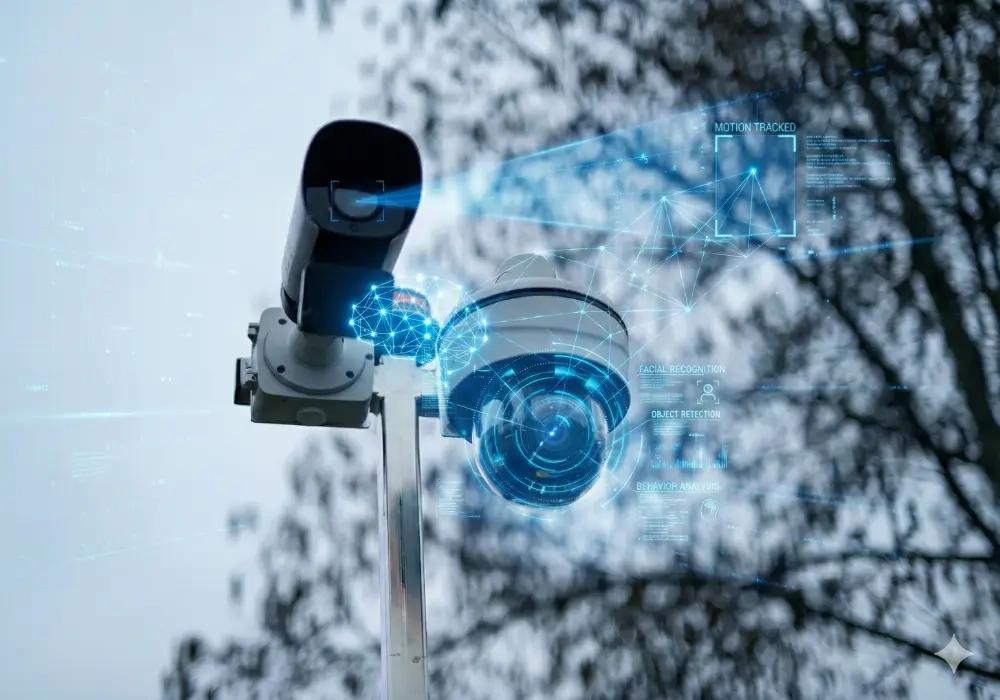
AI-powered security uses artificial intelligence and machine learning to help promptly and more accurately detect, assess, and respond to security threats in real-time.
Compared to traditional surveillance methods like security guards and fixed systems, AI utilizes historical data and advanced technology to learn and identify patterns of behavior. Using this, surveillance systems will adapt to manage new and emerging risks to better protect a site and its assets.
With crime tactics developing and security constantly changing, enhancing surveillance systems is vital to improving the speed, accuracy, and visibility whilst having human oversight to ensure complete safety on-site.
| Time Period | Stage of Development | What Changed |
| Pre-2000s | Rule-Based Security | Security systems relied on static rules and signatures. Threats would need to be detected in that moment to be responded to, creating monitoring limitations. |
| Early 2000s | Automated Detection | Basic automation and heuristics emerged to assist with intrusion detection and log monitoring. However, it could not monitor site conditions. |
| 2010–2015 | Machine Learning Adoption | Security tools began using machine learning to analyze large datasets and identify unusual behavior with this information. Began to establish environmental signals on-site. |
| 2016–2019 | Behavioral Analytics | AI shifted toward behavior-based detection, focusing on anomalies rather than known threat signatures. This means early indicators could be detected before incident escalation. |
| 2020–2022 | AI-Driven Threat Response | AI started supporting automated response actions and alert prioritization to reduce response times. Provided a proactive response to emerging risks or site issues. |
| 2023–Present | Predictive & Adaptive Security | AI-powered security systems can now monitor site activity and site conditions, enabling early threat detection, predictive insights, and proactive prevention. |
The core principles of AI-powered security comes with a wealth of benefits across the board, however, the true value is in how it is applied.
Different industries face different security challenges, environments, layouts, and operational demands, all of which shape how AI can and should be used to ensure best protection for their sites and assets.
How Different Industries Can Use AI-Powered Security
Simply installing AI-powered security isn’t enough, the value depends heavily on how different industries apply it to solve their specific challenges and site needs. Below we’ve outlined some key industry examples and how they can utilize AI-powered security to enhance surveillance and monitoring:
Construction
Construction jobsites are constantly changing, however, are highly regulated by federal and state laws, as well as by OSHA. They face risks of not only; theft, trespassing, and out-of-hours incidents, but also with compliance, with expectations of maintaining worker and environmental safety.
AI-powered security has enabled systems to draw multiple sensors, surveillance cameras, and reporting data into one platform that can be easily managed by jobsite leaders, wherever they are.
From real-time threat detection to environmental monitoring, AI-powered security helps proactively prevent intrusion whilst also triggering alerts when compliance thresholds are close to being exceeded. This allows for early intervention, helping firms avoid financial penalties, metal theft, and project delays.
Critical Infrastructure
Power stations, utilities, transport hubs, and energy networks are essential to the day-to-day operations of the public and businesses, especially the national services. Some of the industry’s biggest risks are copper theft, trespassing, poor air quality, and fire.
Through the use of AI-powered security systems, high-risk locations provided coverage of both site conditions and physical threats by constantly analyzing sensor and video data to detect anomalies. This early detection helps prevent utility sabotage, organized crime, and quick-escalating fires, helping to minimize incident escalation.
Due to the industry’s heavy reliance, this proactive monitoring technology helps prevent risks from damaging operational disruption, protecting both the public and businesses alike.
Government and Public Sector
Government agencies and public sector authorities face complex security challenges that range from protecting public spaces and events to traffic management and national security. This industry faces high public scrutiny, and therefore any surveillance systems must be able to manage their variable needs.
AI-enabled monitoring improves situational awareness and overall visibility for government agencies by flagging unusual behavior, automating alerts, and helping teams to prioritize their response to the specific issues presented.
False alarms often waste time for public sector workers, and can disrupt their capability to support community safety, however, AI-powered security minimizes this. From reducing quality of life crimes to alleviating administrative burden created through manual monitoring processes.
Supporting other industries such as traffic and highways, law enforcement, education, and events, AI-powered security can be successfully applied to support smarter decision-making, leading directly to its core benefits.
Key Benefits of AI-Powered Security
AI-powered security is designed to strengthen how organizations detect, assess, manage, and respond to risks by combining intelligent technology with automation. Across all industries, use cases, and environments, there are a wealth of benefits that can be applied through the adoption of AI.
Faster detection and response times
Often considered the main benefit, AI-powered security enables teams to identify potential threats early and more quickly, allowing them to react faster in response to these risks.
These systems constantly monitor and analyze site activity and conditions in real time, enhancing teams’ visibility on their security and providing them with a greater opportunity to prevent incident escalation.
By increasing detection and response speed, organizations move from reactive security, responding to incidents after they’ve occurred to proactive prevention, helping minimize operational, financial, and safety disruption.
There are three core benefits of this:
-
Monitors activity and site conditions continuously
-
Identifies risks that emerge rather than after incidents occur
-
Supports faster, better informed response actions
Reduced alert fatigue and improved accuracy
For security guards and systems without the backing of AI, they lack historical data and knowledge that enables them to predict dangers and early warning signs. Whereas, AI-powered security systems learn what normal behavior is, providing more accurate and earlier threat detection.
This helps minimize unnecessary alerts, helping teams focus on real risks and compliance issues instead of sifting through noise. This ensures the following:
-
Efficiently filters out low-priority and false alerts that waste time
-
Correlates events across systems to help highlight genuine threats
-
Improve focus, effectiveness, and efficiency of security teams
Scalability across growing environments
AI-powered security is designed to be scaled alongside growing operations, easing the management of multiple sites, and complex environments without increasing administrative burden and manual workload.
Through this technological advancement, AI has allowed multiple surveillance and monitoring to be consolidated into one platform. Cloud-based solutions like Stellifii utilize AI to bring together smart detection, environmental monitoring, and surveillance cameras in order to provide security and site condition coverage.
This supports scalability whilst minimizing security costs and suppliers, with the main takeaways being:
-
Monitors multiple locations simultaneously from one, secure platform
-
Maintains consistent performance monitoring as environments expand
-
Reduces need for manual monitoring, easing scalability
Proactive and predictive security capabilities
Instead of reacting to incidents after the fact they have happened, AI transforms organizations to a proactive security approach by identifying patterns and early warning signs of risk without the need for immediate human intervention.
AI-powered security offers three essential features to do this:
-
Uses historical data and ongoing activity to better threat detection
-
Flags early indicators of potential security issues
-
Enables preventive action and enhanced planning
Despite its advantages, AI-powered security is frequently misunderstood, leading to many unrealistic expectations and misconceptions.
Common Misconceptions of AI-Powered Security
With AI becoming more widely adopted by organizations when it comes to their security, there’s many assumptions due to this that don’t reflect how this technology actually works.
These misconceptions can lead to unrealistic expectations, missed opportunities, and poor implementation, all of which could be avoided if you are provided with the correct information to understand what AI can and cannot do.
AI-Powered Security Misconceptions vs. Reality
| Common Misconception | The Reality |
| AI-powered security replaces human security teams | Effective AI-powered security utilizes the automated analysis and risk detection with the additional support of human oversight and judgement. Rather than removing humans, advanced systems embrace them still to ensure complete accuracy. |
| AI guarantees complete security | No system can eliminate risk entirely. However, AI improves detection and response, enabling quick incident intervention and enhanced site protection. |
| AI always makes unbiased decisions | AI systems reflect the data they are trained on and require regular review to avoid bias or blind spots. This requires a strong provider who truly understands AI and uses software that is both up-to-date and understanding of differing industry needs. |
| AI is fully autonomous once deployed | AI-powered security systems need ongoing improvement and monitoring from human oversight and your provider to ensure your site remains protected against the relevant security risks. |
| AI only applies to cyber security | AI enhances both physical and digital security, including site monitoring, access control, and environmental conditions. Essentially, these systems cover security and operational challenges in one, reducing the need for multiple suppliers and further bettering an organization’s cybersecurity. |
| AI is too complex to manage | While advanced, modern AI tools are designed to be easily managed across the board, ensuring dashboards, workflows, and reports are both easy to create and access. Good providers will also provide access from mobiles and desktop, so that individuals can view reports, live surveillance feeds, and compliance monitoring remotely. |
By recognizing what AI-powered security’s common misconceptions are, this highlights the importance of approaching it with care, informed understanding, and clear goals as to what your needs are as an organization.
Things to Watch For When Using AI in Security
As discussed, there are significant benefits to AI-powered security, however, this is heavily reliant upon how it is implemented, managed, supported, and monitored by both your organization and provider.
To truly receive those benefits, it’s vital you understand potential challenges early as an organization to avoid any unnecessary mishaps and ensure the most value from AI-powered systems.
-
Data Quality and Reliability - The success of AI security systems rely on data to learn and make decisions from, therefore, any poor quality, incomplete, or biased-based data only leads to inaccurate detections, missed risks, and false alerts.
-
Overreliance on Automation - AI is able to automate analysis and monitoring, and should be strong enough to operate without human oversight. However, a system that completely removes any human oversight creates gaps in security as it takes away context, judgement, and accountability.
-
Transparency and Explainability - AI-driven insights must be understandable to the teams using them, from dashboards and reports to threshold adjustments and remote connectivity. Limited visibility into how decisions are made can reduce trust and complicate incident response.
-
Integration with Surveillance Cameras and Additional Compliance Tools - AI-powered tools must work effectively alongside security and other compliance tools, without them needing to be supplied separately. Poor integration can create gaps in visibility or duplicate alerts.
-
Ongoing Maintenance and Governance - AI-powered systems require regular maintenance, review, and updates to remain effective to their environments and threat patterns. Established providers should be able to provide this support as part of an ongoing managed service.
-
Privacy and Compliance Considerations - Using AI to monitor activity or environments must align with regulatory requirements and organizational policies to protect privacy and maintain compliance.
Being aware of the potential challenges when choosing an AI-powered security system helps organizations transform from cautious decision-making to confident, well-informed adoption of artificial intelligence with surveillance monitoring and compliance.
Best Practices for Adopting AI-Powered Security
Deploying new technology requires a strong, established security provider and clear organizational objectives, oversight, and informed decision-making. Without this, you risk interrupting the adoption of AI-powered systems successfully as a business.
We’ve set out a three-step best practice checklist on how to ensure this and achieve meaningful results with your security.
Setting realistic goals and success metrics
When implementing AI, there should be clearly defined objectives that align with your organization’s operational needs.
At this stage, you should establish your measurable success metrics as this will help teams understand what to expect in the delivery of an AI-powered security system and how its performance will be evaluated.
There are three steps you should follow in this:
-
Define the specific problems AI is meant to address
-
Set measurable outcomes such as reduced response times, improved detection accuracy, or incidents prevented
-
Review the performance of your system regularly and adjust expectations as it learns
Ensuring governance and accountability
Strong governance ensures that AI-powered systems are used responsibly and effectively, ensuring clear ownership is taken and oversight remains clear. This helps to maintain trust, transparency, and compliance.
To do this, implement these key points:
-
Assign accountability for AI system performance and decisions
-
Establish review processes regarding performance to ensure the model is aligned for your site’s needs
-
Ensure alignment with internal policies and regulatory requirements
Evaluating vendors and solutions carefully
AI-powered security solutions vary in their capabilities and transparency, so it’s always best to carefully evaluate each provider, their offering, and the technology used. This helps to ensure the technology fits operational and site needs, but more importantly how it integrates into your business.
Remember the following:
-
Assess different AI models are well-trained and updated
-
Evaluate the integration capabilities of any system with additional compliance and monitoring tools
-
Prioritize solutions that offer visibility into decision-making and performance
The future of AI-powered security doesn’t just solely depend on technology, but on how it is applied, guided, and trusted. An approach we are already using to support and shape security across various industries.
The Future of AI-Powered Security
Previously AI was shaped by bold claims and overpromises, however, the future moves past this, instead focusing on the practicality and real-world application of it.
Threats are becoming more complex, crime tactics are evolving, and regulations are tightening, growing the demands of organizations when it comes to their security systems. AI is fast-developing and is now being considered the future of surveillance and compliance monitoring.
This advanced technology enhances visibility, supports early risk detection, and enables faster, more informed decision-making.
Instead of operating alone, AI-powered security embeds into the everyday operations of an organization.This includes site condition monitoring, smart intruder and risk detection, live video monitoring and recording, and remote services.
This focus moves toward adaptive systems that provide complete integration, flexibility, and scalability across multiple sites with ease whilst utilizing human oversight to ensure transparency, accountability, and improved judgement.
WCCTV is already playing a key role in this future by applying AI-powered technology to real-world scenarios and operational needs. Through intelligent video analytics, remote monitoring, and market-leading surveillance solutions, WCCTV uses AI to enhance threat detection accuracy, respond more effectively, and maintain complete site visibility for managers.
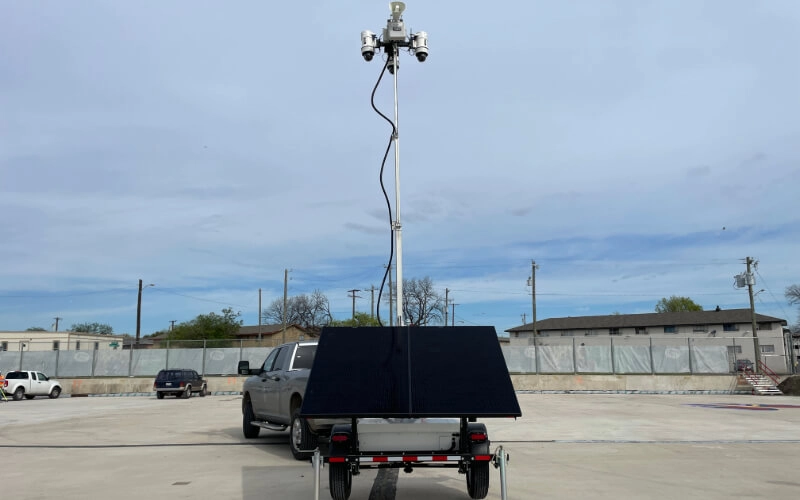
By combining our deep sector knowledge, security expertise, and AI capabilities with market-leading solutions such as, our Solar Surveillance Trailers and Pole Cameras, our systems take a proactive approach to site risks.
Doing so, allows for early incident intervention, prevents compliance breaches, improves worker safety, and builds trusting relationships across the board, whether that’s with the internal organization, stakeholders, or local communities.
The future of AI-powered security is integration, bringing together various tools into one to help situational awareness, compliance reporting, and overall operations as a business. Forget using one supplier for security, another for LPR, and another for smoke and fire detection, the future relies on consolidation and quality.
Security providers play a large role in providing the quality through their solutions, ensuring that both the advanced technology meets operational demand, but also in the human support and oversight that follows this.
In that future, WCCTV stands at the intersection of innovation and real-world security, helping organizations move forward with confidence.
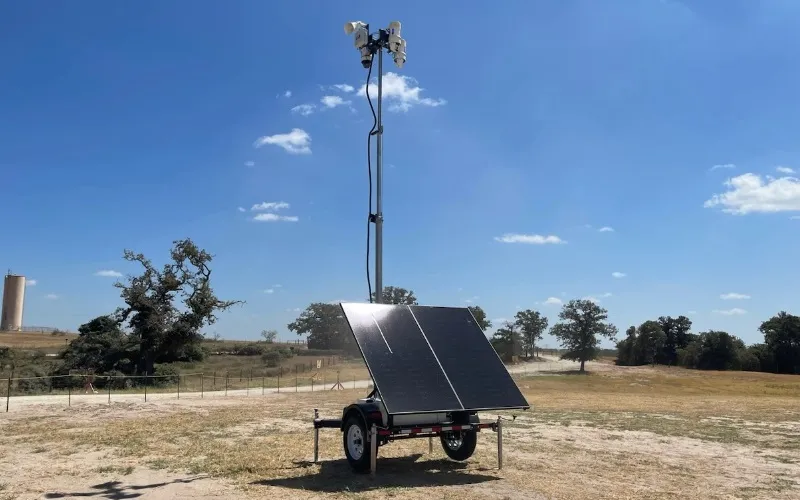
WCCTV: Turning AI-Powered Security Into Real-World Protection
The power of AI is extensive and continues to grow in its capabilities day-by-day, however, in security its greatest value is delivered when it’s applied with purpose, expertise, and understanding of real-world challenges.
Beyond this smart technology, WCCTV recognizes that the success of AI-powered systems depends on how it is used to support visibility, early risk detection, and informed decision-making.
Through the power of Stellifii, environmental monitoring, smart detection, surveillance monitoring, time lapse video, and compliance reporting into one, easy-to-use platform. With clear dashboards and reporting tools to ease the day-to-day operations for an organization.
Bringing our innovative approach across all industries and phases, we combine AI technology with practical knowledge gained throughout our 20+ years of experience, ensuring continued human oversight to provide context and judgement.
Through intelligent monitoring, advanced video analytics, and remote security solutions, WCCTV helps organizations move from reactive response to proactive protection.
Focusing on reliability, accountability, and real operational needs, we ensure AI-powered security systems that don’t just offer bold claims, but provide real-world response. The result being reliant, consistent, and more accurate security that works where it matters most.
Ready to explore how AI-powered security can support your sites?