High-risk construction and industrial sites face constant safety threats and regulatory pressure. The chief regulatory body is OSHA (Occupational Safety and Health Administration), which enforces the Occupational Safety and Health Act of 1970.
The Act requires all employers to provide a safe workplace, free of recognized safety hazards, including fall protection, heat illness, personal protective equipment (PPE) compliance, hazard communication, and more. However outdated, traditional safety programs involving spot checks and spreadsheets can't keep pace with the sector's dynamic challenges and continually evolving OSHA expectations.
Our article breaks down OSHA’s current safety priorities and explains how continuous monitoring and automated reporting help safety managers perfect due diligence and pass inspections every time.
Key OSHA Regulations and Priorities for Construction Firms
The US Bureau of Labor Statistics indicates that 1 in 5 US worker fatalities occurs in the construction sector, highlighting the high-risk nature of the industry.
OSHA enforces federal safety standards to reduce workplace hazards and accidents across the construction industry. Its priorities include proactive hazard control and risk assessment, with a strong focus on falls, PPE non-compliance, noise exposure, heat illnesses, and appropriate training.
Here's an overview of OSHA priority areas leaders shouldn't ignore:
| Priority Area | Key Requirements | OSHA Standard(s) |
| Fall Protection | Requires safety practices and equipment when working at heights of 6 ft+ above a lower level. Includes proper ladder use and scaffold construction/maintenance, plus fall protection training. | OverviewSubpart M regulationsSafety training (1926.503), Ladders (1926.1053), Scaffolds(1926.451) |
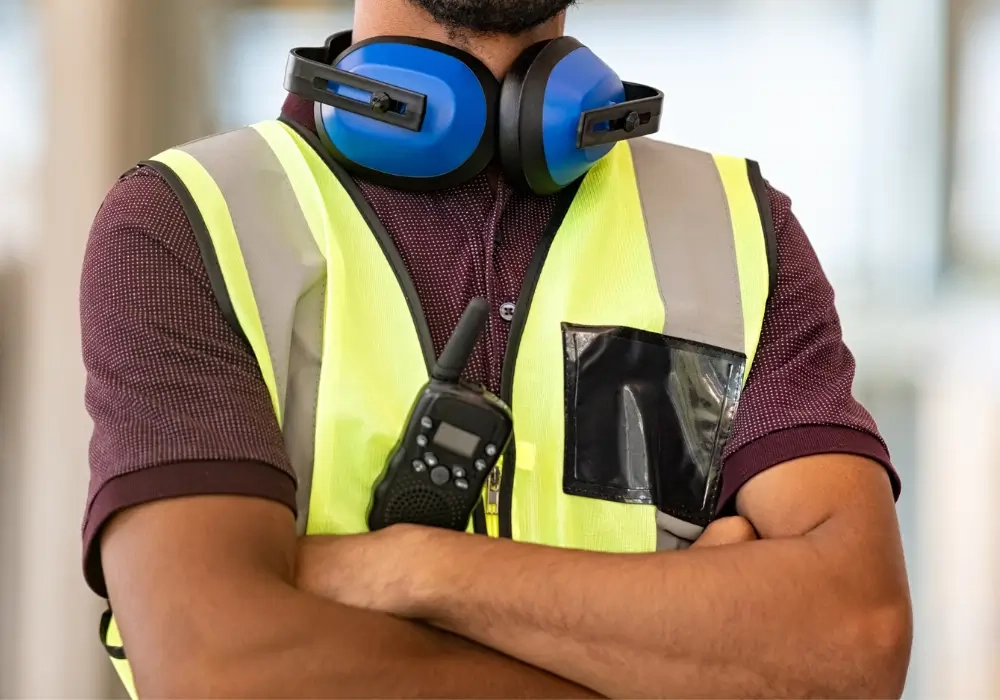
| Proper PPE Use | Requires workers to wear appropriate personal protective equipment such as hard hats, high-visibility vests, goggles, hearing protection, footwear, and respiratory protection. | 1926 Subpart E |
| Hazard Communication (HazCom) | Requires labeling of hazardous materials, employee training, and maintaining Safety Data Sheets (SDS). | 1910.1200 |
| Noise Exposure | Regulates permissible noise limits (e.g., 90 dB for 8 hours) and mandates hearing protection and monitoring. | Subpart D (1926.52) |
| Heat Illness Prevention | Employers must protect workers from heat stress and exhaustion through hydration, rest breaks, shade, and safety training. OSHA enforces under the General Duty Clause. | General Duty Clause, OSHA Heat Illness Prevention Program |
| Airborne Hazards and Pollutants | Regulates exposure to dust, silica, VOCs, fumes, and other airborne contaminants. Requires ventilation, respirators, and monitoring to protect worker health. | Subpart Z with permissible exposure limits |
Read more: The Overlap of CPRA, OSHA, and Federal Rules
Understanding OSHA Enforcement
Violating OSHA rules can have severe consequences, including hefty penalties and enforcement actions.
-
Fines and penalties: OSHA penalties start at $16,550 per serious violation and can rise to $165,541 for willful or repeated transgressions. In extreme cases, OSHA violations can lead to criminal charges.
-
Enforcement actions:
-
Project shutdowns: Jobsites can be closed down if occupational safety and compliance efforts don't meet requirements, resulting in substantial financial losses.
-
Severe Violator Enforcement Program (SVEP): Construction companies guilty of lax safety procedures and controls may be placed in OSHA's Severe Violator Enforcement Program. This brings extra inspections and compliance headaches.
How to Effectively Manage OSHA Safety Priorities on Your Jobsite
Let's discuss how key OSHA mandates impact jobsites and modern solutions that drive safer practices and stronger oversight.
Fall Protection
Falls remain the leading cause of death in construction, accounting for over a third of all construction industry fatalities.
OSHA sets clear safety standards covering fall hazards and enforces the rules strictly. Safety measures and equipment like guardrails, safety nets, and harnesses are mandatory when working at heights of 6 ft+ above a lower level. In 2024, the regulator issued 6,307 violation citations for inadequate fall prevention controls.
How to stay OSHA compliant:
Ongoing training (per the standard) and reinforcing fall safety best practices go a long way to mitigate risks, while advanced monitoring tools help to limit vulnerabilities:
- Future-forward safety professionals are adopting AI-driven visual monitoring and early warnings. These systems detect when crew members are working at heights without proper fall protection or safety harnesses and issue immediate alerts to trigger corrective actions.
Personal Protective Equipment (PPE) Compliance
OSHA's PPE standards prescribe appropriate protective equipment, yet enforcing consistent PPE use remains a challenge.
Workers often flout the rules or remove safety gear because they are hot, uncomfortable, or the equipment doesn't fit properly. OSHA cites thousands of PPE violations every year.
How to stay OSHA compliant:
-
Our PPE Detection and Monitoring system uses AI-powered analytics to track PPE usage across your jobsites. It detects non-adherence in real-time, allowing you to take quick action to address missing gear.
-
All incidents are logged through Stellifii, our cloud-based compliance management tool. The secure platform provides you with video evidence to deal with staff who ignore this vital workplace safety protocol.
Read more: Stellifii: Our New Smart Platform Transforming Surveillance, Safety, and Compliance
Hazard Communication
Hazard Communication Standard 1910.1200 prioritizes safety when working with hazardous chemicals. Employers are expected to label chemicals clearly and accurately, maintain accessible Safety Data Sheets (SDSs), and train employees about workplace hazards (training must be documented).
How to stay OSHA compliant:
-
Create a digital hazard communication plan that encompasses:
-
Centralized SDS management
-
Documented employee training (date, attendees, and topics)
-
Clear accountability for labeling and updates
-
Proactive audits of the above
Noise Exposure
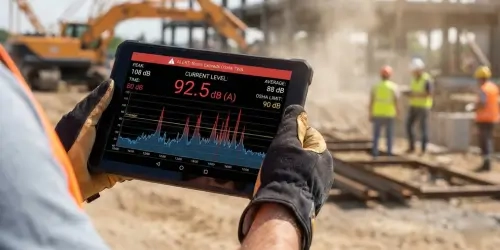
Excessive jobsite noise poses health risks to workers, from temporary deafness to long-term hearing loss. It also "pollutes" the surrounding neighborhood and can lead to complaints from the local community, disrupting your project and harming the company's reputation.
OSHA safety regulations (1926.52) set noise limits that workers can legally be exposed to. Critical thresholds include:
-
90 dB averaged for 8 hours
-
100 dB averaged for no more than 2 hours
-
105 dB averaged for no more than 1 hour
How to stay OSHA compliant:
Since manual spot checks are too inconsistent to monitor noise continuously, IoT technology is the favored solution.
- Our IoT-based Noise Monitoring sensors measure and log jobsite sound levels continuously, providing live readings to the Stellifii dashboard. The system alerts you instantly if regulatory or site-specific limits are approaching, ensuring thresholds are managed and adhered to before violations occur.
Heat Illnesses
Working long shifts without a break compromises physical and mental health, and that's exactly when mistakes happen. This is especially true when temperatures rise, making extreme heat a serious safety hazard.
Preventing heat-related illnesses like exhaustion, cramps, dehydration, and heat stroke became a top OSHA priority in 2022, following the launch of a National Emphasis Program (NEP) targeting heat exposures.
While heat hazard thresholds vary by region, a heat index of 90°F and above is widely recognized as elevated risk, ranging from Extreme Caution to Dangerous.
How to stay OSHA compliant:
-
Develop a written heat illness prevention plan: This must be site-specific and include emergency response for supporting heat-affected employees.
-
Maintain proof of acclimatization: You must demonstrate how you increase workloads gradually for new hires or returning employees during hot periods.
-
Track conditions: Inspectors want to see that employers monitor on-site conditions, not just regional weather forecasts. Our Weather Monitoring stations measure jobsite temperatures and humidity in real-time and send automated alerts to supervisors when conditions become unhealthy.
To protect your crew, the system can prompt hydration breaks, rest periods, and work stoppages, avoiding fatalities and penalties arising from heat hazards.
Air Quality Safety Concerns
The National COSH reports that thousands of US workers die every year from exposure (often long-term) to hazardous substances, such as:
-
Volatile organic compounds (VOCs) from industrial solvents
-
Carbon dioxide (CO₂)
-
Silica dust
-
Fumes from hazardous materials
Many of these fatalities are preventable with proper controls, like adjusting work methods or using PPE and proactively monitoring air quality.
How to stay OSHA compliant:
-
Our Air Quality Monitoring Systems measure fine particulate matter (PM1, PM2, PM10), CO₂, VOCs, and other airborne pollutants and gases on your jobsite.
-
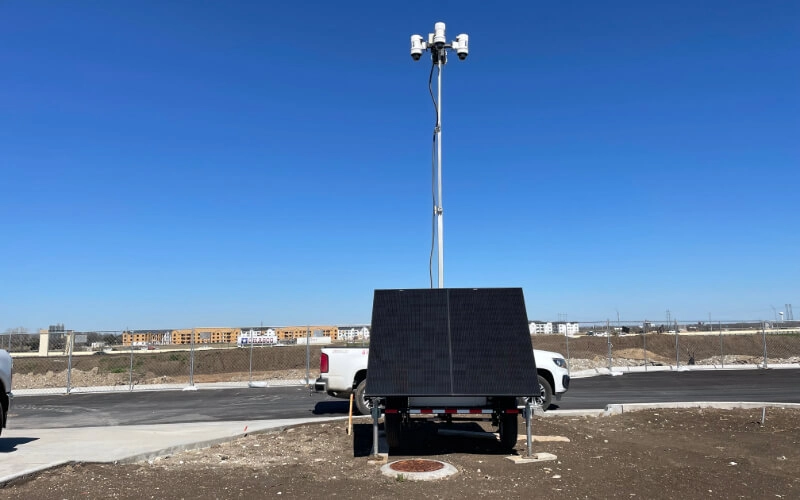
The system automatically alerts managers well before pollutants or hazardous fumes/substances approach allowable limits or endanger your crew. Our Environmental Monitoring Solutions are mounted on our Solar Surveillance Trailers or Pole Cameras and connect directly to the Stellifii platform to give you the critical environmental insights you need.
Read more: Air Quality Data Management: Turning Sensor Data Into Actionable Insights for Jobsites
Other Digital Tools That Keep Josites Safe
Modern monitoring systems support both workplace safety and security by connecting environmental tracking, PPE checks, and worker protection to the same platform that runs site security and access control.
These are our intelligent tools that expand project safety and security:
-
Intrusion Detection continuously scans sites for suspicious activity, such as security breaches, vandalism, or theft. Surveillance can be deployed on a temporary or semi-permanent basis, depending on your needs.
-
Fire Detection is a Smart Detection System that uses AI video analytics to identify and warn of fire dangers.
-
License Plate Recognition improves access control by automatically tracking all vehicles entering, exiting, and moving around jobsites.
-
Security Surveillance linked to Live Video Monitoring detects security threats, and trained operators in the control room initiate immediate interventions (voice, strobe, and siren warnings).
-
Other services: Time Lapse Videos offer a showcase reel of project progress for clients or marketing purposes.
Read more:
4 Advantages of Managing OSHA Safety Priorities with Digital Tools
When safety data flows in real time, problems get caught early and records stay accurate. Here's what that means for your team and your compliance standing.
1. Fewer violations through automated alerts
IoT-based PPE, noise, and heat level tracking is dynamic and proactive, mitigating potential hazards and costs by addressing incidents before they escalate. This approach benefits both workplace safety and your bottom line.
Real-time automated alerts for events are sent immediately to the appropriate safety or compliance manager, enabling a rapid response to limit damage and fallout.
2. Organized record keeping
Stellifii consolidates and organizes all OSHA and other compliance records in one place. Your team no longer has to search scattered files for crucial missing information when inspectors arrive.
You can export audit-ready reports up to 5X quicker than legacy systems, inspiring confidence among all stakeholders.
Audit readiness
Maintaining up-to-date records in one place makes it easy to retrieve documentation when auditors arrive.
When OSHA inspectors question whether appropriate PPE protocols were followed on a specific date, you can retrieve time-stamped video evidence in seconds to satisfy the query.
Protection from personal liability
Training workers in safety and instructing them to follow the rules doesn't in itself absolve safety officers from accountability. You can still be held liable for poor or negligent oversight.
The best personal liability defense is an unimpeachable audit trail proving your proactive due diligence. Smart safety and compliance systems provide this by producing timestamped reports detailing events, immediate alerts, and your diligent, effective response.
Read more:
-
How Digital Tools Ease Audit Prep and Cut Reporting Time in Half for Your Jobsite
-
The Rise of Smart Construction Jobsites: How Tech Is Transforming the Industry
Intelligent OSHA Compliance with Stellifii
Given the range of risks to oversee and contain, real-time compliance tracking of OSHA regulations is vital to workplace safety.
Stellifii’s cloud platform integrates all your OSHA-relevant data, from PPE adherence to fall protection, into a central hub, enabling quick compliance reporting and robust oversight.
If you're looking to upgrade your existing systems into a single connected platform that identifies potential risks in near real-time, ensuring workplace safety everywhere you work, reach out today.