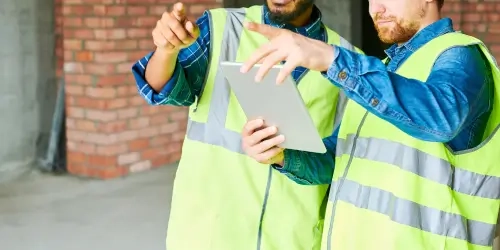
Third-party vendors and subcontractors introduce significant compliance risks on construction jobsites.
Inconsistent subcontractor safety standards and weak supervision can expose you to a range of regulatory problems, from environmental hazards to PPE violations. As the site owner responsible for such breaches, you can face mounting legal liabilities and reputational damage.
To help you reduce subcontractor-related risks and liabilities, our article details prevention strategies that modernize and strengthen subcontractor and vendor management across all your projects.
Understanding Your Responsibilities as the Project Owner
When your company is the General Contractor (or Principal) on a project, you assume the risks and liabilities that come with the job. As the controlling contractor, you are expected to:
-
Ensure subcontractors follow safety and health requirements.
-
Correct violations when possible, or require subcontractors to correct them.
-
Exercise reasonable care, which may include conducting regular safety checks.
-
Increase oversight if a subcontractor has a history of non-compliance.
Under OSHA’s Multi-Employer Citation Policy, the principal contractor (often called the “controlling employer" in law) can be held liable for safety and health violations created by subcontractors. OSHA’s policy (CPL 2-0.124) allows the agency to cite multiple employers for the same hazardous condition, irrespective of who created it.
General contractors are also typically accountable for EPA and local ordinance breaches, even if a third party caused the issue.
7 Third-Party Risks on Jobsites Plus Prevention Strategies
Many compliance failures on jobsites arise from weak subcontractor supervision. Traditional risk management involves physical spot checks to ensure contracted parties comply with health and safety standards. But in large, busy environments, managing third-party risks manually is inadequate, and many critical gaps go undetected.
Here are 7 leading subcontractor compliance risk areas and monitoring approaches that help you to close the gaps.
1. PPE Non-compliance
Although OSHA's PPE standards clearly require all employers to provide workers with proper protective equipment and enforce its use, a 2025 JJ Keller study found that 54% of construction leaders admit that inconsistent PPE wear remains a challenge on jobsites.
This challenge is compounded when subcontractors fail to enforce appropriate PPE use (hard hats, high-visibility vests, safety harnesses, and protective goggles) among their crew.
Consequences of PPE non-compliance include:
-
Worker injuries and legal claims;
-
OSHA citations and fines. In 2024, OSHA issued nearly 2,500 citations for respiratory protection violations.
How to prevent the risks:
-
Closely monitoring third-party workers goes a long way to mitigate the risks and consequences. This demands more than physical spot checks.
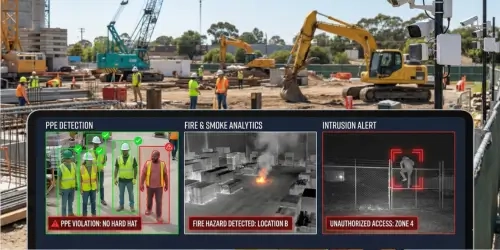
Advanced PPE Detection and Monitoring systems use AI-powered analytics to track PPE compliance across your jobsite. Violations are flagged in real-time, allowing you to take action such as alerting the subcontractor or halting the task until workers have the necessary gear. -
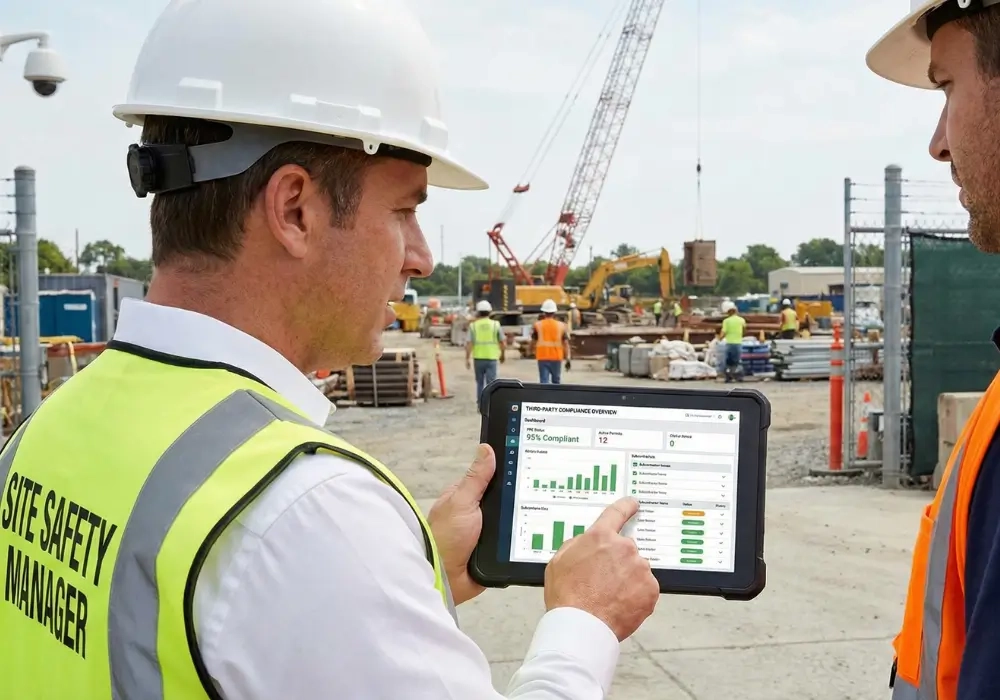
Detection incidents can be logged to an all-in-one cloud-based system like Stellifii, our compliance management platform. This creates an objective record of the incident that you can address with the subcontractor and proves your due diligence to OSHA inspectors.
2. Environmental violation risks
Under OSHA 1926.52 (Subpart D), which sets various noise limit rules, construction workers may not be exposed to noise levels exceeding 105 dBA for over 1 hour. Jobsite conditions must also comply with EPA thresholds under the Clean Air Act (CAA) and other environmental statutes.
Negligent subcontractors often breach permitted environmental limits.
The consequences of these violations include:
-
EPA civil penalties, e.g., fines for Clean Air Act violations, can reach up to $472,901 per violation per day
-
Harm to workers' health
-
Reputational risks to your company
Mitigating the risks:
IoT-based Environmental Monitoring Systems track environmental conditions against limits in real-time:
-
Air Quality Sensors measure fine particulate matter (PM1, PM2.5, PM10) and trigger alerts when construction work nears thresholds.
-
Noise Monitoring Devices record a wide decibel (30-130 dB) and frequency (20Hz-12.5kHz) range, helping to manage compliance with local standards.
-
Weather Monitoring Stations track temperature, wind speed, humidity, and rainfall to help protect the jobsite and all contractors from extreme weather.
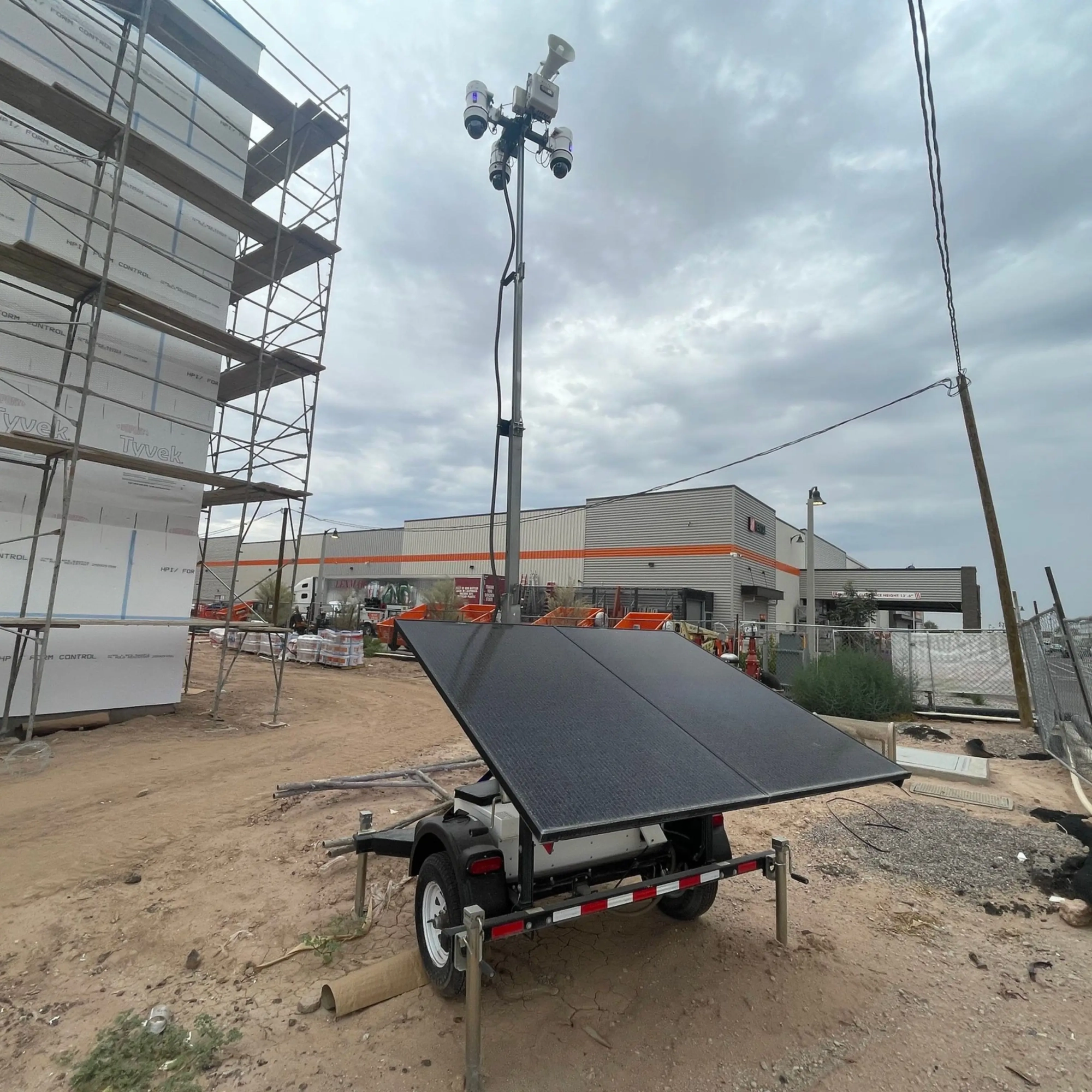
Our environmental monitoring sensors are mounted to Solar Surveillance Trailers or Pole Cameras and connect directly to Stellifii. You can view live readings, receive instant alerts for breaches, and generate downloadable reports for review with subcontractors or to show to auditors.
Read more: Air Quality Data Management: Turning Sensor Data Into Actionable Insights for Jobsites
3. Unsafe work practices
Multiple subcontractors with varying safety standards and limited direct supervision introduce a range of dangers: fall risks from scaffolding, reckless handling of hazardous materials, unsafe access structures, dangerous equipment usage, and hot work without isolating nearby hazards.
Consequences of poor safety monitoring include:
-
Fatalities and injuries
-
Legal liabilities
-
OSHA fines of up to $165,000 per violation
Mitigating the risks:
- Pole-mounted or Temporary Cameras with intelligent monitoring software provide continuous visibility into activities across the jobsite. Equipped with infrared (IR) night vision and weather-resilient hardware, they detect unsafe practices, enabling your compliance team to intervene rapidly before serious harm or damage results.
Read more: Top Strategies for Ensuring Jobsite Safety
4. Fire hazards
Negligent hot work or unsafe handling of combustible materials by subcontracted crews increases the risk of jobsite fires. Untrained subcontracted personnel working in multiple areas across the site can create several potential danger zones.
The consequences:
- Fires endanger the lives of everyone on the jobsite and cause extensive property and asset damage - $370 million damage annually, according to the National Fire Protection Association (NFPA).
Mitigating the risk:
- Smart detection systems like the specialized Smoke and Fire Detection cameras with AI analytics spot heat signatures and the faintest trail of smoke instantly, giving you eyes across your entire site.
After identifying a threat, the system sends an immediate alert to your designated contact or responsible crew. The notification includes a timestamped snapshot, a video clip, and the precise location of the smoke or flames.
Read more: The Benefits of Smoke and Fire Video Analytic Detection on Jobsites
5. Unauthorized access to restricted zones
Subcontractors and vehicles sometimes enter restricted or high-risk areas without permission, such as crane operations, demolition and excavation zones, and electrical rooms, whether due to a legitimate error or a disregard of jobsite rules.
Either way, there are serious potential consequences, including:
-
Accidents or disruptions of critical operations
-
Damage to equipment and vehicles
-
Worker injuries and legal/insurance claims
Mitigating the risks:
-
Live Video Monitoring connects your Security System to professional operators monitoring site safety and security 24/7. They can take immediate action in response to dangerous and unauthorized activities. Interventions include:
-
Live voice warnings and strobe lights
-
Dispatching a mobile security crew
-
Live monitoring reduces workplace risk and criminal trespass and encourages a stronger compliance culture.
-
License Plate Recognition (LPR): License Plate Recognition is an automated system that tracks and logs all vehicles entering and exiting the jobsite. It's a valuable tool for access control and security management, helping to manage the operational risks associated with multiple subcontractors and their vehicles coming and going on the site.
Both LPR and live video systems log every incident for easy review with subcontractors and provide detailed reports that support audits, insurance claims, security reviews, and law enforcement inquiries.
6. Theft and security risks
Theft costs the construction industry billions in stolen assets and work disruptions every year.
Avoiding theft and minor vandalism on projects with multiple subcontractors and (possibly) unvetted employees on site can be a challenge without proactive site security.
Mitigating the risks:
- A range of smart surveillance systems, including Intrusion Detection Solutions, protect high-value assets, metals, materials, and tools. Camera networks with AI analytics deliver the high-value, actionable insights you need to keep your jobsite secure and help leaders make better, faster security decisions and responses.
Security footage can also be repurposed into a Time Lapse Video to visualize the project's progress in a dynamic, marketing-friendly format.
Read more: Types of Construction Theft and How to Prevent Them
7. Vendor sprawl
Construction managers often work with 5 or more monitoring platforms for surveillance, environmental monitoring, PPE tracking, incident reporting, and compliance documentation.
Given the complexity and volumes of data to track, relying on multiple third-party service providers is a risk in itself.
Challenges include:
- Each tool requires different logins, generates siloed reports, and causes inefficiencies and frustrations as you switch between them.
- When incidents occur, you struggle to piece together fragmented information from disconnected sources.
The solution?
-
As a centralized platform, Stellifii consolidates all security and compliance data, from perimeter breaches and air quality to PPE use, in one place. It provides a unified view that managers can access from anywhere with an internet connection.
-
Stellifii eliminates complex multi-vendor risk management while ensuring all your safety practices are fully documented. The platform incorporates advanced data security measures, including AES-256 encryption that protects sensitive project information from data breaches in compliance with the California Privacy Rights Act (CPRA) and other major data protection laws.
Read more:
-
Vendor Sprawl in Construction IT: Why Consolidated Monitoring Matters
-
The Hidden Costs of Legacy Systems on Modern Construction Jobsites
How Digital Tools Enable Complete Oversight of Subcontractor Compliance
Construction firms are increasingly adopting comprehensive monitoring systems that combine smart digital tools into a single platform like Stellifii. This solution enables compliance leaders to enforce standards consistently across all external parties through:
-
Continuous monitoring and centralized visibility
-
Automated reporting
-
Real-time oversight
Here's a high-level blueprint of how successful construction companies manage all their risk areas, including subcontractor compliance, across multiple projects:
| Centralized Monitoring (Dashboard Information) | Automated Reporting | Real-Time Oversight |
|
PPE Monitoring Tracks PPE compliance. |
Automated reports on PPE violations and corrective actions taken. | AI detects workers entering zones without the required equipment and immediately alerts a responsible contact; PPE compliance audits can be performed at any time. |
|
Intrusion and Security Management Ongoing monitoring for unauthorized access, breach, and theft attempts, and vehicle entries. |
Reports summarize intrusions and security breaches, unauthorized vehicle logs, and security responses. | The system triggers real-time warnings to alert managers to breaches or if unauthorized personnel/vehicles enter restricted zones. |
|
Live Video and License Plate Recognition (LPR) Dashboard integrates live video feeds and LPR logs. |
Reports highlight suspicious and unsafe activity, unauthorized vehicles, and the frequency of incidents. | Live video monitoring can activate audio warnings or response teams to stop crime before it happens and address unsafe practices; LPR identifies and blocks unauthorized vehicles. |
|
Environmental Monitoring Sensor data on noise, air quality, and weather conditions. |
Reports document environmental breaches and compliance actions. | AI cross-checks sensor triggers with video feeds to identify causes and sources and alert responsible teams. |
|
Smoke and Fire Detection Smoke/fire incident details. |
Reports record fire/smoke incidents, response times, and mitigation actions. | Identifies smoke/fire indicators in video feeds and issues immediate alerts. |
Read more: The Rise of Smart Construction Jobsites: How Tech Is Transforming the Industry
4 Additional Best Practices For Mitigating Third-Party Risks
While real-time monitoring and oversight help build a stronger safety culture with subcontractors, thorough due diligence before hiring them remains equally important.
Here are 4 tips to manage this process:
-
Standardized checks and onboarding: Require subcontractors to provide their documented safety protocols, training records, and verified trade certifications. Reference and compliance history checks are also a vital part of the approvals process.
-
Set compliance expectations upfront: This includes clearly defined and documented safety standards. Accountability and escalation procedures should also be clearly detailed.
-
Make compliance a contractual obligation: Include measurable KPIs and defined consequences for compliance failures in the contract.
-
Benchmark against industry standards: Ongoing monitoring of compliance performance against industry standards flags poor operators you need to address or terminate.
The Next Step: Smart Integrated Compliance Management
When third-party workers are not closely monitored or when their compliance and safety records are not verified, risks increase across your entire jobsite. You, as the site owner, are typically legally responsible for any breaches that occur.
Construction firms are simplifying third-party risk management by adopting integrated monitoring systems that deliver automated, real-time oversight, significantly reducing manual efforts.
Our Stellifii platform is a proven risk assessment and management solution that keeps business operations on track, reduces liability, and drives ROIs. Clear dashboards and video evidence enable stronger safety and compliance across all your projects.
To discover how you can use Stellifii to manage both multiple subcontractors and all your jobsites from a single place, reach out to us today.
Read more: How Smart Monitoring Saves Construction Jobsites Money