Safety managers carry major oversight and compliance responsibilities on their shoulders every day. Numerous risks, from falls and noise violations to missing PPE, can injure workers, derail operations, and hike costs.
Accurate safety records are a crucial part of effective project management, but relying on physical reports and manual processes leads to delayed, incomplete information and slower response times. Poor records let you down when it matters most: in claim investigations, insurance renewals, and sometimes in courtrooms.
That's why construction professionals are turning to real-time safety monitoring and automated reporting.
These AI-powered solutions keep you fully informed of developing risks, enabling swift remedial actions. They also provide you with a defensible record of all incidents, helping you keep insurance costs, worker compensation claims, and similar liabilities down.
To help you improve workforce safety and reduce claims, our guide explains how automated, real-time safety data strengthens claim defenses and protects professional reputations.
The Costs of Poor Jobsite Safety Records
Poor, scattered safety records expose the company and safety leaders to several costs and liabilities. If you can't provide insurers and investigators with clear documentation explaining how a workplace injury occurred, expect to become embroiled in disputes, penalties, compensation claims, and/or excess insurance.
Disputes
Without solid records, it's more difficult to resolve disputes and investigations. Missing inspection logs and incomplete incident reports can prolong investigations and increase regulatory scrutiny.
If an insurer investigates an injured worker claim and you cannot produce evidence showing due diligence, your case is weak from the start. Trying to stitch together an incident report from disjointed information sources often leaves you with gaps and inconsistencies, making it harder to win the matter or satisfy regulators who expect thorough documentation.
Regulatory penalties
Following safety best practices on jobsites is crucial, but it's only part of the equation. You also need to prove to regulators that you safeguarded your site and crew as best you could.
Construction companies often incur OSHA fines up to $165,514 (per violation) for failing to demonstrate expected safety standards, such as enforcing PPE use. EPA agencies also penalize firms that can't demonstrate compliance with rules like the Clean Air Act (CAA).
Higher insurance and claims costs
Safety records influence workers’ compensation premiums and Experience Modification Rates (EMR). EMR is a key risk indicator that rewards safe companies with lower rates and penalizes those with frequent accidents and workers' compensation claims.
Without clear documentation, insurance companies often assume higher risk and liability, resulting in:
-
Reduced coverage options
-
Less favorable renewal terms
-
Higher premiums (on workers' compensation insurance, vehicle, and asset coverage).
For context of the sums involved, in its 2025 Workplace Safety Index, Liberty Mutual estimated that employers across the country paid more than $1 billion weekly in direct workers' compensation costs for disabling, non-fatal workplace injuries.
Weak legal defense
If workplace injuries lead to a lawsuit, your legal defense will depend mainly on the quality of your safety records. Poor documentation makes it harder to prove you exercised due diligence, such as:
-
Identifying and limiting workplace hazards
-
Actively enforcing safety procedures
-
Delivering proper training
Without this evidence, liability and costs can rise steeply.
How to Achieve Stronger Safety Records and Accident Prevention
Successful construction companies use smart integrated platforms to improve safety recording, significantly reducing risks and liabilities.
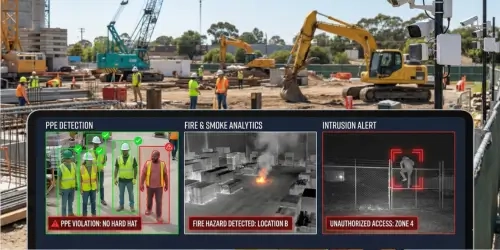
These automated systems monitor and report on all safety issues, enabling responsible officers to manage risks in real-time, across:
-
Personal Protective Equipment (PPE) compliance
-
Heat exposure risks
-
Air pollutants and toxic substances exposure
-
Noise hazards
-
Intrusion and unauthorized access
-
Fire and electrical safety dangers
Intelligent solutions like our cloud-based platform, Stellifii, generate safety warnings and document everything that happens on-site automatically. It retains all logs and records to support regulatory compliance, insurance, legal actions, and/or investigations.
-
Alerts: When the system spots a risk (e.g., a fire or an air quality issue), it instantly alerts the responsible team, prompting a rapid response.
-
Verifiable evidence: The notification includes a timestamped image or short video clip and the exact location. This lets you address the incident swiftly and ensures you have a defensible record of the event.
-
Incident logging and storage: The platform logs and stores all safety incidents, often including video evidence. You can pull an accurate record for insurers and inspectors with a click (even after a long period of time).
-
Advanced reporting insights: Comprehensive, detailed documentation helps safety leaders to review, improve, and stand confidently behind their safety programs.
Read more: The Rise of Smart Construction Jobsites: How Tech Is Transforming the Industry
How Digital Tools Enhance Safety Performance and Documentation
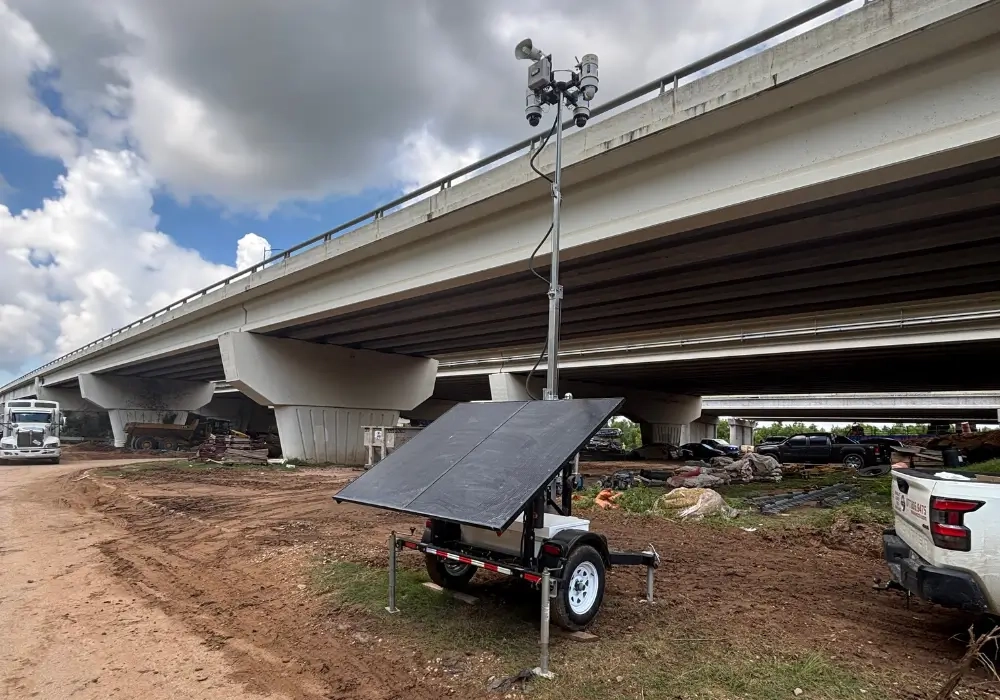
Modern digital tools utilize high-definition, PTZ (Pan-Tilt-Zoom) cameras and sophisticated environmental sensors to capture activities and workplace safety data across your jobsites.
Core features include:
-
AI-video analytics: The camera/sensor networks use AI-based software trained to recognize and quickly flag safety issues, such as fire, PPE non-adherence, noise, or excessive dust and other hazardous materials. The AI-driven system continuously analyzes the live video feeds, alerts you to threats, and retains a complete record of the event.
-
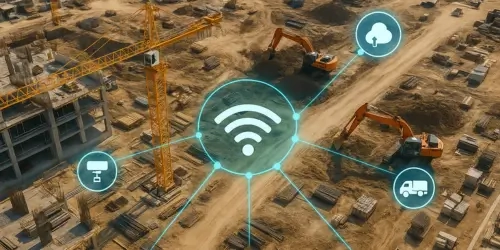
Centralized record management: All monitoring data and reporting are neatly consolidated in a single interface, such as Stellifii's secure cloud environment (AES256 encrypted with 14 rounds of encryption). Safety leaders and their teams can access Stellifii and view the latest safety information from any connected device.
-
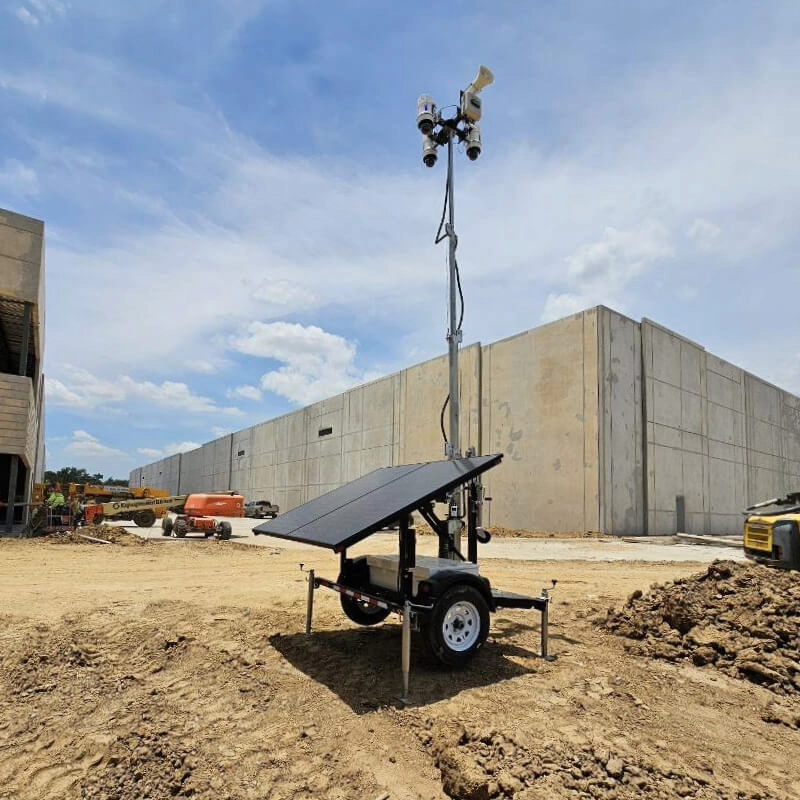
Scalable across sites: Our monitoring and Smart Detection Systems can be easily scaled and deployed in diverse settings using mobile Surveillance Trailers, allowing leaders to oversee multiple jobsites and projects (highway builds, critical infrastructure projects, parking lots) from a single "control point".
To show Stellifii's powerful capabilities, here's a breakdown of the comprehensive risk and reporting coverage the platform delivers:
| Safety Areas Managed on Stellifii | Safety Benefits | Record Keeping Benefits |
| PPE Monitoring | Tracks, alerts, and documents when crew fail to wear required protective gear. | Demonstrates proactive enforcement, reduces injury claims, and protects managers from liability. |
| Noise Monitoring | Continuously measures and reports on sound levels, notifying when noise endangers workers' hearing. | Defends against worker health claims and proves compliance with noise limits. |
| Air Quality Monitoring | Automatically detects and warns of harmful emissions and air quality breaches. | Provides evidence of environmental monitoring diligence, avoids costly penalties, and supports ESGreporting. |
| Weather Monitoring | Tracks extreme weather conditions (heat, storms, humidity) to protect jobsite safety and limit downtime. | Proves 24/7 risk preparedness and mitigation in audits. |
| Smoke and Fire Detection | Instantly alerts and logs responses to fire hazards, preventing damage and harm. | Reduces insurance premiums, proves rapid responses, and limits liability exposure. |
| Intrusion Detection | Continuously scans sites for suspicious activity, such as security breaches, vandalism, or theft; automatically logs incidents. | Demonstrates proactive site and asset protection and provides evidence for investigations. |
| License Plate Recognition (LPR) | Automatically tracks all vehicles entering and exiting sites for access control and safety. | Improves access control, supports investigations, and provides transparent audit trails for compliance. |
Read more:
Security Solutions That Support Jobsite Safety
Our jobsite security solutions safeguard your assets and contribute to overall jobsite safety:
-
Rapid deployment Surveillance Systems (like our Pole Cameras, surveillance trailers and temporary security solutions) linked to Live Video Monitoring detect security threats in real-time. Trained operators in the control room initiate immediate interventions (including voice and siren warnings) to ensure a rapid response.
-
Other services: Time Lapse Video condenses days of work into minutes, offering an attention-grabbing showreel of the build's progress.
Read more:
How Better Safety Records Protect Workers
Strong documentation plays a key role in improving worker safety. Consistent, complete records bring sharp focus to:
-
High-risk work zones
-
High-danger work times
-
Concerning trends, like recurring hazards and unsafe behaviors
-
Training and enforcement gaps
Good records provide actionable insights that help managers implement more effective safety programs and prevent injuries before they happen, not just document them after the fact.
Safety training for current job duties/responsibilities is most likely to be followed when it's backed by visible oversight and reporting. When the crew follows protocols, the project suffers fewer workers' compensation claims, medical expenses, and disruptions. And a safer workplace promotes higher morale and better relationships with regulators and insurance carriers.
Read more: Top Strategies for Ensuring Jobsite Safety
How Better Records Protect Safety Leaders' Careers
After serious incidents, investigations look at the decisions and actions of safety leadership. For the accountable manager, your defense often hinges on the question: "Can you prove that you exercised due diligence and reasonable care at all times?"
Complete, accurate records help you prove this; weak documentation leaves you vulnerable.
Let's compare the 2 positions and see how strong records make a substantively stronger case.
| Strong documentation systems | Weak record systems |
| Managers can demonstrate diligence: They have clear, time-stamped evidence of compliance actions taken in real time. | Delayed reporting causes gaps: Incidents may only be documented days later (or missed altogether), compromising credibility. |
| Proactive risk management: Records show hazards were identified and addressed to minimize harm. | Reactive safety and health programs: This approach records accidents rather than actively seeking to prevent them. |
| Reliable accuracy: Automated systems capture data instantly, reducing reliance on uncertain memories and subjective notes. | Human error: Missed alerts and inspections, and incorrect logs weaken defenses. Details are often imprecise or inconsistent when reports rely on human memory. |
| Error-free consistency: Automation eliminates missed inspections, lost logs, and incomplete reports. | Unverifiable evidence: Paper logs and witness testimony are easily challenged. |
| Defensible evidence: Records are complete and verifiable, strengthening professional defense. | Shaky defense: Outdated systems leave safety leaders exposed to liability and reputational damage. |
Explore Intelligent Safety Reporting and Recording
Based on the National Safety Council's estimates, the combined cost of work-related deaths and injuries to the nation, employers, and individual workers reached approximately $1,283 billion in 2022.
You can help reduce these occupational injury numbers while protecting your company's financial health and your own professional reputation by integrating robust safety reporting into your work environment. In practice, this means replacing incomplete, inconsistent records with irrefutable, timestamped evidence.
Leaders who modernize this way not only improve workplace safety and reduce claims, but also often boost productivity and profitability.
If you're looking to implement smart safety and reporting strategies that reduce injuries and illnesses, contact us before your next project.