The EPA defines noise as a form of pollution, and as far back as 1968, authorities first identified it as a public health hazard.
US construction leaders face pressure from two directions: EPA rules designed to protect the general public from excessive sound and OSHA laws aimed at safeguarding workers. Complying with these regulations is mandatory, but controlling sound levels on large, complex sites is challenging to say the least.
Repeated noise violations can land your company in considerable trouble and result in forced shutdowns. What's particularly concerning is that many violations and penalties arise due to human error and missing records.
Modern IoT-based noise monitoring is a practical solution to error-prone manual processes, giving you the evidence-driven oversight required to protect your projects and bottom line.
In this guide, we take a closer look at modern noise monitoring systems and how real-time alerts allow for more proactive sound management that protects you against fines, community complaints, enforcement actions, and reputational damage.
Understanding OSHA and EPA Noise Laws
Both OSHA (Occupational Safety and Health Administration) and the EPA (Environmental Protection Agency) regulate noise standards, but they approach the issue from different angles.
OSHA protects workers in all industries from noise-induced hearing loss and adverse health effects from occupational noise exposure. The rules are typically enforced by OSHA authorities.
The EPA enacted the Noise Control Act of 1972 to protect the general public from excessive noise that jeopardizes their health or welfare. The agency has largely delegated regulation and enforcement of noise laws to state and local government officials.
The table below summarizes how these regulatory frameworks affect construction firms.
|
OSHA |
EPA |
|
|
Law |
Safety and Health Regulations for Construction (29 CFR 1926) - particularly Subpart D |
Noise Control Act of 1972 |
|
Who the Law Protects |
Construction workers (including subcontractors) and other employees exposed to loud noise levels on the job. |
The general public and communities affected by construction noise in their areas. |
|
Key Standards |
Workplace noise exposure standards (1926.52) set noise limits that workers can legally be exposed to, such as: -90 Decibels averaged for 8 hours. -100 dB averaged for no more than 2 hours. -105 dB averaged for no more than 1 hour. |
Environmental noise standards are mainly set and regulated by state and local governments through ordinances and permits. |
|
Enforcement |
OSHA inspectors conduct workplace inspections. Employers can be cited for violations and required to implement engineering controls, administrative controls, or provide hearing protection devices/gear. |
State and local permitting authorities handle enforcement. |
|
Penalties |
OSHA fines start at $16,550 per violation; repeat or willful violations can lead to higher fines and potential criminal liability. |
Penalties vary by jurisdiction; local governments may issue fines or work restriction orders. |
The Cost of Non-Compliance with OSHA and EPA Noise Laws
Besides endangering your crews' health, breaching noise regulations can lead to fines, enforcement actions, and fraught community relations.
Financial penalties
Construction firms that breach federal and local noise laws face stiff penalties that erode the project's profitability:
-
OSHA: OSHA violation penalties start at $16,550 per serious violation and can rise to $165,541 per violation for willful or repeated transgressions. In some cases, flouting OSHA's rules can even result in criminal charges.
-
EPA: Fines for EPA noise transgressions are established by local ordinances. Penalties vary based on location and whether it is a first or repeat offense. Amounts range from under $500 to well over $10,000 per violation.
Project shutdowns
Jobsites can be shut down by OSHA or local permitting authorities if safety and compliance efforts, including noise controls, don't adhere to standards.
-
OSHA can halt operations via stop-work orders if safety standards are not met.
-
Local permitting or environmental authorities can shut down or suspend jobsites for noise ordinance violations and permit non-compliance.
Each day construction is halted costs thousands of dollars in lost productivity. Add to that the legal and administrative expenses required to lift shutdown or suspension orders, and the financial hit grows quickly.
Strained community relations
On large jobs, construction companies become part of the local community for 12-24 months. Ideally, you want to be a good neighbor by limiting the adverse impact of your daily activities.
Failure to responsibly control excessive noise exposure and other pollutants will quickly strain locals' patience, which can lead to ongoing complaints, disputes, formal reports to regulators, and project shutdowns.
Business and reputational harm
When neighbors' complaints about environmental noise pollution are ignored or poorly handled, the community might use social media to organize activist campaigns against the company.
Negative publicity and a smeared reputation undermine stakeholder confidence and can harm your chances of winning lucrative future contracts.
Read more: The Hidden Costs of Legacy Systems on Modern Construction Jobsites
How Noise Monitoring Systems Work to Protect Your Workforce and the Public
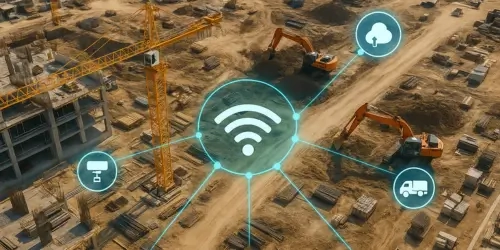
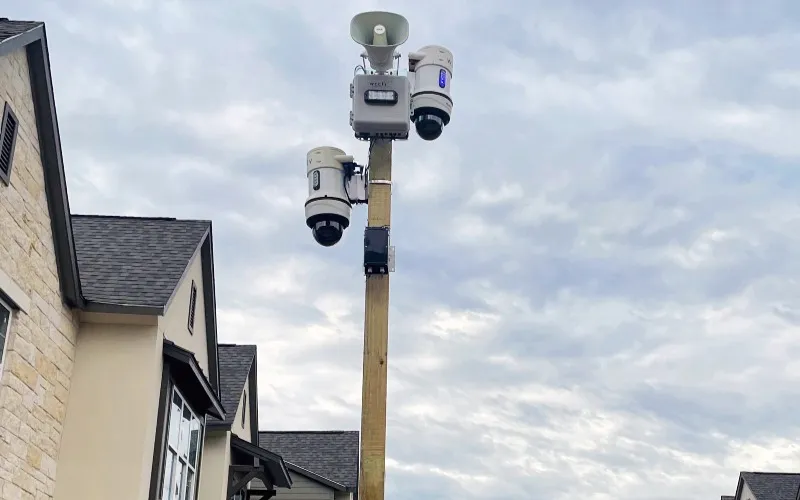
Modern noise monitoring systems incorporate IoT (Internet of Things) sensors that collect and transmit real-time data about noise levels around-the-clock.
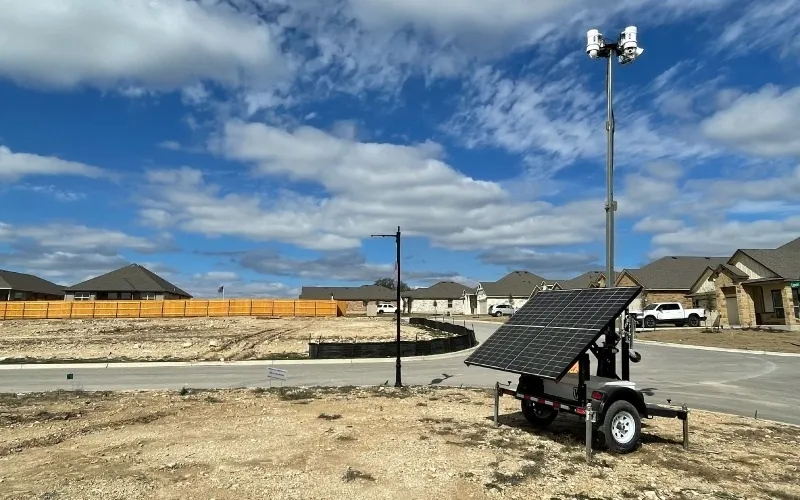
Our advanced noise monitoring systems require minimal setup and can be deployed quickly across temporary or more permanent sites (including on mobile Solar Surveillance Trailers). Sensors measure across ranges of:
-
30-130 Decibels
-
20Hz to 12.5kHz Frequency
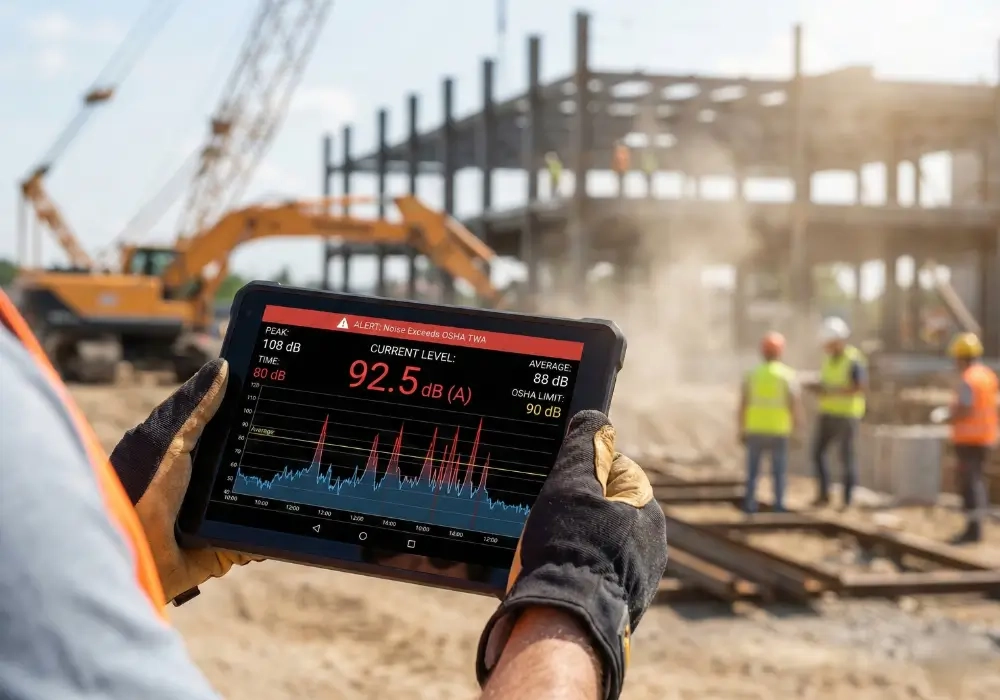
These precise devices track decibel levels on your jobsites against set limits, triggering near-instant alerts (under 3 seconds) when thresholds are exceeded. Immediate notification allows your team to respond before issues escalate into safety risks or complaints.
Recording every fluctuation in real-time provides a comprehensive view of exposure patterns and problem areas; for example, spikes from blasting or heavy machinery operations outside permitted hours.
Noise data is integrated with Stellifii, our cloud-based management platform, which allows your safety managers to securely access the live dashboard remotely. Readings are time-stamped and stored so that you can quickly retrieve the necessary documentation for compliance audits, reviews/investigations, environmental reporting, or trend analysis.
Organizations that track and manage noise levels achieve:
-
Protection of workers' hearing and lower long-term occupational risks
-
Accurate digital logs that support audits and reporting
-
Compliance with local noise regulations and OSHA and EPA standards
-
Better community relations by managing and minimizing disturbances
Our integrated Environmental Monitoring Solutions can combine noise sensors with:
-
Air Quality Sensors that monitor for excessive dust and air pollutants
-
Weather Monitoring for tracking weather conditions
Adding broader environmental oversight keeps your jobsite safe and demonstrates social responsibility by preventing noise, dust, and other airborne hazards from polluting the neighborhood.
Read more: Air Quality Data Management: Turning Sensor Data Into Actionable Insights for Jobsites
How Noise Monitoring Defends Leaders from Legal and Compliance Risks
Here are 4 ways noise monitoring sensors mitigate OSHA and EPA complaints and legal exposures.
1. Eliminating human error
IoT devices with intelligent software are part of a growing digital transformation toward more reliable data tracking and reporting. Manual noise checks can't catch sound breaches as they happen, and spot inspections, by their very nature, often miss potentially damaging noise exposures.
Another issue is that paper logs often don't stand up as credible evidence because they are incomplete or inaccurate. Only continuous automated monitoring provides complete reliability.
2. Indefensible evidence to support your case
Real-time noise tracking gives you a comprehensive overview of all sound events. With a camera connected, Stellifii can instantly link a noise hazard with an alert and high-definition video clip, showing the location and source. This provides:
-
Conclusive evidence: A time-stamped image or video clip record, ensuring reporting accuracy.
-
Rapid response: Alerts are sent instantly to the responsible team, allowing them to react swiftly.
-
Reduced liability: If an OSHA official or local authority questions the noise incident, your compliance leader can produce a report detailing the event, the automated alert, and your rapid response.
3. Organized record keeping
Stellifii consolidates and organizes all compliance records into a centralized control point. Your team no longer has to search scattered files for crucial missing information to satisfy inspectors.
You can export audit-ready reports up to 5X quicker than legacy systems, meeting OSHA and environmental agency deadlines without unnecessary stress or panic. Records are stored for as long as they are needed for compliance (often for 5+ years after the incident).
4. Strong data security
While construction companies are aware of physical jobsite security, many are less focused on protecting their sensitive data from cybercriminals. But in a digital world where the average cost of data breaches is $4.4 million, strong cybersecurity controls are imperative.
Stellifii is built with security at its core. By safeguarding project information with end-to-end AES-256 encryption (Advanced Encryption Standard with 256-bit keys), it protects you from data breaches and the penalties and reputational damage that result.
Read more: How Digital Tools Ease Audit Prep and Cut Reporting Time in Half for Your Jobsite
Optimizing Compliance and ROIs with an Integrated System
A 2021 McKinsey report projects IoT could unlock up to $12.6 trillion in value by 2030. In construction, the key to capturing this lies in smart, connected systems with a single interface for managing all compliance and security risks.
Stellifii supports such Smart Detection Solutions, connecting with surveillance systems, fire detection, PPE monitoring, and more.
To extract the best value from large volumes of diverse data, the platform integrates and organizes:
-
Smoke and Fire Detection to identify and warn of fire dangers.
-
Intrusion Detection to spot and block unauthorized access attempts.
-
PPE Monitoring to support proper protective equipment usage.
-
License Plate Recognition (LPR) to control access and road traffic noise from jobsite vehicles.
All risks relating to the above are identified in real-time. Alerts appear instantly on a unified dashboard, so managers can respond to urgent issues right away.
A single central platform means less vendor sprawl and hopping between apps, which improves productivity and ROIs while ensuring that nothing falls through the cracks.
Our advanced Security Solutions fortify your perimeter against breaches and theft 24/7. Temporary or semi-permanent surveillance is deployed on Pole Cameras or specialized mobile trailers and backed by Live Video Monitoring. With live monitoring, trained operators in our control center receive alerts of security threats, check the feed, and issue immediate voice challenges to warn off intruders.
Read more:
Get the Smart WCCTV Defense against OSHA and EPA Complaints
Real-time noise measurement and reporting give leaders the fast, actionable insights they need to protect teams and meet OSHA and EPA-delegated requirements with confidence.
Continuous decibel tracking, automated alerts, and time-stamped records help you identify breaches early and demonstrate clear corrective actions.
A unified platform combining noise, environmental, and other risk monitoring delivers even stronger compliance capabilities, improving safety and security surveillance across all your workplaces.
To keep jobsites safe and compliant, contact us to learn about best-in-class monitoring solutions, including the latest smart noise sensors.