
Extreme weather is one of the leading causes of cost overruns, safety incidents, and unplanned downtime on Texas jobsites. Site superintendents can't control rising Texas temperatures or increasing environmental volatility, but they can prepare for potentially disruptive and unsafe conditions.
Automated weather tracking works 24/7 to help leaders stay a step ahead of unpredictable climate risks. Live, site-specific insights into environmental conditions make these systems a critical part of modern construction risk management.
This article explains how Texas weather impacts jobsite safety and deadlines and explores real-time environmental monitoring solutions that help leaders prepare for weather threats and defend their sites and safety decisions.
The Challenges of Texas Weather for Construction Projects
Superintendents on Texas construction sites must deal with a range of weather-related challenges, from extreme heat waves and humidity in the south to bitter, icy winter weather in the north.
Let's take a look at 3 broad environmental factors impacting jobsite safety and productivity in the Lone Star State.
1. Extreme heat exposure
Texas temperatures regularly soar over 100°F, creating uncomfortable conditions on physically demanding jobsites. High temperatures and humidity pose real dangers for crews, increasing the risk of heat-related illnesses, including dehydration and heat stroke. As the workday warms up, productivity falls, and crews need more frequent breaks and shorter work cycles to avoid heat stress.
From a compliance standpoint, these safety breaks are mandatory. The Occupational Safety and Health Administration's (OSHA) NEP for Heat-Related Hazards requires employers to provide regular rest, shade, and rehydration breaks in hazardous heat (generally over 85-90 °F). This entails a balancing act between keeping tasks moving and protecting your crew's well-being.
Scientific research shows that Texas is warming faster than historical averages, making climate monitoring and resilience more critical than ever.
2. Sudden storms and severe weather events
Texas is known for fast-moving, high-impact storms that bring lightning, high winds, heavy rain, and flash flooding with little warning. These events create immediate safety risks, often forcing crews to evacuate the site at short notice.
Storms damage construction equipment, with rain often flooding work areas and creating hazardous ground conditions that slow productivity once operations resume. These tropical cyclone events, which are becoming more regular (especially in South Texas), can shut down projects for days. If completed structures are damaged and rework is required, the schedule is severely impacted.
3. Rapid, unpredictable weather changes
One of the biggest challenges is how quickly conditions can change. Central Texas, in particular, is increasingly experiencing the Weather Whiplash effect. The "whiplash" refers to a sudden shift between extremes, where a long drought is followed by heavy rainfall and flooding.
This unpredictability makes daily planning more complex. Workflows may need to be rescheduled on short notice, and advanced safety protocols may need to be introduced between shifts. In an already high-pressure environment, leaders must interpret dynamic, variable conditions and make the correct calls to keep people safe and schedules on course.
Read more: Texas Weather Risks Changing Jobsite Safety | WCCTV
How Extreme Texas Weather Impacts Jobsite Safety and Project Timelines
Here are the 3 primary ways weather affects Texas construction site safety and jeopardizes normal operations.
1. Safety risks and liability exposure
Extreme weather significantly increases the likelihood of on-site incidents. Heat waves and cold snaps can be equally dangerous to employees' well-being, while winds, ice hazards, and rain can all put workers in peril, often with little warning.
-
Sudden high winds endanger crane work and teams working at heights.
-
Texas heat causes dehydration, exhaustion, and heat stroke. When a worker's body temperature is unnaturally high, it affects their concentration and judgment, making accidents and serious injuries more likely. Workers are also known to remove protective gear like hard hats when it's uncomfortably hot.
-
Wet weather turns jobsites muddy and hazardous underfoot. Slippery surfaces make it unsafe for construction workers operating machinery and heavy equipment. People climbing ladders, working at heights, or transporting materials are also at risk.
-
Cold weather can bring dangerous sleet and ice, increasing the risk of slips and falls.
Since organizations are responsible for maintaining safe environments for their employees, workplace injuries can expose Texas employers to legal liabilities and increase workers' compensation claims. Failure to safely manage climate risks may also lead to compliance breaches, investigations, and higher insurance premiums.
2. Lost productivity and idle crews
Unfavorable weather drags down performance in numerous ways. Consider these common examples:
-
When weather conditions force a pause or slowdown, short-term productivity immediately suffers. Crews left standing idle affect overall labor efficiency metrics, and this loss may never be recovered.
-
In extreme heat, it's natural that activity slows and concentration flags. In the circumstances, working hours must often be cut back to avoid heat-related injuries.
-
In freezing temperatures, certain equipment and hydraulic systems take longer to warm up, and their efficient performance is often compromised.
-
Unexpected downtime inevitably derails sequenced workflows. When one trade falls behind, follow-up tasks can't proceed, creating a cascade of delays and rescheduling challenges.
What begins as a weather hiccup easily escalates into compounding inefficiencies that hit both your timeline and budget.
3. Schedule delays and contractual pressure
Weather-related disruptions often push projects off schedule, threatening key milestones. Bottlenecks build as subsequent activities hang in limbo, and tighter timeframes increase the pressure on crews and resources. There is always a danger that when teams rush to catch up, safety rules get bypassed.
Missed deadlines may come with contractual penalties and create tensions with clients and stakeholders who expect performance in line with the agreed terms. If you can't convincingly justify a weather-related stoppage, it can lead to disputes, even legal processes, over responsibility and cost.
This underscores the importance of managing work pauses carefully and, just as importantly, having defensible records to show stakeholders when and how weather impacted progress.
Read more: The Future of Safety in US Construction: Proactive Protection
How Real-Time Monitoring Enhances Safety and Protects Schedules
In recent years, the construction industry has invested heavily in real-time IoT-enabled monitoring to manage environmental and weather risks more effectively.
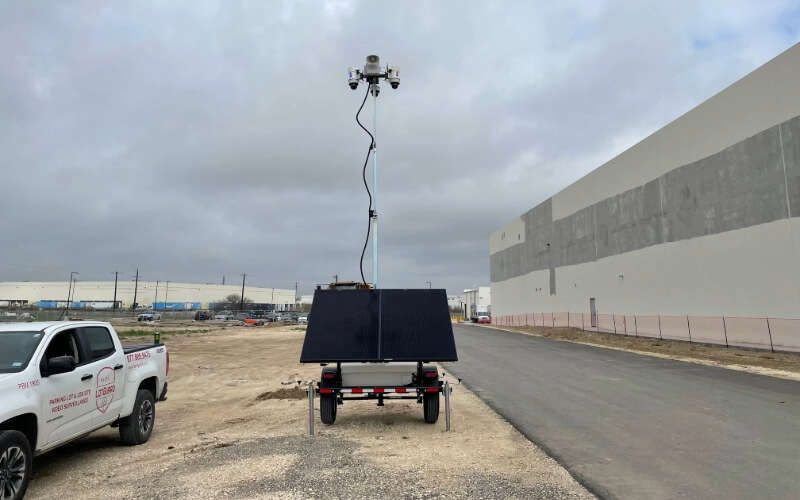
Many Texas contractors today use advanced tracking stations that deliver up-to-the-minute weather data, keeping site managers fully informed of jobsite conditions that could threaten worker health, temporary structures, or contractual deadlines.
Let's explore this powerful technology and its capabilities.
Weather Monitoring Stations
To protect crews and projects, our advanced Weather Monitoring Systems measure and provide continuous, accurate jobsite data on:
-
Wind speed and direction (0–110mph)
-
Temperature (-4° F to 122° F)
-
Humidity (10-99%)
-
Rainfall (hourly)
-
Dew point
-
Lightning activity
From early wind warnings to alerts about a concerning temperature rise, the system gives you real-time, site-specific data more quickly than local weather forecasts.
Actionable information helps you manage weather-related risks by planning for all events, such as:
-
Blustering winds: Rescheduling crane operations and work at heights if wind speed and direction are unsafe.
-
Heat exposure: Scheduling water breaks, rest periods/shade breaks, and temporary work stoppages to protect the crew when temperatures reach set thresholds, demonstrating active heat monitoring in line with federal OSHA standards.
-
Lightning: Ensuring crews aren't exposed to lightning risks and creating safe zones around tall objects and equipment such as scaffolding and cranes.
-
Work stoppages and rescheduling: Temporarily halting work to avoid extreme weather, rescheduling timelines, and adjusting shifts to minimize project delays.
Weather tracking sensors connected to cameras show you clearly how weather factors are impacting activities on the ground. For instance, you can see live how a sudden downpour is complicating a concrete pour.
This system works together with other safety and environmental monitoring tools, including smart detection of fires and PPE, and live noise and air pollutant measurements.
While not required by Texas law, many contractors in the state implement comprehensive, 24/7 environmental and safety monitoring strategies to safeguard their construction sites around the clock.
Here's a blueprint showing the key tools and value-adds of a connected strategy. All tools are hosted through our smart management platform (read more in the next section).
|
Monitoring Tool |
What It Does |
Benefits to Managers |
|
Mobile Solar Surveillance Trailers and flexible Temporary Cameras |
Provides solar-powered, wide-area monitoring of jobsites with infrared (IR) night vision. |
Gives managers visibility into unsafe conditions and activities that threaten operations. Supports jobsite security operations. |
|
Weather Monitoring Stations |
Real-time alerts on heat, rain, cold, and wind hazards; prevents accidents, shutdowns, and unsafe operations. |
Enables proactive rescheduling of tasks, reduces downtime by shifting crews indoors or to safer activities, and helps to avoid worker heat exhaustion. Minimizes delays and project cost overruns. |
|
Detects when workers remove or fail to use Personal Protective Equipment (hard hats, goggles, hi-vis vests, face protection, boots, etc.), reducing risks and ensuring compliance. |
Prevents stoppages due to worker injuries and safety violations. Supports inspections and reduces insurance, workers' comp claims, and medical expenses. |
|
|
Uses AI analytics to identify sparks, smoke, or rising heat early. Enables rapid response to prevent jobsite fires. |
Prevents fire-related shutdowns and ensures faster return to operations after incidents. |
|
|
Air Quality Monitoring Systems (with connected cameras) |
Tracks dust, PM2.5, PM10, gases (CO, CO₂, VOCs), and pollutants, protecting employees from respiratory issues and guiding mask/ventilator use. |
Allows teams to adjust work sequencing (e.g., low ventilation areas vs. outdoor spaces). Reduces stoppages due to regulatory breaches and maintains productivity when air quality is sub-optimal. |
|
Noise Monitoring Sensors (with connected cameras) |
Continuously measures and reports site sound levels and violations, safeguarding the site and its surroundings. |
Teams adjust operations or wear hearing protection when alerts trigger to stay safe. Reinforces consistent compliance to limit incidents. |
Read more:
Centralized data capture and management with WCCTV
Monitoring multiple, dynamic risk areas across large jobsites requires a user-friendly central control platform. Without it, you're trying to build a jigsaw puzzle in a wind tunnel. Our secure cloud platform consolidates all the above monitoring feeds into a single centralized hub, enabling ultimate oversight and live control.
Here's what we offer:
-
Unified dashboards: Surveillance footage, environmental data, detection alerts, and incident reports are unified into one intuitive interface.
-
Instant reporting: Automated reporting allows you to provide executives and other stakeholders with status updates (regarding a fire or noise incident, for example) with a few clicks.
-
Remote, mobile-friendly access: Cloud connectivity delivers seamless viewing from your mobile or desktop device wherever you are.
-
Proactive oversight: Leaders can monitor sites remotely, catch issues early, and act before minor issues become expensive problems.
-
Security and compliance: Built on cloud infrastructure, the platform is end-to-end AES256 encrypted, NDAA-compliant, and 5G-ready.
-
Adaptability: Purpose-built to streamline monitoring for efficiency gains and scale seamlessly as your business grows.
By quickly unifying scattered information into actionable intelligence, the platform equips you to make decisive, well-informed decisions and contribute meaningfully to project and professional success.
Read more: Stellifii: Our New Smart Platform Transforming Surveillance, Safety, and Compliance
Other Safety and Security Considerations for Texas Construction Managers
Smart technology strengthens workplace safety and enables smoother workflows, but these systems must be supported by actionable and documented SOPs and emergency plans:
Emergency Action Plan (EAP): OSHA regulations (Standard 1910.38) require every employer to maintain a written emergency plan. It's recommended that the document account for high-impact environmental hazards: tornadoes, hurricanes, flooding, wildfires, ice storms, and heavy snowfalls. Proper training for emergencies should include threat identification and evacuation drills.
Escalation procedures and flexible scheduling: Clear guidelines should define when work must slow down, pause, or shift to safer conditions due to unfavorable weather.
Heat illness prevention protocols: Employers must establish site-specific plans to prevent heat stress and related illnesses. These should be reviewed seasonally to reflect changing conditions and stay relevant.
Security Systems: To expand project safety beyond environmental and PPE issues, our centralized platform also integrates jobsite security and access control solutions:
-
Intrusion Detection systems use AI-powered tools to detect criminal and suspicious behavior without relying on human involvement. The system then immediately alerts your team and/or remote monitoring partner, prompting swift action to prevent theft, vandalism, trespassing, protecting valuable company assets.
-
License Plate Recognition (LPR) employs AI imaging to identify and record all vehicles entering your perimeter zone, hardening perimeter and access controls.
-
Linked to our security and access systems, a Live Video Monitoring service detects unauthorized breaches and movement. Trained operators in the control room intervene immediately via audio voice down challenges, warning lights, and pre-defined escalation measures.
Get Smarter Environmental Tracking For Your Next Project
While weather can't be controlled, astute planning helps teams respond more effectively to the forces of nature. By integrating intelligent environmental monitoring with proactive reporting, construction leaders can protect their crews while meeting regulatory standards and contractual deadlines.
We help Texas firms leverage smart data to strengthen on-the-ground safety and performance, providing the necessary support to manage environmental volatility on high-stakes projects.
Reach out today to discuss how we can help you mitigate risks and secure your future builds.
