Managing risks in construction is a significant challenge that project owners face every single day. Risk factors range from serious crew accidents and equipment failures to volatile gas leaks and security breaches, any of which can throw your job significantly off track.
Traditional risk assessment methods are mostly reactive, failing to proactively limit project delays and cost overruns that place firms under financial pressure.
Smart detection systems change the game by collecting project data and turning it into quick, actionable insights. Real-time visibility hugely improves construction safety and overall project outcomes because when you can see risks as they develop, you can stop problems before they spiral.
To help you manage hazards on your construction projects proactively, our guide explains how smart monitoring and risk management tools transform workplace safety. We highlight how they lower liability across every corner of your jobsite while improving overall ROI.
What is Smart Detection Data?
Smart detection data on construction projects is intelligence generated by an automated solution that helps project managers identify risks before they become costly problems. Put simply, it's an early warning system that saves the construction industry billions every year.
What does smart detection and reporting look like? Let's walk through the main components:
-
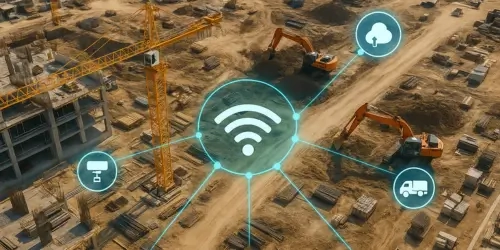
An integrated network of IoT (Internet of Things) sensors and cameras captures activities and environmental readings across your construction projects.
-
AI-powered analytics continuously analyze these feeds in real-time, flagging suspicious activity or violations (like noise or dust limit violations) with near pinpoint accuracy.
-
Smart data is the detailed, executive-level information and automated reporting that flows from this surveillance, analysis, and risk identification system.
Smart data is collected and presented without manual involvement, simplifying and improving construction project management. The foreman doesn't need to complete spreadsheets, and the project manager isn't dragged into a lengthy scaffolding accident inquiry. The relevant information and video evidence are now available at the push of a button.
This real-time data provides construction companies with:
-
Precise actionable alerts: A specific, clear notification (e.g., "Hard Hat Violation at Zone B").
-
Continuous visibility: It operates in real-time, allowing you to move swiftly to mitigate risks and protect project teams.
-
Measurability and evidence: An audit-ready log of incidents and responses provides an invaluable record of compliance on your construction projects. When auditors ask for historical data from two years ago, you can pull up timestamped evidence instantly.
Our Stellifii platform enhances smart detection and risk assessment. It's an integrated cloud-based monitoring and reporting solution combining surveillance, audit trails, and automated reports in a centralized hub.
Clear dashboards and video evidence enable smarter risk management across all your construction projects from a single platform. AI-driven analytics deliver high-value, actionable insights to help you minimize potential risks and make better, faster safety and security decisions throughout the project lifecycle.
5 Smart Detection Data Tools That Are Transforming Risk Management on Construction Projects
WCCTV's modern detection systems combine monitoring tools that automate data collection. They deliver real-time visibility and intelligence that make risk assessment and incident reporting simpler for project managers and their teams.
1. Smart surveillance
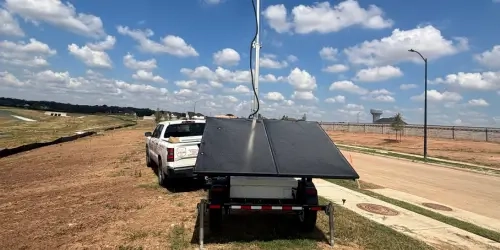
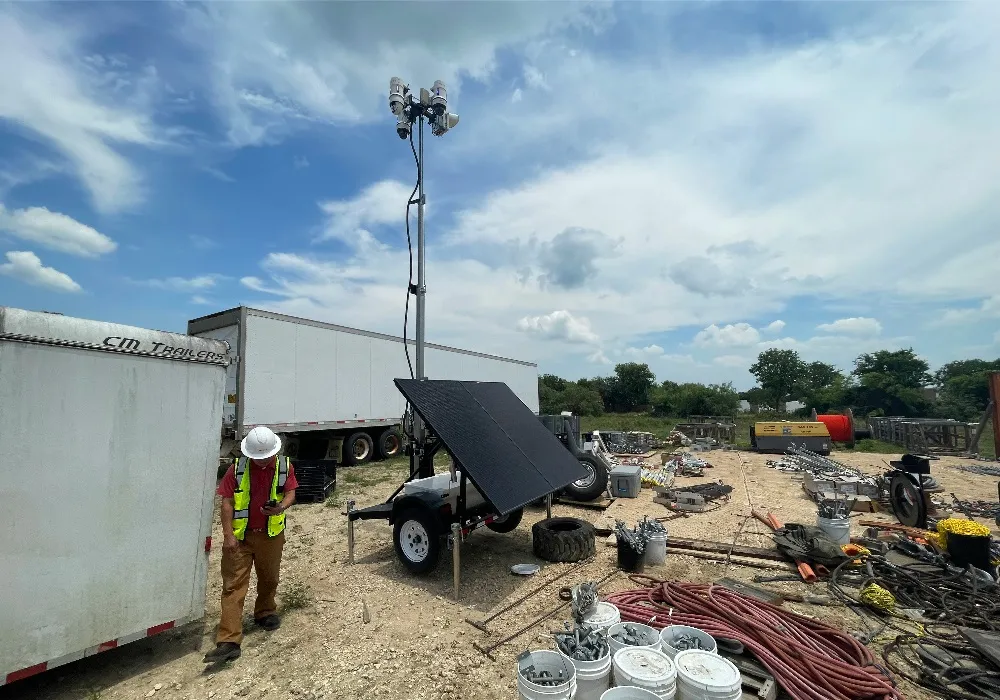
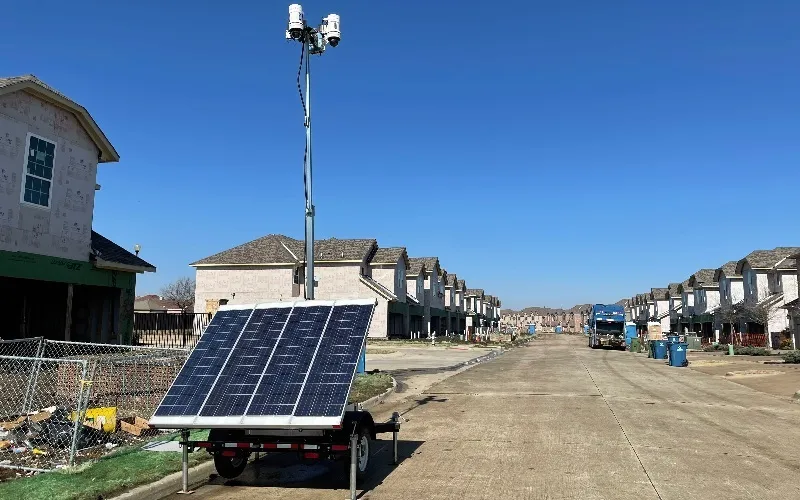
Solar-powered Mobile Surveillance Trailers, standing up to 20-feet tall, and Pole Cameras provide a near-360° view of your construction project. These advanced setups and temporary security cameras provide live high-definition footage of everything on the jobsite, from a theft attempt to unauthorized workers in an excavation zone.
When something irregular is spotted on one of the PTZ (Pan-Tilt-Zoom) cameras, you receive an instant notification. This allows the project manager or responsible team to respond to the threat and resolve it before it impacts project outcomes.
Every incident is logged with precise timestamps and audit-ready reports, giving you an executive-ready record of all project safety and compliance information.
2. IoT-based environmental data
Environmental data management has also become smarter by utilizing IoT monitoring sensors that collect and transmit real-time data about crucial environmental events.
-
Noise monitoring sensors continuously track noise levels on your jobsite across a wide decibel (30-130 dB) and frequency (20Hz to 12.5kHz) range. This monitoring includes alerts if limits are breached, helping you protect both your crew and reputation in the local community. Easy-to-access data and automated reports are available if a municipal inspector queries a noise incident.
-
Air quality sensors monitor fine particulate matter (PM1, PM2, PM10), CO₂, VOCs, and other air-borne pollutants. The system triggers warnings if jobsite conditions approach EPA thresholds under the National Ambient Air Quality Standards (NAAQS) of the Clean Air Act (CAA).
-
Weather monitoring stations provide live insights into temperature/humidity, winds, and rainfall likely to affect your construction projects. This vital data helps you to mitigate risks by planning based on weather events. For example, you can implement safety measures to prepare for rising temperatures, protecting your crew while limiting project delays.
Information from every sensor across every jobsite flows into one unified dashboard, giving construction managers a comprehensive, high-level overview.
3. Fire and smoke detection alerts
Fires are one of the most serious dangers in the construction industry. According to the National Fire Protection Association (NFPA) statistics, US fire departments respond to over 4,400 jobsite fires each year.
Smoke and fire detection systems are trained to identify smoke/fire accurately and quickly on your construction projects.
The automated system uses cameras and AI-powered video analytics to detect early signs of smoke or flames. It reacts faster than traditional detectors that often only activate after a large smoke or high heat build-up, by which time flames may have already spread dangerously.
After detection, the system sends an alert to your designated contact or the responsible crew member. The supporting data includes a timestamped snapshot, access to the video clip, and automatic incident logging. All of this significantly improves fire safety while also strengthening compliance.
4. Advanced safety and security intel
Smart detection systems reduce the need for safety and security officers to patrol jobsites on foot. Advanced safety solutions identify potential risks and trigger the necessary actions and responses.
Cameras and AI-video analytics keep you on top of the following situations:
-
Intrusion Detection: Notifies your teams immediately about unauthorized access.
-
PPE Monitoring: Flags crew members not wearing safety equipment like hard hats or high-visibility vests.
-
License Plate Recognition (LPR): LPR automated tracking of vehicles entering/exiting facilities to improve access controls and safety.
-
Video footage can be edited into a Time Lapse Video, which condenses days/weeks worth of construction into a dynamic clip. This is a neat way to show your clients the project progress from start to finish.
5. Live video monitoring
Live video monitoring helps stop crime in its tracks. Security surveillance systems are connected to control centers where trained operators monitor events on the ground. They can take immediate actions in response to incidents or perimeter breaches, including:
- Live audio voice-down challenges
- Activating strobe lights
- Dispatching mobile security
- Summoning law enforcement
The system timestamps every incident, so you can easily review and retrieve data for audits, insurance claims, security reviews, or police investigations.
How Smart Technology Improves Project Management
Modern surveillance and detection infrastructure is supported by AI-video analytics, smart data solutions, and cloud technology. Let's take a closer look at how these technologies and systems elevate risk and project management.
1. AI-video analytics
Successful construction companies have been using AI-video analytics to enhance jobsite risk identification for several years, and it's fair to say that this technology is reshaping construction risk management strategies.
Video analytics employs artificial intelligence (AI) to monitor live video streams from your camera and sensor networks. Trained on thousands of hours of footage and instruction, these AI tools understand how to recognize the risks that cause costly delays, such as:
-
Fires
-
Break-ins and materials theft
-
Unsafe equipment use
-
PPE non-compliance
-
Unauthorized activities
-
Environmental violations
The automated system flags these potential risks in real-time while cleverly filtering out false alarms (e.g., exhaust smoke).
This smart analysis and audit automation gives project managers complete job oversight supported by evidence of risk mitigation strategies to reassure project stakeholders and regulators.
Many construction professionals now consider AI-video analytics indispensable to proactive risk management, compliance, and overall project success.
2. Centralized data management
A unified platform like Stellifii combines all surveillance footage, AI-analytic alerts, real-time data, and compliance reports in a user-friendly centralized dashboard. Safety and compliance teams can access this information from their offices, vehicles, or homes. The goal is to ensure continuous visibility into construction project risks.
Centralized data management eliminates fragmented documentation and lost files. More than that, it streamlines inspections and cuts audit prep time. Project managers and owners can generate automated, audit-ready reports 5X faster than on legacy systems.
This means you're in good shape to reassure local inspectors, EPA agencies, or OSHA officials, checking compliance and project team safety. Construction firms with solid compliance and risk mitigation strategies largely avoid regulatory fines and project delays due to rule violations.
3. Secure, flexible cloud storage and access
Stellifii's cloud storage lets you securely access any current and historical project data you need from anywhere. If you're at a remote site and an insurer urgently requests information about an accident that happened 6 months ago, you can pull and send it in within a minute.
As your jobsite grows or your technology evolves, and you need more data storage, you can increase capacity seamlessly. Cloud resources are highly elastic and can scale up or down quickly and easily.
What about protecting sensitive information? Data protection laws like the California Privacy Rights Act (CPRA) require secure handling of surveillance data. Failure to do so can result in fines, delays, or legal consequences.
Stellifii is end-to-end AES-256 encrypted (Advanced Encryption Standard with 256-bit keys) to protect sensitive worker and client data in compliance with CPRA. It is also NDAA‑compliant to safeguard federal contractors from restricted surveillance equipment (including Chinese-made cameras).
As an indication of how businesses globally are modernizing their technology by embracing the cloud, it's estimated that 30% of total IT spending now goes toward cloud services.
The Benefits of Smart Detection and Data
There are several advantages to smart data generation. Here is an overview of the key benefits.
| Project Outcomes | How Smart Systems Identify Risks | Business Benefits |
| Improved worker safety and lower incident costs | Real-time intervention prevents incidents (injuries, theft, fire) from escalating or occurring, protecting people and assets. | Fewer injuries, lower insurance premiums, reduced asset damage. |
| Improved productivity and efficiency | Automation handles continuous monitoring, freeing up management and crews for more productive operations. | Redirects security and safety personnel from foot patrols to higher-value tasks; eliminates manual data collection and logging. |
| Strengthened compliance and simplified audits | Automated reporting generates solid evidence of compliance that is easily accessible and hard to dispute. | Complete timestamped audit trails; faster responses to regulators; solid proof of due diligence. |
| Guaranteed jobsite continuity | Proactive environmental monitoring alerts (e.g., air quality, noise) and rapid risk responses prevent work disruptions. | Fewer regulatory-related stoppages; faster threat resolution; more predictable project timelines. |
The Dollars and Sense of Smart Detection and Reporting
Stellifii's smart risk identification and reporting lowers construction risk and liability. For example, a $25,000 investment might prevent $50,000 in cost overruns and delays due to safety incidents on 2 construction jobsites. The system delivers efficiencies and improved ROI in several areas:
-
Consolidated efficiency: Stellifii's central platform eliminates the cost and inefficiencies of vendor sprawl and switching between several disconnected tools. With one unified automated system, you have the information you need, including historical data, from every jobsite.
-
Fewer work disruptions: Continuous data collection and real-time risk assessment enable rapid responses to manage construction risks and guarantee successful project delivery.
-
Compliance without fines: Automated audit trails provide proof for regulators, demonstrating compliance and avoiding the financial risks of penalties and enforced stoppages.
Summary and Next Steps
Construction firms committed to proactively mitigating risks to keep their teams, jobsites, and assets safe at all times are increasingly viewing smart detection and data analysis as a valuable investment. It's an essential insurance that protects against costly future incidents.
To get smarter about construction risk management and improve every project's success, contact WCCTV today.