Wind, rain, snow, and extreme temperatures present different operational and safety challenges on construction projects. High winds make crane operations dangerous, heavy downpours can cause flooding in trenches, sleet makes surfaces slippery, and heat can drain productivity.
Managing these risks effectively now means getting ahead of them. Real-time monitoring, automated reporting, and proactive planning help construction managers to anticipate weather risks and protect their crews and workflows.
Our article explores how live weather data and environmental monitoring provide earlier warnings to help prevent weather-related delays. These tools support safer project decision-making and keep detailed documentation, enabling managers to explain work stoppages to owners and key stakeholders confidently.
5 Extreme Weather Events That Disrupt Project Schedules
Weather-related hazards that force construction teams to down tools range from icy sleet and extreme heat to tropical thunderstorms. For context, 2024 was the warmest year on record in the US and featured 23 named storms in the Atlantic basin. Meanwhile, in 2021, Winter Storm Uri blanketed much of sunny Texas in snow and ice.
We spotlight 5 severe weather risks that US construction leaders must build contingency plans for, or face frustrating disruptions to their schedules.
Heatwaves
Across much of America, particularly in southern and western states, summer temperatures soar well above 90°F for days at a time.
Extreme heat and intense humidity increase the risk of heat-related illnesses, such as dehydration, heat exhaustion, and heat stroke. In sweltering conditions, productivity slows, and working hours must often be cut back for the crew's safety.
When a worker's body temperature is unnaturally high, it impairs concentration and judgment, increasing accident and incident rates. Serious accidents and injuries (e.g., employees struck by heavy machinery) bring operations to an immediate halt.
Federal safety regulations require contractors to protect workers from excessive heat exposure. Under OSHA’s National Emphasis Program for Heat, employers are expected to monitor conditions and provide water, rest, and shade breaks.
Since 50% to 70% of heat-related fatalities occur during the first few days of working in hot environments, employers must also acclimatize crews to high temperatures.
These heat-stress protocols are essential for protecting worker safety, but they can slow operations.
How to reduce heatwave disruptions:
-
Shift work schedules to early mornings or evenings to avoid peak temperatures
-
Provide water, rest, and shade stations to prevent heat-related illness
-
Acclimatize new workers gradually to high temperatures
-
Use real-time environmental monitoring forecasting tools to track heat conditions across the site
Storms and lightning
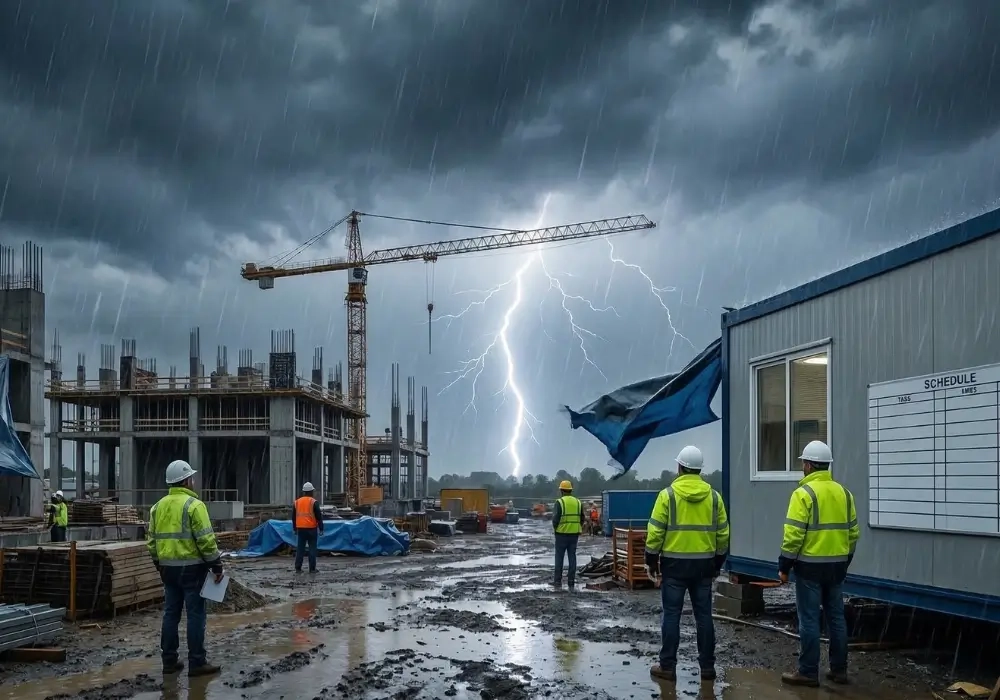
Thunderstorms, hurricanes, tornadoes, and tropical storms are hugely disruptive to the building industry. These extreme weather events bring hazardous winds, heavy rainfall, lightning, and flooding that can shut down construction sites for days or longer.
Lightning triggers an immediate halt in operations, especially for crews working on scaffolding and structural steel, while hurricanes and major tropical storms can delay material deliveries and disrupt supply chains.
Severe storms cause damage to partially completed structures or flood the jobsite, forcing contractors to pause work while safety inspections and clean-up take place. When rework is required to repair the damage, work hours must be added to the schedule.
How to limit storm disruptions:
-
Develop storm preparedness plans before major storm seasons, including:
-
Evacuation procedures
-
Securing loose materials and equipment with anchors and covers
-
Installing temporary drainage for controlled run-off
-
Reinforcing scaffolding and temporary structures
-
Monitor weather patterns in real time to anticipate shutdowns due to severe weather events.
Heavy rainfall
Heavy rains derail schedules at every stage, from site preparation to finishing work.
Many activities require dry, stable ground to ensure structural integrity. Work such as foundation laying, grading, excavation, and concrete pours can't proceed if conditions are soggy.
Wet, inclement weather turns jobsites muddy, hazardous, and unstable underfoot. Slippery surfaces make it unsafe for construction workers operating machinery, climbing ladders, working at heights, or transporting materials.
Downpours often flood excavations while moisture compromises building materials and concrete curing.
How to reduce unexpected delays from rain:
-
Install temporary drainage systems to prevent standing water and flooding
-
Use pumps for excavations such as basements and garages
-
Store materials indoors or protect them with strong tarps and plastic sheeting
-
Shift work schedules to prioritize indoor tasks during rainy spells
High winds
High winds are a major cause of weather delays on construction sites, particularly on high-rise projects. Strong gusts endanger crews working at heights, especially if proper safety equipment and guardrails aren't in place. Scaffolding, lifts, and temporary structures all become unsafe in gusty conditions.
Winds make it impossible to lift materials and do installation work safely, which is why safety standards require that crane work be suspended when wind speeds exceed certain thresholds. Wind also increases the risk of tip-overs and dropped loads, and can turn unsecured materials into dangerous flying objects.
How to reduce wind-related disruptions:
-
Monitor wind speeds continuously before and during lifting operations
-
Secure equipment, loose materials, and tools to prevent flying objects and debris
-
Install bracing for tilt-up panels and temporary structures
-
Halt crane operations when wind limits are exceeded
Extreme cold snaps
Plummeting temperatures hit thousands of construction projects annually, with northern and central States most severely affected.
A cold, icy workplace slows productivity and increases the risk of slips and falls. Snow and frozen ground make excavation difficult or impossible without specialized equipment.
Freezing temperatures affect material quality in several ways. For example, concrete curing slows significantly in cold weather, and water used in construction processes may freeze. These factors force contractors to delay certain workflows until temperatures rise.
How to reduce cold-weather jobsite disruptions:
-
Use insulated coverings and heated enclosures to protect materials
-
Clear snow and ice promptly to reduce slip risks
-
Store equipment and materials indoors or under protective covers
-
Adjust project schedules to prioritize indoor work during cold periods
-
Use ground-thawing equipment when excavation work can't be delayed
Other Common Causes of Project Disruptions (And How Adverse Weather Aggravates Problems)
Even well-planned projects with strong teams and leaders fall behind schedule due to a range of factors. Let's look at common work disruptions and how poor weather conditions often worsen the situation.
Material supply disruptions
Natural disasters, such as named storms and flooding, interrupt transportation routes and cause shipping bottlenecks. When materials like steel, lumber, concrete, glass panels, or specialized equipment don’t arrive on time, work is delayed, and teams stand idle.
This has a ripple effect on the project timeline, as every subsequent task on the build is held up.
Subcontractor coordination
Tight coordination of multiple subcontractors working in sequence is vital to keep timelines running smoothly. Sudden bad weather can force construction crews, including subcontractors, to suspend their work for safety reasons, jeopardizing the schedule.
When one trade (e.g., electrical) is delayed, it pushes back the arrival of other subcontractors (e.g., drywall installers) who can't begin until the previous phase is completed.
Inspection and compliance delays
Work inspections by building or regulatory officials are a critical milestone in construction projects. Severe weather conditions can delay scheduled inspections if roads are unsafe or sites are flooded or inaccessible.
When inspections are postponed, contractors can't proceed with the next work phase, causing further delays even after weather conditions improve.
Equipment failures and downtime
Harsh weather conditions create a higher risk of equipment failure. Winds may force cranes and lifts to shut down, while extreme heat, cold temperatures, and heavy rain can damage engines and hydraulic systems.
When essential equipment is unavailable or awaiting repairs, operators can't complete their tasks, and construction productivity stalls, adding further downtime to an already weather-disrupted schedule.
How Real-Time Weather and Environmental Monitoring Protects Schedules
Construction companies that have prioritized digital transformation to gain a competitive edge use IoT-enabled monitoring to manage environmental and weather risks. Advanced tracking stations, providing up-to-the-minute weather data, are central to this proactive strategy.
Weather Monitoring Stations
To safeguard crews and project timelines, our advanced Weather Monitoring Systems measure and provide continuous, precise jobsite data on:
-
Temperature (-4° F to 122° F)
-
Humidity (10-99%)
-
Wind speed and direction (0–110mph)
-
Rainfall (hourly)
-
Chill factor
-
Lightning activity
From early lightning warnings to detailed reporting on temperature shifts and wind changes, the system offers users real-time, site-specific data far quicker than local weather forecasts.
Actionable information helps you mitigate weather-related risks by planning for all weather scenarios, including:
-
Heat exposure: Scheduling water breaks, rest periods/shade breaks, and temporary work stoppages to protect the crew when temperatures reach set thresholds, and demonstrating active heat monitoring in line with OSHA’s expectations.
-
Lightning: Ensuring crews aren't exposed to lightning risks and creating safe zones around tall objects and equipment such as scaffolding and cranes.
-
Winds: Rescheduling crane operations and work at heights if wind speed and direction are unsafe.
-
Work stoppages and rescheduling: Temporarily halting work to avoid extreme weather, rescheduling timelines, and adjusting shifts to minimize project delays.
Weather tracking sensors connected to cameras let you see clearly how weather events are affecting operations. This system works together with other safety and environmental monitoring tools, specifically:
-
Intelligent surveillance to monitor project activities and compliance
-
Jobsite noise monitoring sensors
-
Construction air quality monitoring
-
Smoke and fire detection systems
-
PPE adherence, e.g., checking raingear use in wet conditions and electrical hazard boots for post-storm electrical repairs
Dry, windy conditions also affect how jobsite air pollutants and noise hazards are carried, and can create fire dangers.
Here's a framework of real-time environmental and safety monitoring that helps project managers protect workers, project budgets/ timelines, and construction equipment, and meet regulatory standards.
| Monitoring Tool | What It Does | How It Helps to Manage Schedules |
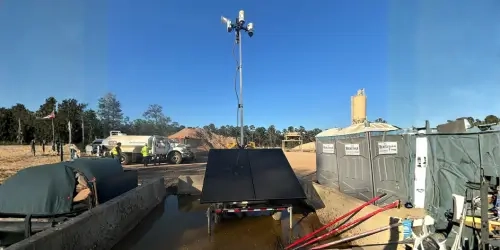
| Solar Surveillance Trailers and flexible Temporary Cameras | Provides solar-powered, wide-area monitoring of jobsites with infrared (IR) night vision. | Gives managers visibility into unsafe conditions and activities that threaten operations. |
| Weather Monitoring Stations | Real-time alerts on heat, rain, lightning, and wind hazards; prevents accidents, shutdowns, and unsafe operations. | Enables proactive rescheduling of tasks, reduces downtime by shifting crews indoors or to safer activities. Minimizes delays and project cost overruns. |
| PPE Detection and Monitoring | Detects when workers remove or misuse PPE (hard hats, goggles, hi-vis vests, face protection, boots, etc.), reducing risks and ensuring compliance. | Prevents stoppages due to worker injuries and safety violations. Supports inspections and reduces insurance, claims, and medical expenses. |
| Smoke and Fire Detection | Uses AI analytics to identify sparks, smoke, or rising temperatures early. Enables rapid response to prevent jobsite fires. | Prevents fire-related shutdowns and ensures faster return to operations after incidents. |
| Air Quality Monitoring Systems (with connected cameras) | Tracks dust, PM2.5, PM10, gases (CO, CO₂, VOCs), and pollutants, protecting workers from respiratory issues and guiding mask/ventilator use. | Allows crews to adjust work sequencing (e.g., indoor vs. outdoor). Reduces stoppages due to regulatory breaches and maintains productivity when air quality is poor. |
| Noise Monitoring Sensors (with connected cameras) | Continuously measures and reports site sound levels and violations, safeguarding the site and its surroundings. | Crews adjust operations or wear hearing protection when alerts trigger to stay safe.Reinforces consistent compliance to limit incidents. |
Read more:
All Monitoring Information on one Platform with Stellifii
Our user-friendly cloud platform, Stellifii, allows leaders to manage virtually everything that poses a safety risk from a single hub. It eliminates the inefficiencies of app sprawl and gives construction managers the multi-site project intelligence they need to successfully drive every project forward.
The platform streamlines jobsite monitoring by unifying surveillance feeds, environmental data, detection alerts (fire, PPE), and incident reports in intuitive central dashboards. Leaders can instantly access a comprehensive view of every location from their phone or laptop to make informed project decisions.
Centralized cloud storage secured with AES-256 end-to-end encryption provides detailed documentation on operational/safety incidents at the push of a button, giving you complete and accurate records to show regulators and stakeholders at any time.
Read more:
How Managers Defend Themselves With Documentation
Project managers are expected to justify every weather-related delay to owners and other key stakeholders (who are laser-focused on completion deadlines). Citing consistent, reliable data tied to safety protocols is the best way to explain and defend your decision.
Stellifii provides the data-backed evidence you need to make your case. By consolidating real-time environmental readings into a centralized, timestamped log, you have:
-
Objective evidence: Securely stored and timestamped historical weather data showing that site conditions, such as unsafe wind speeds or drenching rain, made operations impossible during the period in question.
-
Due diligence logs: Showing that closures were triggered by official alerts or regulatory requirements, proving delays were necessary rather than subjective calls.
-
Visual verification: Linking weather data with time-lapse footage or high-definition images to give stakeholders a clear view of why work was paused.
Read more: How Digital Tools Ease Audit Prep and Cut Reporting Time in Half for Your Jobsite
Safeguarding Your Projects in all Weather with Smart Security
Criminals often see inclement weather as an opportunity; a temporarily evacuated jobsite may appear as an easy target to opportunists.
Digital-first security systems effectively deter criminals whilst safeguarding materials and valuable assets from theft and vandalism that might disrupt work.
Our advanced security and access control systems integrate cameras and AI-video analytics to accurately detect security breaches and suspicious behaviors. The AI filters out false alarms such as blowing trees, debris, or tarps, limiting unnecessary call-outs.
Here's a high-level summary of what smart jobsite security looks like:
| Tool | What It Does | How It Supports Schedules |
| License Plate Recognition (LPR) | Automatically tracks and logs vehicles entering and exiting jobsites.Strengthens access and movement control. | Tightly controls vehicle access to limit damage and theft.Drivers operate vehicles responsibly, minimizing accidents. |
| Intrusion Detection and Security Solutions | Detect and notify of perimeter breaches, unauthorized access, and unsafe or suspicious activity in real-time.Monitoring professionals provide immediate response to any verified threats.Timestamped video footage and reporting are logged automatically. | Prevents asset theft and unauthorized access, making schedules andjobsites more secure. |
| Live Video Monitoring | Trained intervention specialists respond to alerts with audio voice downs and other live challenges to warn off bad actors. | Stops crime in its tracks to keep projects on track. |
Read more:
-
The Future of Construction Security: From Guards to AI-Powered Smart Systems
-
The Rise of Smart Construction Jobsites: How Tech Is Transforming the Industry
Manage Construction Weather Risks with Smart Monitoring
Adverse weather events cause millions of dollars in damage and delays to US construction projects every year. Real-time weather tracking and mitigation is the proven strategy to stay on top of this unpredictable threat.
By incorporating live environmental monitoring into your operational plans, you have an early warning system, empowering you to better protect your crews and timelines.
Stellifii provides the data and intelligence that help leaders manage weather risks across multiple sites from a single platform. The robust tool ensures you always have solid records to prove to stakeholders your commitment to both project success and workers' safety.
Contact us today to learn how our integrated weather monitoring keeps projects on course, come rain or shine.