Construction crews are under pressure to hit production targets every day. They're dealing with the physical demands of the job and tight schedules, all while managing environmental challenges like heat, wind, dust, and fumes.
So, if construction safety processes involve lengthy form-filling and many confusing systems, employee commitment to safety initiatives won't be as strong as it should be.
Fortunately, modern digital tools are intuitive and designed for jobsite realities. AI-powered systems enhance worker safety significantly, while also reducing the burden on crews.
This article highlights how easy-to-use smart tools motivate real engagement and stronger safety habits. We explain what a well-engaged construction environment looks like, how to build one, and share tips for a successful rollout of digital safety.
Why Safety Engagement Falls Short
Several factors compromise crew participation in construction site safety, including:
-
Admin burden: Overcomplicated reporting processes and paperwork are major stumbling blocks. When busy crew members must complete lengthy forms to report incidents or near-misses, they're tempted to ignore this admin work altogether and fail to report some incidents and safety hazards.
-
Feedback delay: Incident reporting and safety feedback sometimes takes days or weeks to reach supervisors or safety teams. That delay slows down the ability to fix problems right away or give workers the extra training they need. Without engaged, supervisory guidance, workers keep repeating the same unsafe habits, often without understanding how serious the risks really are.
-
Perception of "tick-box" safety: If safety protocols are seen as a tick-box exercise, employees are grudging participants. They won’t fully engage in a process that they consider is more about paperwork than genuine care for their well-being.
-
System overload: Construction companies often use 5 or 6 separate systems or platforms to manage different risk areas (fall protection, PPE, airborne safety hazards). This "app sprawl" forces employees to deal with multiple logins and interfaces, which discourages consistent use.
-
Inconsistency and weak enforcement: Enforcement varies widely between teams, shifts, contractors, and managers. If one supervisor enforces safety boots in a designated zone and another lets it slide, employees receive a mixed message. When rules are applied unevenly, workers see them as optional, and safety standards slip.
-
Tools disrupt productivity: Tools that interrupt tasks and slow productivity are seen as a hindrance, even an obstruction. The crew wants to get the job done, and if safety protocols are an obstacle, they are often ignored.
Read more: The Hidden Costs of Legacy Systems on Modern Construction Jobsites
The Features of High-Engagement Construction Safety
Strong engagement is possible when safety tools help the team rather than slow it down. This is what defines a well‑engaged jobsite:
-
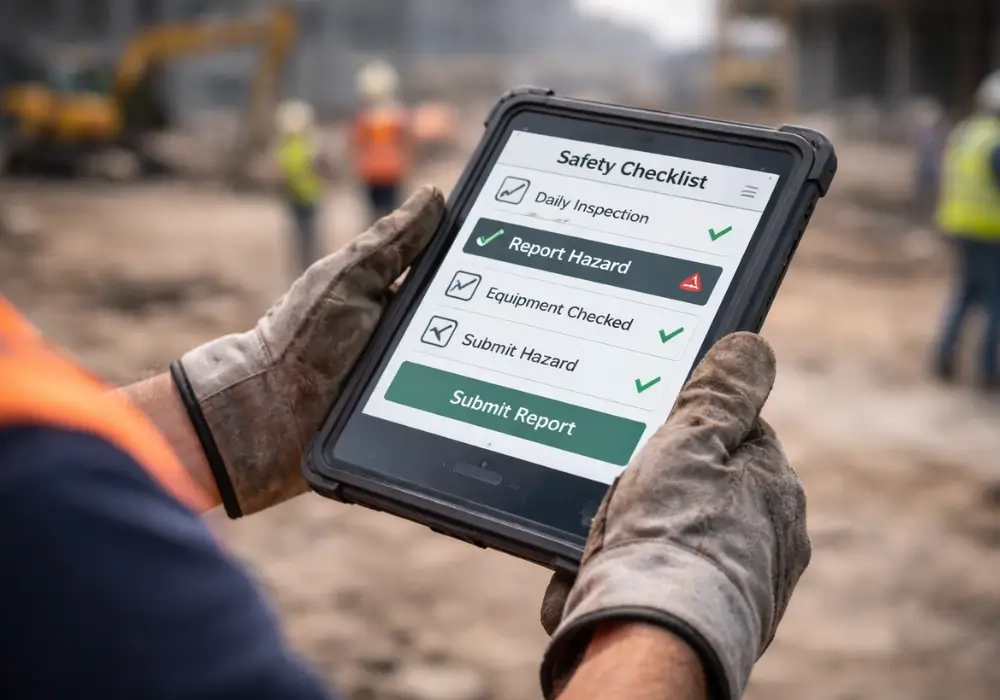
Intuitive reporting: Workers can log incidents, near‑misses, and/or hazards in seconds, using smart, simple tech. When reporting is a natural part of the workflow, it doesn't feel like extra admin. This encourages greater participation, shifting construction safety from reactive recording to active accident prevention.
-
Positive enforcement: Managers reinforce safety practices consistently and visibly, but without heavy-handed policing. Enforcement is transparent and fair, showing the crew that rules are applied equally without favoritism or exceptions.
-
Consistent across construction projects: Workplace safety protocols are standardized across teams, sites, shifts, and contractors, reinforcing that standards are mandatory, not optional. Workers are clear on what’s expected, regardless of the workspace or supervisor.
-
Real-time feedback: Quickly generated safety incident reports trigger immediate alerts and actionable insights, turning risk situations into training opportunities. The result is better trust in the system, greater participation, and ultimately fewer incidents.
-
Mobile access to safety data: Managers and authorized staff access the latest safety information and alerts (e.g., PPE gaps or noise ordinance violations) directly on their mobile devices (smartphones, tablets).
When leaders identify risks early, they can launch rapid responses and prevent a low-level threat from becoming an expensive accident. This vigilance encourages stronger safety practices among employees, ensuring compliance standards are maintained consistently.
How Easy-to-Use Digital Tools Build Safety Engagement
Manual processes involving periodic spot checks and paper-based auditing are inadequate for the demands of today's construction industry. Modern technology designed for construction safety integrates risk oversight into everyday operations to streamline this essential function.
The right construction safety software enables:
-
Automated workflows: Removing repetitive tasks and freeing employees to focus on higher-value work, like improving safety procedures.
-
AI-powered reporting: Provides real-time data and injury logs, PPE reports, and environmental monitoring records. Automated reporting improves safety outcomes and supports compliance with OSHA and other regulatory requirements.
-
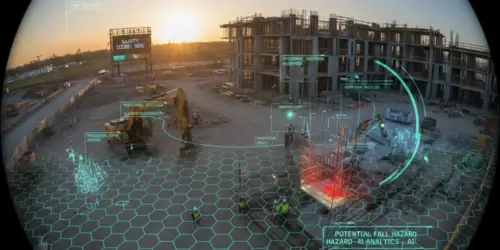
Continuous monitoring: Detects hazards such as intrusions or fire risks in real time, enabling rapid responses while allowing construction workers to continue with their priority tasks.
-
Centralized data management: Seamless integration of live video, timestamped incident reports, and historical safety data into a unified platform helps you make better management decisions.
-
Audit readiness: Instead of scrambling for safety documentation before inspections, teams can pull detailed reports with a few clicks.
Let's break down how our intelligent tools, including Smart Detection, Environmental Monitoring, and security controls, strengthen project safety culture.
|
Tool |
What It Does |
Core Features |
How It Supports Engagement |
|
Tracks and flags in real time when crew fails to wear the required personal protective equipment. Incidents are logged automatically with timestamped image and video evidence for safety audits and review. |
Uses AI-video analytics to accurately detect PPE use (helmets, vests, boots, gloves, face protection, respirators, and more). Offers live audio warnings to workers not wearing the required PPE. |
Compliance rises through visible enforcement. Workers remind fellow team members to wear PPE. Managers have video evidence to support discussions with non-compliant personnel. |
|
|
Continuously measures and reports site sound levels and violations. Logs incidents and responses to demonstrate compliance. |
Measures dB levels (30-130 Decibels) and frequency range (20 Hz–20 kHz). Devices have IP43-rated outdoor protection. |
Crews adjust operations or wear hearing protection when alerts trigger. Reinforces consistent safe behaviors. |
|
|
Flags emissions and air quality breaches and issues warnings. Alerts are logged for compliance and inspection. |
IoT sensors monitor dust, particulate matter (PM2.5, PM10), gases (CO, CO₂, VOCs). Devices boast robust IP43-rated protection. |
Workers follow protocols to move from unsafe areas or use respirators. Threats are addressed before exposure to pollutants or hazardous materials causes harm. |
|
|
Tracks the weather conditions affecting the jobsite in real time. Triggers alerts for hazardous conditions, protecting workers, and logs incidents. |
Tracks wind speed and direction (0–110mph), rainfall, humidity (10% to 99%), temperature (-4° F to 122° F), dewpoint, and storm alerts. |
Teams pause or reschedule work around threatening weather. Hydration and rest breaks are scheduled and taken in high heat. Safety is prioritized over deadlines. |
|
|
Provides instant alerts and logs responses to fire hazards with timestamped image and video evidence. |
Cameras with advanced video analytics recognize early fire indicators faster than traditional alarms. |
Workers perform hot work safely. Managers/crew drill emergency responses. |
|
|
Detects unauthorized access and logs incident reports automatically with timestamped images and video footage. |
High-definition PTZ cameras with AI-driven surveillance capability (reducing false alarms). The trigger feature immediately alerts you or your remote monitoring partner to intrusion attempts. |
Workers report suspicious activity. Jobsite access is diligently controlled so that crews can focus on their tasks. |
|
|
Automatically tracks and logs vehicles entering and exiting jobsites. Strengthens access and movement control. |
AI-imaging recognizes vehicle license plates, make, color, model, and speed. |
Drivers operate vehicles responsibly. Site traffic flows safely. |
|
|
Detect unsafe or suspicious behavior in real-time. Footage logged automatically with timestamps. Live monitoring includes audio voice down challenges when trespassers or theft attempts are spotted. |
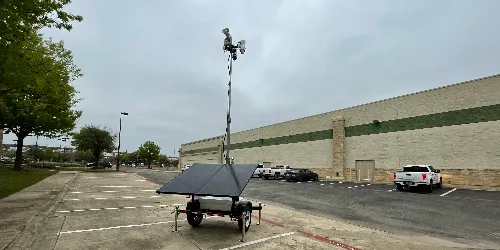
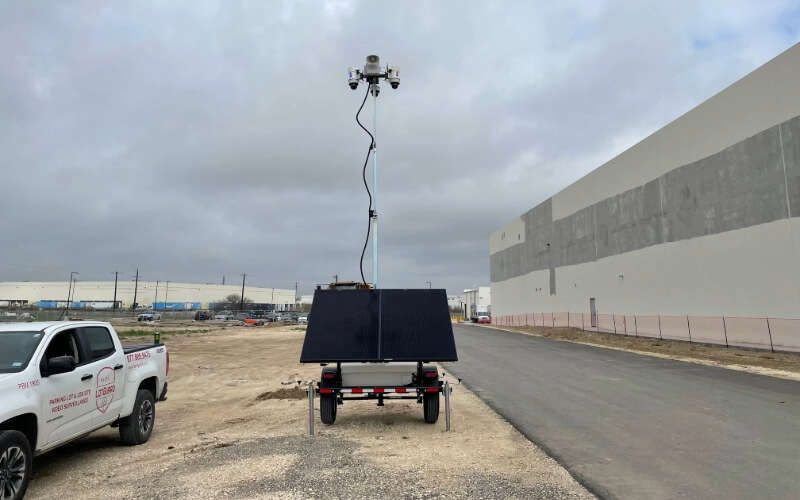
High-definition, mobile cameras with AI analytics for accurate motion and behavior detection. Cameras are deployed on Mobile Surveillance Trailers or as Pole Cameras on a semi-permanent or temporary basis. |
Unauthorized access is prevented, making the jobsite safer and more secure. |
These tools are field-ready and highly appreciated by workers who understand they enhance safety without dragging productivity.
Footage can be edited into a Time Lapse Video and used to motivate teams about their achievements on the project.
-
How AI-Video Analytics for PPE, Fire, and Smoke Detection Ensures Jobsite Safety
-
Air Quality Data Management: Turning Sensor Data Into Actionable Insights for Jobsites
-
The Future of Construction Security: From Guards to AI-Powered Smart Systems
Unifying safety management in a single platform: Stellifii
We mentioned the problem of "app sprawl" earlier. The modern reality is that, in many companies, employees use over 30 different work tools! It's estimated that 10% of each work week is wasted searching for information.
Our proven solution is Stellifii: a secure cloud platform that consolidates your entire safety and compliance system into one intuitive interface.
By integrating surveillance feeds, real-time environmental data, and AI-driven monitoring, Stellifii overcomes the problems of data silos and fragmented information that don't give you the full picture.
With mobile access to all your safety intelligence in one place, the platform helps teams make faster decisions, reduce risks, and effectively control dynamic, geographically dispersed jobsites. All incidents and documentation are stored so that site managers and leaders can retrieve detailed safety reports much faster compared to existing systems.
To reassure workers and other stakeholders that their information is safe, Stellifii uses AES256 encryption (14 rounds of encryption) to protect data. It's also NDAA-compliant, certifying the platform and surveillance infrastructure for federal contracts.
Read more: Stellifii: Our New Smart Platform Transforming Surveillance, Safety, and Compliance
5 Advantages of Safety Tools Engagement
The benefits of high engagement include increased trust, leadership credibility, reporting value, and fewer project disruptions.
1. Increased trust
Workers trust safety systems when they believe they actively reduce risks and guide better decisions. Real-time alerts and swift corrective actions prove that safety measures are practical and relevant to everyday operations. As trust grows, crews are increasingly open to guidance and more willing to comply with proven procedures.
2. Credibility from consistency
Consistent positive enforcement reduces uncertainty around rules. It reinforces that safety protocols are there to protect everyone, not just to meet compliance targets. Consistent oversight strengthens leadership's credibility and creates a culture where safe behaviors become daily habits.
3. Increased reporting value
Automated data capture and centralized dashboards solve the problems of manual logging and over-complicated, slow reporting. Safety activity is recorded accurately and reliably across every jobsite, producing valuable data and documentation. This promotes a safer, more controlled environment for all.
4. Reduced downtime
Real-time monitoring and automated alerts allow safety teams to address unsafe situations before they escalate. Rapid responses help prevent unplanned stoppages and project delays. This approach protects productivity while strengthening overall jobsite safety and compliance.
5. Improved staff retention
Labor shortages affect 38% of construction leaders, highlighting the importance of attracting and retaining good staff. Skilled construction workers are more likely to favor employers that are visibly committed to project safety and employee well-being. Employers who take safety risks seriously don't just protect their people; they build loyalty with a workforce that wants to contribute to the business.
Read more: How Digital Tools Ease Audit Prep and Cut Reporting Time in Half for Your Jobsite
Strategies to Introduce Digital Tools and Gain Engagement
Safety managers know that workers might resist a new system even if the existing one is clearly unfit for purpose. Resistance to change is a universal reaction, and employees are often particularly distrustful of new technology.
Here are common challenges to be aware of and tips to overcome them:
Challenges to gaining buy-in
-
Privacy concerns: Employees worry that monitoring extends beyond worker safety and will intrude on their private rights and personal affairs.
-
Fear of punishment: There is a natural concern that safety data will be used to discipline rather than improve worker safety.
-
Surveillance anxiety: The sense of being watched by cameras can cause anxiety.
-
Tick-box "fatigue": If tools are introduced without prepping the crew for adoption, they can be seen as a tick-box initiative rather than genuine safety management.
-
Data overreach: While data-driven safety practices are the future, there is always the risk that data supersedes all. It's important to still value employees' real, on-the-job experience and input.
5 Tips to introduce smart tools successfully
When construction safety software and surveillance are rolled out with training, transparency, and data security, workers are motivated to participate in the process.
1. Transparency
Clearly explain what is monitored, why, and how data is used. The message should emphasize that the technology's purpose is to enhance worker safety and compliance documentation, not to micromanage.
Workers must be reassured that data isn't more important than their valid on-the-ground experiences. Share real-life examples of incidents prevented due to real-time monitoring.
2. Safety training
Educate all employees on the use cases and benefits of the tools (e.g., workers won't be interrupted by manual safety inspections; they will be freed from manual reporting).
Ensure hands-on training for employees working with these tools. Role-play scenarios (e.g., weather alerts, PPE reminders) to demonstrate how the technology makes a difference on the job.
3. Security and privacy protection
Use platforms with strong encryption and access controls (such as Stellifii) to safeguard sensitive information. Commit to capturing only relevant site safety data and collecting only necessary personal information. Communicate this policy clearly to staff.
4. Encourage employees to take ownership
Encourage crews to give feedback and suggestions during rollout. If you include their suggestions whenever it's helpful and practical, you show them they are partners in building a safety culture that benefits the entire company.
5. Lead by example
Leadership plays a key role in championing worker safety, setting the tone for employees to follow. Managers should use or demonstrate a sound working knowledge of the tools, showing they are driving the system actively. Don't forget to celebrate safety wins, such as achieving a fall prevention or PPE target.
Read more:
Easily Improve Safety Standards and Employee Commitment
On modern construction sites, safety and operations must work hand-in-glove. Safety and project management professionals use smart technology for 24/7 visibility, improving risk assessment throughout the project lifecycle.
User-friendly tools detect early warning signs and direct you to address threats that might derail operations if left unattended. Crucially, they alert workers and mitigate risks without distracting the crew from their core mission: to deliver projects on time and within budget.
With over 20-years of experience perfecting jobsite monitoring, we offer precision, field-ready AI-powered systems that improve safety performance and keep projects moving.
Speak with us today to see how proven safety technology creates an engaged culture where employees take pride in driving continuous safety improvement.