Construction jobsites are high-risk environments where a single accident can derail an entire project and destroy careers. Workers face dangers daily, from falls and electrical hazards to extreme weather conditions and heavy equipment accidents, all of which require constant attention and proactive management.
A 2025 industry study highlighted the concerning statistic that only 48% of construction leaders feel even somewhat confident that their workplaces are consistently safe and compliant. Construction companies must understand the full range of project dangers they face so they can develop strong safety procedures to protect their sites and crews.
Our article breaks down the 10 most common safety hazards impacting US jobsites and construction workers. We explain how smart technology mitigates these risks by detecting issues in real-time and generating automatic notifications to help safety managers prevent incidents from escalating.
The 10 hazards we cover are:
-
Falls from heights
-
PPE non-compliance
-
Struck-by and dangerous driving
-
Electrical dangers
-
Caught-in or between
-
Unauthorized access and theft
-
Noise harm
-
Fire dangers
-
Airborne hazards
-
Heat exposure
Top 10 Jobsite Safety Dangers
The Bureau of Labor Statistics indicates that construction accounts for 20% of all US workplace fatalities, a statistic that exceeds any other sector.
Back in 1994, OSHA (Occupational Safety and Health Administration) introduced "Focus Four", spotlighting the 4 leading causes of construction fatalities: falls, struck-by incidents, caught-in or between, and electrocutions. While these categories are still among the top dangers today, several other risks demand attention as well.
Let's walk through the leading jobsite hazards and how technology minimizes risks and construction injuries.
1. Falls from height
Falls remain the leading cause of death for construction workers, accounting for over a third of all construction industry fatalities. In 2023, 421 out of 1,075 deaths (39.2%) were due to falls, slips, and trips.
OSHA sets clear safety standards around fall prevention, including:
-
Subpart M regulations cover safety practices and equipment when working at heights of 6 ft+ above a lower level. Fall protection equipment, such as guardrails, safety nets, and harnesses (fall arrest systems), is mandatory.
-
1926.1053 addresses the secure use of all ladders on construction sites.
-
1926.451 covers the proper and safe erection of scaffolding.
Enforcing OSHA rules as part of everyday safety protocols, combined with proper training, greatly reduces the number of falls. Unfortunately, even trained crews sometimes take shortcuts that manual checks easily miss.
How technology can help:
- Modern risk assessment solutions include AI-driven visual monitoring and early warnings. These systems detect when crew members are working at heights without proper fall protection or harnesses and issue immediate alerts to trigger corrective actions.
2. PPE non-compliance
Construction workers and leaders are widely aware of OSHA's PPE standards requiring the use of appropriate protective equipment, such as hard hats, high-visibility vests, safety footwear, eye protection, and face masks. That said, 54% of construction leaders say that inconsistent PPE wear remains a challenge on projects.
Manual supervision and box ticking are not enough to achieve PPE compliance; this vital safety area demands continuous, proactive tracking and enforcement.
Technology solutions:
-
Our PPE Detection and Monitoring system uses AI-powered analytics to track PPE compliance across your construction sites. It detects non-adherence in real-time, allowing you to take swift action to resolve situations.
-
All incidents are logged through Stellifii, our cloud-based compliance management platform. The secure platform provides you with solid, verifiable evidence to address non-compliance with staff and demonstrates your safety protocols and practices to inspectors.
Read more: Stellifii: Our New Smart Platform Transforming Surveillance, Safety, and Compliance
3. Struck-by and dangerous driving accidents
Given the mix of operating equipment, heavy machinery, power tools, and overhead work on busy jobsites, it's unsurprising that struck-by accidents are a Focus Four danger.
Construction workers are routinely hit by heavy equipment or falling objects, while vehicles driving faster than they should add to the toll.
Safety measures to limit struck-by injuries include wearing personal protective equipment such as hard helmets and safety footwear.
Technology solutions:
-
Our License Plate Recognition (LPR) tool is an automated system that tracks and logs all vehicles entering and exiting the jobsite. Accurate readings of speed and distance using AI-assisted imaging help to enforce safer driving across all work zones.
-
PPE monitoring and detection can be employed to monitor and ensure worker safety through the use of personal protective equipment.
-
Other advanced tech includes wearable sensors or vision-based AI that alert operators and workers to potential dangers.
4. Electrocution and electrical hazards
Most modern developments involve complex electrical installations/connections. Electrical work is dangerous by nature, and even more so if contractors are untrained and housekeeping is poor (exposed wiring, faulty equipment, improper grounding).
High voltage incidents and electrical hazards cause approximately 400 deaths annually and around 30,000 injuries, including severe burns.
A common electrical safety issue on construction sites is failures in lockout‑tagout (LOTO) procedures, especially during the final stages of a project.
Technology solutions:
-
Digital Permit-to-Work systems are a key LOTO (Lockout/Tagout) safety measure. This protocol requires a photo showing that LOTO has been performed before you can mark a task as “started” on the project dashboard.
-
PPE compliance monitoring ensures that contractors wear the necessary safety boots (rubber-soled), insulated gloves, face shields, or arc-rated clothing when working with electrical equipment.
5. Caught-in or between
Caught-in or between incidents occur when body parts get caught in machinery or workers are crushed between equipment or collapsing structures, such as trenches.
Examples of caught-in/between casualties are:
-
Trapped in a trench collapse
-
Hands, limbs, and clothing caught in machinery
-
Pinned by collapsed scaffolding
-
Caught by rotating equipment
-
Crushed between the counterweight of the crane and another structure
Technology solutions:
-
Smart monitoring systems and automated alerts are used to track equipment movement and site activity in real time. For example, systems can be taught to check that:
-
Proper machine guarding is in place.
-
Workers aren't wearing over-loose clothing or jewelry that might get caught in moving parts.
6. Unauthorized access and theft
Unauthorized personnel in hazardous areas or restricted zones are a danger to themselves and others. They're likely not trained to be in the sector and don't understand the risks on the ground.
Meanwhile, theft and vandalism cost the construction industry over $1 billion annually. Protecting valuable equipment, metals, copper, materials, and tools is hard without proactive jobsite security.
A weakly secured site with poorly controlled sectors inevitably suffers more losses, injuries, legal liabilities, and work disruption than a well-controlled environment.
Technology solutions:
-
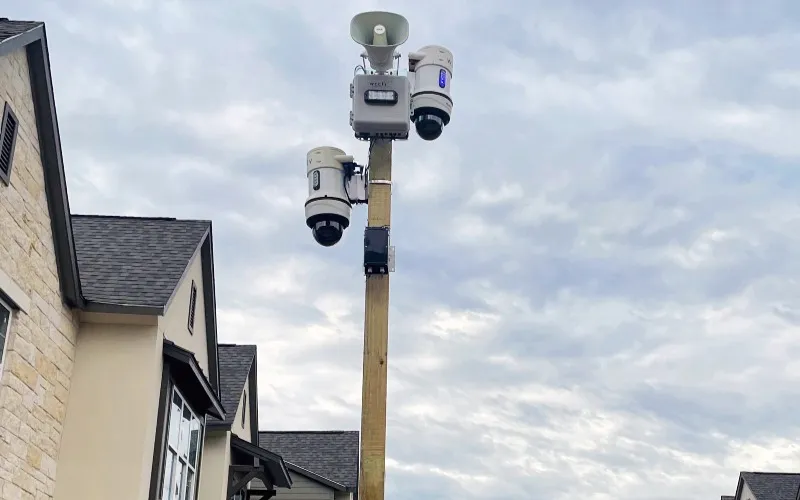
Our Security Systems incorporate AI analytics to identify threats and protect your site against breaches and theft 24/7. Surveillance deployed on Pole Cameras or Temporary Security setups supported by Live Video Monitoring that enables immediate voice challenges to warn off intruders.
-
Intrusion Detection with AI analytics linked to Stellifii delivers the actionable insights you need to make better, faster security decisions and responses.
Read more: The Future of Construction Security: From Guards to AI-Powered Smart Systems
7. Noise harm
Noise is a common construction site hazard that must be responsibly managed on a daily basis. Excessive noise exposure poses serious health risks to workers, including temporary deafness, tinnitus, and long-term hearing loss (which can lead to injury claims). Excessive construction noise is also considered a health hazard to the surrounding community.
OSHA safety regulations (1926.52) set noise limits that workers can legally be exposed to. For example:
-
90 Decibels averaged for 8 hours
-
100 dB averaged for no more than 2 hours
-
105 dB averaged for no more than 1 hour
In terms of health and safety standards, employers are expected to take appropriate engineering controls and provide hearing protection to safeguard workers from occupational noise hazards. Since manual spot checks are too irregular and flawed to monitor noise effectively, technology is the go-to answer.
Technology solution:
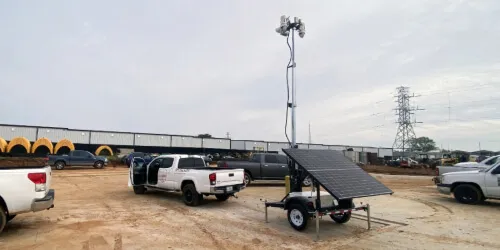
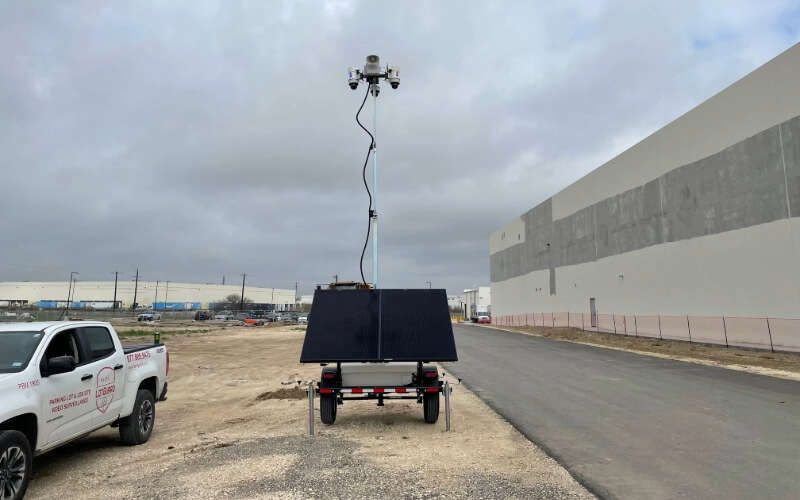
- To protect workers, our smart Noise Monitoring sensors continuously measure jobsite sound levels and ensure noise exposure limits aren't breached. Sensors are deployed on our Solar Surveillance Trailers and connect directly to the Stellifii platform, providing live readings and instant alerts while reducing the need for physical site visits.
8. Fire dangers
Fires are an ongoing construction site safety concern. Negligent hot work, electrical faults, sparks from grinding, and unsafe handling of combustible materials can ignite site-wide fires in minutes.
Based on NFPA statistics, US fire departments respond to over 4,400 jobsite fires each year. Uncontrolled blazes endanger the lives of all on-site and cause extensive property and equipment damage.
Technology solutions:
-
Our specialized Smoke and Fire Detection cameras with AI video analytics spot heat signatures and the early traces of smoke near instantly. This smart detection and prevention solution is proven to react faster and pinpoint the flame source more accurately than traditional fire alarms.
-
After identifying a threat, the system sends an immediate alert to your designated contact or responsible crew, enabling a rapid fire-fighting response. Stellifii retains a complete record of the incident for audit and insurance purposes.
Read more: The Benefits of Smoke and Fire Video Analytic Detection on Jobsites
9. Airborne hazards
Various airborne hazards cause workers short-term discomfort (headaches, fatigue) and long-term health complications, including lung damage. Air contaminants include:
-
Excessive dust and particulate matter
-
Volatile organic compounds (VOCs) from industrial solvents
-
Carbon dioxide (CO₂)
-
Silica dust
-
Fumes from hazardous materials
The National COSH reports that thousands of US workers die every year from prolonged exposure to hazardous substances. Many of these fatalities are preventable with the proper controls, like adjusting work methods, using PPEs, pausing work to shut down a hazard, and monitoring air quality proactively.
Technology solution:
-
Our Environment Monitoring Solutions include Air Quality Monitoring Systems that precisely measure fine particulate matter (PM1, PM2, PM10), CO₂, VOCs, and other airborne pollutants and gases. IoT-based sensors detect substances more quickly and accurately than human senses or manual processes.
-
The smart system ensures managers are automatically alerted well before pollutants or hazardous chemical fumes approach allowable limits or endanger your crew. All environmental and other data (fire, intrusion detection, and PPE) are unified in Stellifii's central interface for easy remote viewing, guiding corrective actions.
Read more: Air Quality Data Management: Turning Sensor Data Into Actionable Insights for Jobsites
10. Heat exposure and exhaustion
Rising summer temperatures increase the danger of heat-related illnesses, such as exhaustion, dehydration, and heat stroke.
Beyond the direct physical toll, heat stress compromises workers' judgment and abilities, leading to errors and accidents. Dropping tools/materials on crew members below or stumbling into a moving machine part are two prime examples.
Traditional safety plans often depend on forecast data or scheduled breaks, which may not reflect actual conditions.
Technology solutions
-
Our Weather Monitoring stations track extreme temperatures and humidity (and other dangerous conditions like winds, rainfall, storms). They monitor the risks in real-time and send automated alerts to supervisors.
-
The system can trigger hydration breaks, rest periods, and work stoppages to protect your crew and jobsite, avoiding fatalities and penalties arising from heat hazards.
Read more: The Rise of Smart Construction Jobsites: How Tech Is Transforming the Industry
Make the Move to Smart Accident Prevention
Construction projects have too many moving parts to manage effectively with manual processes. Even the best safety training can't guarantee accident-free workplaces, which is why technology-based AI-powered prevention is the smart solution.
Technology provides greater visibility and improved oversight across all potential hazards everywhere. Automated alerts with centralized dashboards empower safety leaders to respond to events in seconds, not hours.
This approach substantially reduces site travel and audit prep because you can oversee multiple projects from a single platform and have accurate digital records of all safety and compliance issues at your fingertips.
To leverage the powerful advantages of jobsite safety technology, reach out and let's explore the best solutions for your next project.
Read more: How Can Construction Jobsites Adapt To Digital Transformation