For project leaders managing multiple jobsites, the pressure of keeping all operations on track can be immense. Even well-planned projects with experienced teams can fall behind schedule due to a combination of factors.
Some variables, such as global supply chain problems, are outside your control, while others, like reporting systems and workplace safety, are very much within it.
The key to avoiding delays is to manage what you control as effectively and tightly as possible, and this requires deep visibility into the risks that might derail operations. Strong monitoring and reporting systems, along with real-time updates, are essential to detect issues before they disrupt operations significantly.
To help leaders protect timelines and contractual obligations, we highlight 7 common causes of significant delays in construction projects and explore how centralized monitoring and AI-driven intelligence can help you mitigate threats and deliver projects proudly on time.
Why Construction Project Delays Happen So Often (and How Technology Changes Things)
Construction projects are complex and challenging environments. Several teams, including operations and compliance, must work together to drive project progress and success. Multiple crews, subcontractors, suppliers, and regulatory requirements add to the complexity and potential conflict.
Effective project management requires connected and efficient systems. Unfortunately, outdated processes remain widespread across the industry, which is one of the primary reasons for delays in construction projects. Examples of inefficient systems are:
-
Fragmented reporting in different files and processes
-
Manual tracking of jobsite conditions
-
Irregular and delayed updates
-
Poor coordination between work crews
-
Reactive risk monitoring that can't foresee or intercept problems
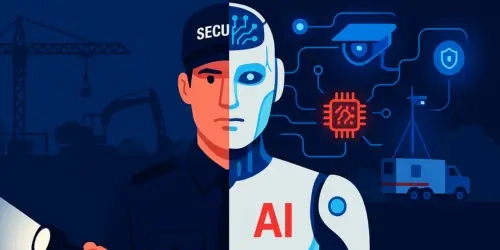
Today, smart monitoring replaces haphazard information and incomplete reports with complete data-driven oversight that prevents small disruptions from escalating into major delays. Modern strategies integrate the following tools to limit schedule and cost overruns.
-
Intelligent site surveillance using advanced cameras and IoT sensors
-
AI-powered video analytics that detect and flag jobsite hazards quickly and accurately
-
Live alerts notifying you of hazards so you can tackle them before they jeopardize deadlines
These tools operate through sophisticated platforms where central dashboards present the information you need to make strong, informed decisions to keep operations on track. Our cloud-based platform, Stellifii, consolidates all your project data into a single interface, giving you mobile access and a real-time view of risks that might threaten the schedule:
-
Unsafe conditions and activities
-
Fire and smoke dangers
-
PPE non-compliance
-
Environmental variables affecting worker health
-
Vehicle access, movement, and driving safety
With eyes on every site, straight from your phone, you can quickly deal with challenges and stay on course.
Read more:
-
Stellifii: Our New Smart Platform Transforming Surveillance, Safety, and Compliance
-
The Hidden Costs of Legacy Systems on Modern Construction Jobsites
The 7 Most Common Causes of Construction Delays
The causes of project delays range from controllable factors like safety protocols to unforeseen site conditions, such as a flash flood wiping out a day's progress.
We take a closer look at 7 of the most common causes of delays in jobsite projects.
1. Subcontractor problems and labor shortages
Subcontractors are vital to the completion of any sizable job, as poor subcontractor performance directly impacts the project schedule.
If a subcontractor is spread too thin or unaware of the project’s timeline, it can cause a delay in every subsequent task on the build. When an electrical or demolition team doesn't arrive on time or is understaffed, entire phases of the project are affected.
Sometimes a subcontractor is punctual but simply not up to the task. Poor workmanship results in failed inspections and rework, extending the timeline.
Besides setting expectations clearly up front, always check the firm's licensing and certifications. Of course, the best approach is to try to work with subcontractors that you know and trust.
How smart monitoring helps:
Remote monitoring allows project managers to confirm:
-
Whether crews arrive on time
-
If there are enough workers to do the job properly
-
Whether work areas are active or idle
Through integrated cameras and real-time feeds, project managers can quickly identify labor gaps and respond before workflows suffer.
2. Material delivery disruptions
For managers overseeing several jobsites, delivery disruptions are an external factor they must control to keep workflows moving. When crucial materials such as lumber, steel, concrete, glass panels, or specialized equipment don’t arrive on time, entire teams are unproductive and work stalls.
A concrete pour can be delayed by days due to late material delivery and rescheduling difficulties. Reasons for delayed deliveries include:
-
Supply chain disruptions
-
Material shortages
-
Transport problems
-
Incorrect orders
-
Vendor scheduling conflicts
Whatever the cause, if you can't source materials in good time, your schedule takes a knock.
How smart monitoring helps:
Connected cameras and automated alerts help project managers verify that materials arrive as scheduled and respond quickly if deliveries are missed. Our License Plate Recognition (LPR) system tracks vehicles entering and leaving the jobsite. This includes collecting information on delivery vehicles to monitor when they arrive.
3. Poor communication across jobs and crews
Poor coordination between crews derails progress on many construction projects as work sequences become misaligned and time management slips.
Causes of weak communication include:
-
Fragmented reporting: Project owners and subcontractors often use different systems, making critical communication and information sharing more difficult. Based on studies, around 10% of each work week is wasted searching for necessary information.
-
Siloed crews: Each trade focuses on its own tasks and is not always aware of how its work affects larger deadlines.
-
Outdated systems: When you rely on outdated processes like paper logs, spreadsheets, email threads, and physical inspections, communication is often delayed, and updates are missed.
How smart solutions help:
A unified cloud platform brings everyone onto one page, seeing the same progress data and schedule information. With live updates, teams can quickly check progress and coordinate tasks more effectively.
4. Inspection and compliance bottlenecks
Inspections are a critical checkpoint in construction projects, ensuring compliance with building codes, safety standards, and quality requirements.
When inspections don’t happen as planned (perhaps because the inspector is delayed by a heavy workload), a work stoppage may be inevitable. When you fail inspections due to incomplete or poor workmanship, you need to build in more time for fixes and follow-up checks.
When inspectors arrive, you want to be ready for them. The goal is to get the sign-off you need without stress or delay.
How smart systems help:
Digital platforms ensure you have all the necessary documentation (permits, plans, test results, etc.) available in one place for inspections.
If you can’t physically inspect a job yourself, centralized surveillance can help to:
-
Check that the work meets safety standards
-
Review site conditions before inspectors arrive
-
Provide visual records to inspectors
5. Severe weather
Extreme weather plays havoc on even the most carefully planned schedules.
-
Strong winds endanger crane work and teams working at heights, halting operations.
-
Extreme heat compels employers to schedule water and rest breaks for crews in line with OSHA's NEP for Heat-Related Hazards, pushing out timelines.
-
Dangerous sleet and icy conditions may force you to suspend work for a period.
-
Unexpected storms and flooding can shut down projects for days. If completed structures are damaged and rework is required, the schedule is severely impacted.
How smart monitoring helps:
-
While weather can't be controlled, smart monitoring and planning help teams respond more effectively to threatening conditions. When wet weather is expected, you can prepare waterproof gear for crews and reschedule activities to keep momentum moving.
-
Weather Monitoring Stations track the micro-climate of your jobsite, providing detailed insights into risks. By measuring temperature and humidity continuously, it guides managers to schedule rest and rehydration breaks in high heat and helps you plan schedules around weather events to keep workers safe and minimize disruptions.
6. Equipment failure and misuse
When heavy machinery and equipment break down or are damaged, jobs can stall for hours or days, depending on the timeliness of repairs and replacements.
Equipment-related delays occur because of:
-
Mechanical failures
-
Improper or reckless operation
-
Lack of supervision
-
Unauthorized use
-
Use outside of working hours
Without clear oversight, machinery may be moved between areas without proper scheduling, used by untrained operators, or driven dangerously in busy work zones.
How smart monitoring helps:
License Plate Recognition (LPR) systems help to address these challenges by tracking vehicle and machinery movement and speed across the site. By employing surveillance to monitor who is using equipment and how it is operated, project managers can prevent unauthorized and reckless operation that leads to accidents and work stoppages.
7. Safety-related stoppages
A 2025 industry study reveals that only 48% of construction leaders feel even somewhat confident that their workplaces are consistently safe and compliant.
The concerning statistic that 20% of all US worker fatalities occur in the construction industry highlights the high stakes in the sector. Beyond the human cost, a major safety incident can halt a project instantly. High-risk events that trigger such shutdowns include:
-
Explosions requiring immediate evacuation and shutting down of critical utilities.
-
A major fire that damages property and assets and injures crew members.
-
Collapsing structures that injure or trap workers and require engineering risk analysis.
-
Air contaminants such as silica dust, asbestos, or chemical leaks that threaten the crew's health and well-being.
-
Shortage of proper PPE that prevents tasks requiring specific equipment, e.g., respirators or fall harnesses.
If OSHA or local authorities become aware of unsafe conditions on your jobsite, they can restrict work or even shut down the entire project indefinitely.
How smart monitoring helps:
-
AI-driven PPE Monitoring catches workers not wearing appropriate PPE (e.g., hard hats, face masks, gloves) and alerts managers.
-
Environmental monitoring sensors measure air pollutants and noise hazards to ensure they don't threaten workplace and public safety and prompt shutdowns.
-
Camera surveillance identifies unsafe behaviors and activities, allowing immediate corrective actions.
Read More on Construction News
How Centralized Monitoring Helps Prevent Construction Delays
Centralized monitoring platforms give construction leaders a real-time view of activity across every jobsite. Information-rich dashboards accessible from anywhere on a mobile or desktop app keep you fully apprised of live conditions that could cause delays and cost overruns.
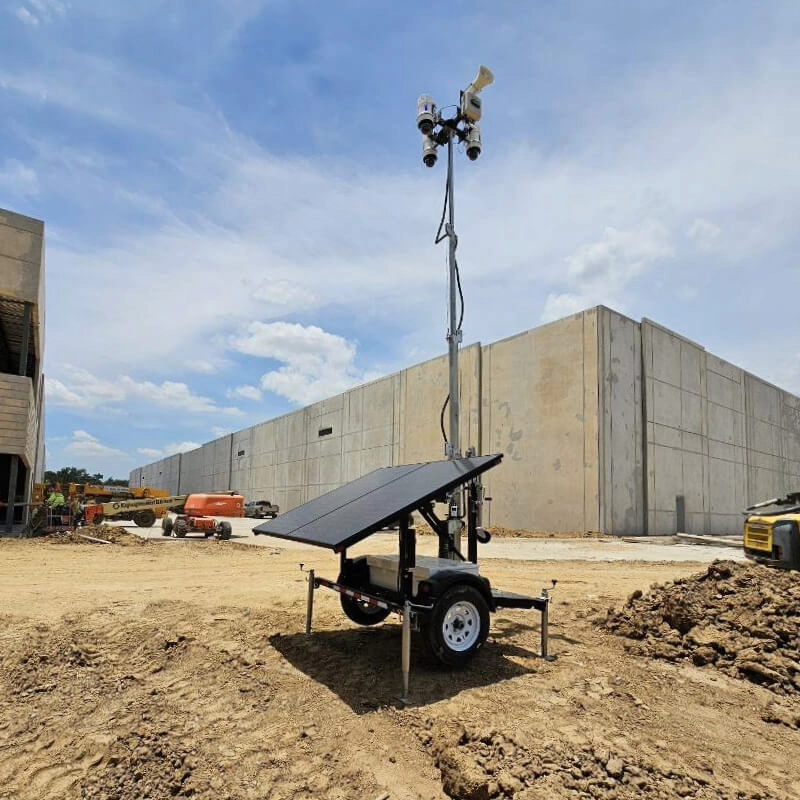
High-definition PTZ (Pan-Tilt-Zoom) cameras and advanced sensors are the backbone of centralized monitoring. They capture project data and video footage from rapidly deployable hardware, such as:
-
Mobile Surveillance Trailers: Rugged and versatile enough to be positioned around virtually any environment, delivering near 360° area coverage.
-
Temporary installations: Mounted as pole cameras or on other alternatives, depending on your needs and available infrastructure.
Providing 24/7 monitoring, AI-backed surveillance scans jobsites continuously to collect the critical data leaders need to understand site conditions and make well-informed decisions.
When issues arise, the Stellifii system triggers warnings with timestamped evidence. It stores a log of the incident and a record of the corrective action, giving project leaders clear proof of due diligence to show regulators and inspectors (OSHA, EPA agencies, local permitting offices, etc.).
AI-Powered Safety Detection
Modern monitoring integrates cameras, machine learning, and AI-video analytics to track jobsite activities and safety conditions 24/7. Smart detection systems identify threats (e.g., fire indicators or unauthorized access) and raise near-instant alerts.
Our intelligent monitoring systems cover the following risk areas:
-
PPE Monitoring and Detection protects workers and projects by flagging personnel not wearing required PPE.
-
Smoke and Fire Detection uses advanced cameras and AI trained to spot the early signs of smoke or flames, enabling a rapid emergency response.
-
Intrusion Detection prevents unauthorized access that could lead to accidents or vandalism, damaging essential equipment.
-
Environmental monitoring sensors with connected cameras track noise and air hazards that can shut projects down.
-
Noise Monitoring Sensors measure jobsite sound levels across a wide decibel (30-130 dB) and frequency (20Hz to 12.5kHz) range to protect workers' hearing and avoid ordinance violations that could threaten operations.
-
Air Quality Sensors monitor airborne contaminants (PM1, PM2.5, PM10, CO₂, dust, and VOCs) to ensure they don't exceed permissible limits or safety levels.
-
Early alerts to all of these threats reduce the likelihood of incidents that could halt work.
Read more:
Security monitoring and alerts
Advanced security solutions use AI detection to protect your jobsite against perimeter breaches by raising prompt alerts of any suspicious activity. Temporary or semi-permanent surveillance, deployed on mobile trailers or as pole cameras, scans 24/7 to prevent metal, materials, equipment, and other theft attempts.
The system is backed by Live Video Monitoring, where trained operators in our control center receive alerts of security threats, check the feed, and issue immediate audio voice-down challenges to deter criminals (90% of intruders leave after a voice warning). Detailed, timestamped evidence of all events is retained for internal and external investigations.
Proactively limiting crime and trespassing protects both your valuable assets and project timelines.
Read more:
Real-time visibility for multi-site management
Live video feeds allow you to see what's happening on every site without spending hours on the road checking different locations. With remote visibility, you can verify:
-
Crew attendance
-
Material deliveries
-
Work progress
-
Equipment usage
Real-time data and analytics deliver actionable insights that help you make better, faster project and security decisions.
Centralized dashboards and cloud data management
The Stellifii platform consolidates monitoring data from all your jobsites into a single interface, allowing managers to:
-
Understand and compare jobsite activity
-
Prioritize problem areas
-
Respond faster to emerging issues
The platforms' cloud technology offers tremendous advantages:
-
Cloud services are flexible, secure, and easily accessible from anywhere on mobile (or desktop).
-
Capacity can be easily scaled up or down as your needs evolve.
-
Secure cloud storage and backup safeguard your data against disaster events. Hurricanes, floods, and fires have destroyed substantial on-premise software and data storage assets.
According to industry reports, 21.5% of construction/engineering firms experienced a cybersecurity incident in the past year, with 40% of those incidents causing operational disruptions. To defend against cyber threats, Stellifii uses AES-256 end-to-end encryption (14 rounds of encryption) to protect your data rigorously. The system is also NDAA-compliant, approving it for use on federal contracts.
Read more: The Benefits of Integrating Your Security and Communications Systems
Stay On Schedule Across Every Future Jobsite
Real-time monitoring, centralized management platforms, AI insights, and automated documentation have become essential tools in today's construction industry.
Companies that invest in this smart technology gain a clear edge in spotting problems sooner and course-correcting faster. By preventing speedbumps from becoming roadblocks, you keep your projects firmly on the road.
While it's difficult to eradicate delays altogether, leaders who combine strong planning with advanced monitoring tools are most likely to deliver projects on time and on budget.
Contact us today to gain better, more confident control over all your project pressures.