Managing OSHA compliance across multiple Texas jobsites is one of the toughest parts of running a construction project. Without clear systems in place, priorities compete and challenges pile up quickly.
For modern project managers, information and visibility gaps are major concerns. You can’t be everywhere at once to enforce standards, and you can't write every report yourself. When relevant records are scattered across separate systems (spreadsheets, email threads, and even paper logs), proving compliance becomes difficult, placing the company at risk of costly penalties.
This blog highlights important OSHA rules and the challenges of successfully managing regulatory risks across several jobsites. We explore how automated safety alerts and centralized platform control help you tackle compliance confidently, providing evidence of best practices that build trust with the regulator.
Key OSHA Safety Regulations in Texas Construction
The Occupational Safety and Health Act of 1970, enforced by the U.S. Department of Labor's Occupational Safety and Health Administration (OSHA) division, requires employers to provide a safe workplace for their employees.
Since Texas doesn't have a separate OSHA State plan, the federal OSHA enforces workplace safety and health laws for private-sector employers in the State. The regulator places strong emphasis on several priority areas that Texas construction leaders should never overlook:
Environmental-related regulations
Airborne Hazards and Pollutants: OSHA's Subpart Z establishes permissible exposure limits that define the maximum levels of air pollution workers can legally encounter during their shifts. Airborne hazards such as dust, silica, volatile organic compounds (VOCs), carbon monoxide (CO), and other contaminants are tightly regulated.
Employers are required to implement ventilation systems, provide exposed crew with respirators, and monitor jobsite conditions to protect their employees' health.
Noise Exposure: Noise regulations (Subpart D (1926.52) set permissible noise limits that crew members may legally be exposed to, e.g.:
-
90 decibels averaged for an eight-hour shift
-
100 dB averaged for no more than 2 hours
-
105 dB averaged for no more than 1 hour
Employers must provide hearing protection and monitor jobsite sound levels to ensure employee safety. EPA agencies also enforce construction sound levels to protect the general public from noise hazards.
Heat Exposure: Under OSHA's Heat Prevention plan and the Heat NEP, employers are expected to safeguard workers from heat stress and related illnesses/effects (extreme exhaustion, dehydration, and heatstroke). They must:
-
Proactively monitor on-site conditions to minimize exposure to unsafe heat and humidity. Generally, when site temperatures exceed 80-85°F, they start to become hazardous.
-
Provide proper water, rest, and shade breaks.
-
Acclimatize new and returning crews to hot conditions.
-
Develop a heat-related illness prevention plan.
Safety regulations
Fall Protection: Fall protection regulations (Subpart M) require safety equipment (guardrails, harnesses) and safe working practices whenever crew members work at heights of six feet or more above a lower level. This includes:
-
Secure scaffold construction and maintenance (451)
-
Safe and proper ladder use (1053)
-
Fall protection training (with documented evidence) (503)
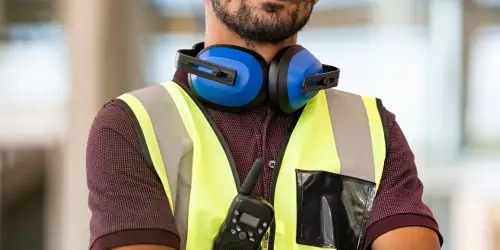
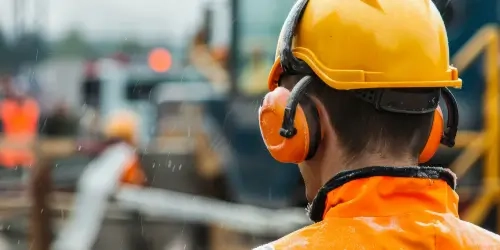
Proper PPE Use: PPE regulations (1926 Subpart E) mandate that workers wear appropriate personal protective equipment to minimize workplace risks. Required protective gear includes hard hats, high-visibility vests, goggles, hearing protection, footwear, and respiratory protection.
Hazard Communication (HazCom): HazCom regulations (1910.1200) require construction employers to label hazardous materials, provide employee training as part of their safety program, and maintain Safety Data Sheets (SDS). OSHA's goal here is to ensure employees know and understand the risks when working with hazardous substances.
Recordkeeping
OSHA requires thorough recordkeeping of workplace injuries and illnesses. Employers must record incidents using:
-
Forms 300: Illness/injury log
-
300A: Annual summary
-
301: Incident report
These forms must be kept for 5 years.
Read more: The Overlap of CPRA, OSHA, and Federal Rules
The Challenges of Managing OSHA Compliance Across Multiple Jobsites
OSHA performs nearly 35,000 workplace inspections a year. Since construction workplaces are high-risk environments (1,032 fatalities in construction/extraction in 2024), the regulator oversees the sector actively.
Remember, OSHA inspectors can arrive at your jobsite at any time, usually unannounced. If you're not present and don't have consistent controls and documentation in place, there's a good chance officials will find problems and cite or even fine you.
Consider a few examples of potential compliance lapses:
-
While you're at your main Houston site, crew members on a project across the city remove their hard hats and vests because it's hot and the gear is uncomfortable.
-
Demolition, cutting, and vehicle movements overlap during a busy shift, causing noise spikes that exceed the limit. Workers are exposed to unsafe decibel levels longer than permitted, and there’s no documentation that the situation was addressed (e.g, by rescheduling cutting/grinding tasks).
-
Supervisors don’t schedule water breaks for crews working in soaring heat and humidity. Shade isn't provided, and there is no documentation to prove the company offers hydration and rest breaks.
-
A gas‑powered generator inside a partially enclosed space causes a dangerous carbon monoxide buildup. There are no monitors in place to track the CO reading and mitigate the risk.
-
Forklifts operate in the same corridor where materials are being manually carried in breach of operating rules. Near-misses where forklifts almost collide with workers aren’t recorded (to inform better future practices).
-
During drywall cutting and sanding, dust clouds build up in a work zone. Ventilation fans aren’t running, and the crew isn't provided with essential respirators.
There are dozens of areas where things can go wrong - unless you have eyes everywhere!
Read more: Construction Jobsite Compliance Failures and Lessons Learned
Intelligent Surveillance for Eyes Everywhere
As digital transformation accelerates in the construction industry, IoT sensors and high-definition cameras have replaced manual oversight. Today's leaders can depend on live video feeds rather than delayed foremen's reports, spreadsheet logs, email threads, or patrolling security guards.
Technology-enabled oversight scans all jobsites continuously, ensuring nothing falls through the cracks. It delivers immediate warnings of compliance or safety hazards that might derail operations.
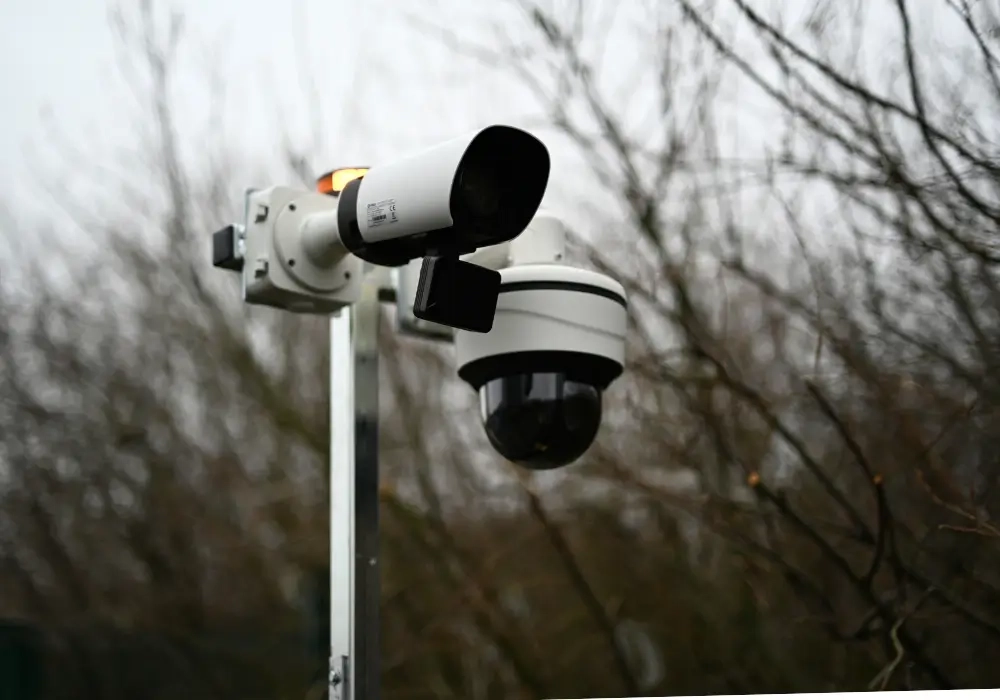
Our Mobile Solar Surveillance Trailers are an excellent example of smart surveillance systems built for construction environments. They are 24/7 monitoring units that require no site power or internet.
-
Solar powered: Solar panels with battery backup make these trailers ideal for Texas builds in locations with limited grid infrastructure.
-
Rapid deployment: Trailers are rapidly and easily deployed. They can also be conveniently moved around the jobsite as the project progresses.
-
AI-powered analytics: The advanced Stellifii-integrated PTZ cameras have built-in AI analytics trained to recognize signatures like smoke, fire, specific PPE gear, or unauthorized vehicles, and trigger automated alerts when a threat is spotted.
Read more: Why Smart Surveillance Systems Are the Future of Business Security
A Centralized Platform for Complete Visibility and Control
The greatest hurdle to regulatory compliance across multiple sites is scattered, siloed data. If your noise logs, weather data, and PPE alerts live in 4 different systems (vendor sprawl), it's difficult to prioritize and control issues as they emerge in different locations.
Our secure cloud platform, Stellifii, was designed to help stretched construction leaders effectively manage events across several locations at once. The centralized platform turns video and data streams from your surveillance into clear, simple reports that guide your immediate next steps.
For example, when you're checking PPE compliance, Stellifii highlights issues in an intuitive centralized dashboard. You can see at a glance that workers in Zone C at your Austin jobsite are not wearing respirators as OSHA regulations stipulate.
Managing safety compliance within a central platform ensures you're fully updated on events as they happen on the ground. This means no waiting for a supervisor's report or a call at the end of the day. You can view the latest information across all jobsites from your phone or desktop, whether you're in the office, traveling, or on-site.
Read more: Stellifii: Our New Smart Platform Transforming Surveillance, Safety, and Compliance
Automated Reporting Tools That Ensure OSHA Compliance
With an intelligent surveillance platform in place, you can connect a range of tracking tools and functions, including:
-
Access control
-
Safety monitoring and detection
By consolidating PPE, environmental conditions, fire risks, security, and access control, organizations cover virtually every safety compliance risk on every project.
Here's a summarized framework that Texas construction firms use to manage OSHA compliance and security across their active projects.
| Tool | Functionality | How It Supports OSHA Compliance |
| PPE Monitoring | AI-powered systems track PPE adherence across multiple sites and flag violations instantly. | Ensures PPE violations are minimized and generates audit-ready documentation for OSHA inspection. |
| Weather Monitoring | Continuously monitors and detects dangerous heat, cold, winds (speed and direction), humidity levels, and rainfall that can affect safety and performance. | Protects crews from perilous weather conditions, including heat exposure (in line with OSHA Heat NEP).Retains evidence of work adjustments around weather risks to show stakeholders. |
| Noise Monitoring | Tracks sound levels across sites, capturing sustained exposure and sudden peaks from heavy equipment or blasting (with supporting video).Connected cameras link readings to conditions and activities on jobsites. | Helps maintain compliance with OSHA noise standards and retains logs/records of noise incidents. |
| Air Quality Monitoring | Sensors and connected cameras monitor airborne pollutants and harmful gases.Provide continuous readings of dust, particulate matter (PM1, PM2.5, PM10), CO₂, CO, and VOCs. | Protects the site from air quality violations.Provides evidence of controls and due diligence for OSHA audits. |
| Smoke and Fire Detection | Cameras integrated with AI analytics detect heat signatures and smoke in real time. | The smart detection system supports OSHA fire prevention and emergency response requirements. |
| Security and Intrusion Detection (temporary and semi-permanent setups) | AI-powered surveillance monitors the jobsite perimeter and work zones to prevent breaches, theft, andunauthorized access. | Safeguards the jobsite and crew. Ensures only authorized personnel enter high-risk areas.Supports OSHA's general safety requirements to provide a workplace free of recognized hazards. |
| Live Video Monitoring | Trained specialists in a control center react to alerts on the video feed and intervene in seconds to discourage further criminal behavior. | Protects valuable assets. Maintains jobsite and crew safety and security. |
| License Plate Recognition | Continuously monitors vehicles entering and moving around jobsites, including their speeds. | Prevents unauthorized vehicle access and controls movements around work zones.Keeps logs/documentation for OSHA inquiries and other investigations. |
| Centralized Management (Stellifii) | A cloud platform consolidates safety, environmental, and security data into centralized dashboards.All data is secured by AES-256 end-to-end encryption (14 rounds of encryption) | Simplifies compliance oversight by providing managers with clear, unified reporting on every project's OSHA health. |
This table highlights how automated alerts and centralized reporting systems create a proactive, comprehensive compliance strategy.
With all management information in one place, you have easy access to complete, reliable audit trails, making it straightforward to prove due diligence and compliance to inspectors. This neat organization of the facts supports faster, smoother audits every time.
Read more:
-
Air Quality Data Management: Turning Sensor Data Into Actionable Insights for Jobsites
-
The Benefits of Smoke And Fire Video Analytic Detection On Jobsites
-
The Benefits of Integrating Your Security and Communications Systems
How Centralized Compliance Reporting Protects You
Here are 3 ways a smart reporting system ensures your compliance position remains healthy and defensible.
1. Fewer violations through automated alerts
Proactive safety oversight addresses compliance issues before they turn into violations. Real-time automated alerts are sent immediately to the designated managers, enabling swift corrective actions to avoid damage and regulatory repercussions.
2. Solid evidence-backed defenses
When a compliance authority investigates an incident, your case is only as strong as your evidence. Professional records documenting sound practices and proactive management, plus a robust health and safety program, put you firmly on the front foot.
If a compliance/safety issue leads to a lawsuit, you can produce a report detailing the event, the immediate alerts, and the effectiveness of your response. A solid audit trail of due diligence forms the basis for a strong regulatory and legal defense.
3. Improved audit-readiness
In a manual system, audit preparation can take days. Centralized reporting allows you to pull detailed documentation in seconds when inspectors arrive.
With a few clicks, you can produce audit trails covering everything from PPE to noise ordinance compliance to logs for dust, diesel emissions, and fire prevention.
This halves audit preparation time and streamlines inspections significantly compared to legacy systems. A quick, professional response to regulators helps build trust and confidence in your operations.
Read more: How Smart Monitoring Saves Construction Jobsites Money
The Cost of OSHA Violations on Texas Jobsites
It's important to understand the costs of ignoring or violating the regulator's standards. With 150,000 people injured on construction sites every year, OSHA targets construction as a high-priority sector, and inspection failures can lead to:
-
Project shutdowns: Jobsites can be closed down indefinitely if safety and compliance efforts are deemed negligent or substandard.
-
Significant fines:
-
Serious violations: Start at $16,550.
-
Willful or repeat transgressions: Rise to $165,514 per violation.
-
-
Severe Violator Enforcement Program (SVEP): Repeated failures can land your company in OSHA's Severe Violator Enforcement Program. This triggers follow-up inspections, increased administrative costs, and reputational harm that can disqualify you from state and federal contracts.
We stress again that without consistent, reliable records, you are exposed during inspections. If you can't produce reasonable evidence of due diligence (e.g., a timestamped sensor reading or video log), your defense is on shaky grounds.
Upgrade to Centralized Reporting and Improve OSHA Compliance
The key to meeting regulatory standards are consistent processes and complete real-time visibility into all your risk areas. Continuous monitoring and complete coverage of every project mean nothing falls through the cracks.
Stellifii’s cloud platform integrates all your OSHA-relevant data, from PPE adherence to fire detection, into a central control point, enabling quick compliance reporting and simplified oversight.
If you're ready to upgrade your existing system to make OSHA compliance better and faster, accessing records in seconds rather than hours, contact us today.
You won't only strengthen your compliance hand, but by identifying hazards earlier, Stellifii will significantly improve workplace safety performance across all your Texas projects