For occupational safety managers, controlling harmful air pollutants on jobsites is an ongoing challenge. Dust, diesel fumes, carbon dioxide (CO₂), and carbon monoxide (CO) are part of everyday operations, but their dangers are often underestimated. Hazardous conditions, such as a CO buildup, can occur almost unnoticed, and by the time you realize it, workers have become seriously ill.
Weak controls in this area endanger your crew's health and can lead to project shutdowns and substantial regulatory penalties. Construction best practices show that early detection and preventive measures can significantly mitigate the risks of air pollution.
In this article, we explore how airborne contaminants affect construction workers, why exposure is often missed, and how smart air monitoring provides reliable data to safeguard employees' health, ensure compliance, and demonstrate sound corporate responsibility.
Understanding Air Quality Risks on Jobsites
Construction operations produce a wide range of airborne pollutants, with common hazards coming from many sources:
-
Demolition work generates vast amounts of dust that often remain suspended in the atmosphere for many hours. Earthmoving, drilling, grinding, and similar activities all add to the dust buildup.
-
Heavy diesel-powered machinery emits pollutants such as carbon monoxide (CO), particulate matter (PM), and nitrogen oxides (NOx).
-
Trucks, cranes, machinery, and other vehicles add to the dust and fumes, especially in high-traffic areas on dusty ground surfaces.
Let's run through everyday hazards and their health consequences.
Dust and fine particles
Dust generated during demolition, earthmoving, grinding, and cutting contains a mixture of particles, including fine particulate matter (PM10 and PM2.5).
This fine matter can penetrate the lungs, and some particles can even enter the bloodstream. Long-term exposure has been linked to:
-
Asthma, emphysema, and other respiratory issues
-
Chronic Obstructive Pulmonary Disease (COPD)
-
Cardiovascular/heart disease
Construction dust may also contain hazardous substances, including asbestos and heavy metals. Asbestos exposure is a leading cause of asbestosis and lung cancer and has been responsible for thousands of deaths, notably among construction workers and miners.
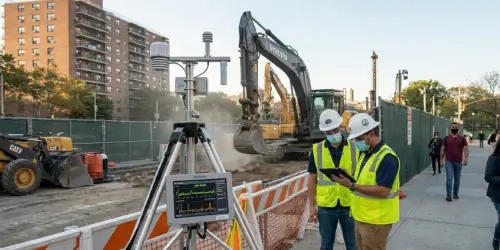
Teams on construction sites often rely on water sprays and misting systems to keep dust under control.
Diesel and fossil fuel emissions
Heavy machinery powered by fossil fuels releases diesel engine exhaust (DEE), nitrogen oxides (NOx), carbon monoxide, and carbon dioxide (CO₂). When excavation, leveling, grading, structure building, and vehicle movement increase, especially in enclosed or semi-enclosed areas, emissions can reach elevated levels quickly, causing headaches, dizziness, and fatigue.
Moreover, carbon dioxide (CO₂) can cause unconsciousness and can even be fatal at very high levels.
Diesel exhaust is classified as a Group 1 carcinogen by the IARC (International Agency for Research on Cancer), meaning there is sufficient evidence that the emissions can cause cancer in humans. Despite this, exposure levels frequently go unmeasured on construction projects.
Carbon monoxide (CO) emissions
Carbon monoxide poisoning remains one of the most dangerous but underestimated risks on jobsites. Produced by generators, heavy machinery, and temporary heaters, the gas is colorless and odorless, so workers can't see or smell it. It's a particular danger in enclosed indoor spaces with limited airflow.
CO interferes with oxygen delivery in the bloodstream, compromising the body’s ability to function. At low concentrations, symptoms include fatigue, which is often passed off as normal tiredness from hard work. Higher concentrations lead to:
-
Compromised vision and coordination
-
Crippling headaches and nausea
-
Dizziness and confusion
In extreme cases, severe CO poisoning can be fatal within minutes.
Other common jobsite contaminants
Here's an overview of other common airborne hazards construction and safety leaders must deal with to protect employee health and professional reputations.
| Hazard | Activities That Cause Exposure | Adverse Effects |
| Respirable Crystalline Silica (RCS) | Cutting, grinding, drilling, or crushing concrete, brick, stone, or mortar. | Silicosis, COPD, and lung cancer. |
| Volatile Organic Compounds (VOCs) | Working with paints, solvents, adhesives, sealants, and fuel combustion. | Irritation, headaches, organ damage, and cancer risks. |
| Welding fumes (metal oxides, gases) | Welding, cutting, and brazing metals. | Metal fume fever, respiratory problems (a higher risk for those with pre-existing respiratory conditions), neurological effects, and lung cancer. |
| Asbestos fibers | Demolition, renovation, and disturbance of old insulation, flooring, and roofing. | Asbestosis, mesothelioma, and lung cancer. |
| Wood dust | Sawing, sanding, cutting, and milling wood. | Allergic reactions, asthma, and nasal cancer (hardwood dust). |
| Mold spores | Disturbance of damp or water-damaged building materials. | Allergic reactions, asthma, and hypersensitivity pneumonitis. |
It's important to note that the adverse health effects are not just physical. Air pollution has also been associated with weak concentration and mental health problems.
Why Air Quality Risks Are Missed
Several factors explain why air pollution risks on jobsites are often missed or incompletely assessed:
-
Air quality standards fluctuate throughout the day: Spot checks can easily miss short-term spikes, especially if a safety manager is inspecting another area or project. A focus on outdoor hazards might overlook an indoor air quality danger.
-
Weather conditions: Wind can carry airborne particles far beyond their source, while heat and humidity can intensify exposures. Sudden weather changes and shifting risk conditions make it hard to get an accurate handle on your site's environmental health.
-
Delayed complaints: Workers exposed to chemical pollutants often don't feel the full effects immediately. In many cases, symptoms such as respiratory or lung complications surface years later, by which stage the harm is irreversible.
The key point is that sporadic checks never capture the full picture. Without continuous monitoring, even well-planned attempts to control dust, fumes, toxic gases, and other airborne health hazards on your jobsites fail.
Read more:
-
The Hidden Costs of Legacy Systems on Modern Construction Jobsites
-
How Can Construction Jobsites Adapt To Digital Transformation
How Real-Time Monitoring Monitors Air Quality and Protects Worker Health
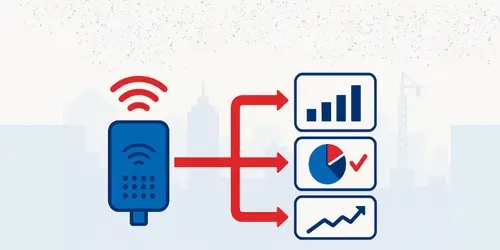
To overcome the limitations of periodic checks and manual logging, many construction firms have implemented IoT-enabled air monitoring systems. These smart solutions provide live, continuous environmental tracking to improve workplace safety.
Our Air Quality Monitoring Systems identify harmful and toxic substances more quickly and accurately than human senses or manual processes. The system delivers precise measurements and automatic alerts to managers well before conditions (in both indoor and outdoor environments) approach threat levels.
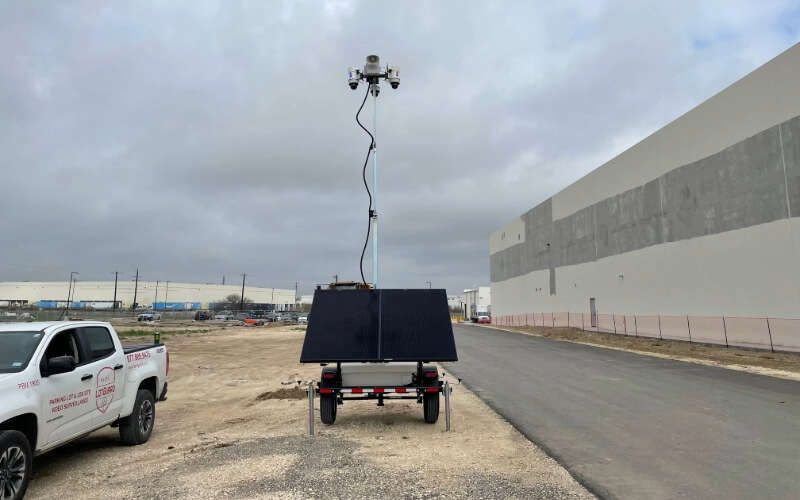
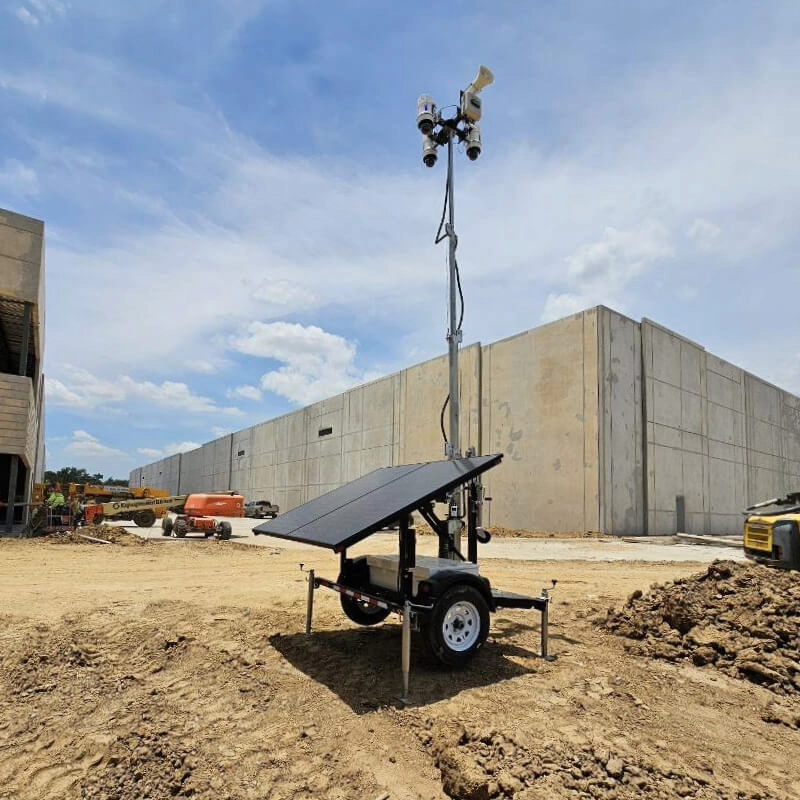
As add-on features to our Mobile Surveillance Trailers and Temporary Camera solutions, IoT-based air sensors collect data on airborne pollutants, including:
-
Fine particulate matter (PM1, PM2.5, PM10) from dust, diesel fumes, and demolition operations.
-
Carbon dioxide (CO₂) readings during excavation activities and heavy machinery usage.
-
Carbon monoxide (CO) levels in poorly ventilated or confined spaces.
-
VOCs (Volatile Organic Compounds) from paints, sealants, adhesives, and solvents.
-
Weather conditions (temperature, humidity levels) that affect how pollutants disperse.
How smart air monitoring works
After thorough risk assessments and identifying the best monitoring points, sensors are deployed across your jobsite and linked to our cloud-based platform, Stellifii, which is end-to-end AES256 encrypted to protect all data.
This platform comes with the following features and capabilities:
-
Customized threshold settings: You define alert levels based on regulatory limits and site safety/environmental rules.
-
Real-time alerts: Sensors capture thousands of data points every hour, and readings are analyzed by built-in AI in real-time. When conditions approach or exceed thresholds, managers receive instant notifications via app, SMS, or email.
-
Remote oversight: Continuous monitoring provides 24/7 access to the latest data from any connected device. This eliminates the need for inconsistent and often flawed manual tracking.
-
Secure data storage: Up to 180,000 timestamped records are stored for trend analysis and compliance reporting.
Stellifii brings all data into one place, giving you total visibility across all projects. If inspectors request air readings from 2 months ago, documented evidence is immediately available. This transforms environmental monitoring into a defensible compliance tool.
Air quality tracking works together with other environmental monitoring tools that can be integrated into Stellifii to provide a fuller picture of jobsite conditions, including:
-
Weather Monitoring: Weather monitoring stations track extreme conditions such as high temperatures, humidity, winds (speed and direction), and rainfall, and incoming storm conditions.
-
Noise Monitoring: Continuously measures jobsite sound levels against thresholds to ensure compliance with noise limits. Noise sensors measure across ranges of 30-130 decibels (dB) and frequencies of 20Hz to 12.5kHz.
Weather factors can have a direct impact on pollutant dispersion, while noise affects worker stress and concentration. Connecting all environmental variables provides safety managers with richer and more useful insights, allowing them to identify trends and plan accordingly. For instance, rescheduling a demolition job until after strong winds have calmed to reduce dust dispersion.
Read more: Stellifii: Our New Smart Platform Transforming Surveillance, Safety, and Compliance
Connecting Air Monitoring, PPE, and Fire Safety Management
While air quality control plays a vital role in mitigating jobsite risks, it delivers the best results when paired with PPE compliance. This is especially true during high‑exposure activities like cutting, grinding, welding, and demolition, where airborne contaminants can quickly exceed safe limits.
Crew members doing these jobs are expected to wear PPE such as dust masks, air-purifying respirators, and gas masks. Smart detection systems integrate AI-powered visual monitoring to check that workers are indeed wearing appropriate protective gear.
If the required equipment is absent, the PPE Monitoring system flags this and sends a real-time alert to supervisors. Advanced systems can send non-compliant workers a direct audio warning, too.
Fires are a related risk factor. The same dry, windy conditions that create dust also increase fire dangers, while escaped chemical hazards can cause combustion. Smoke and Fire Detection solutions with video analytics recognize early signs of smoke or fire faster than traditional fire alarms, alerting responders immediately.
By unifying continuous air quality monitoring with automated PPE verification and fire detection, safety managers gain tight control over these risk factors.
Read more: Why Video Analytics is Best for Smoke and Fire Detection
How Automated Air-Quality Control Meets Regulatory Compliance
Air quality laws are becoming increasingly stringent, with both OSHA (Occupational Safety and Health Administration) and the EPA (Environmental Protection Agency) committed to reducing pollutants and toxins in construction environments.
-
OSHA establishes permissible exposure limits that define the maximum levels of air pollution workers can legally encounter during their shifts. The maximum fine for violating limits is $165,514 per violation.
-
The EPA’s NAAQS (National Ambient Air Quality Standards), established under the Clean Air Act (CAA), sets concentration limits for common air pollutants that affect public health. These include particulate pollution, nitrogen dioxide, lead, and carbon monoxide.
-
Falling under the EPA, NESHAP (National Emission Standard for Hazardous Air Pollutants) targets hazardous air pollutants (HAPs) that are known to cause cancer and other serious health complications.
Maximum penalties for non-compliance with EPA regulations are steep. NESHAP breaches can lead to up to 5 years in prison and costly fines (fines/sentences can double for second or subsequent convictions), while EPA civil penalties for Clean Air Act violations may reach $472,901 per violation, depending on the nature and duration of the transgression.
Proactively managing on‑site pollution (plus PPE and fire risks) is the best way to avoid regulatory problems and fines. Continuous data and automated reporting create a solid record of monitoring and corrective actions for audit purposes.
Through Stellifii, both current and historical data can be retrieved, showing EPA, OSHA, and state inspectors exactly what was measured (PM2.5, CO₂, dust, etc.), when, and what actions were taken. When inspectors ask for air readings, you can generate reports in just a few minutes, proving due diligence in word and deed.
Read more:
Protecting Construction Workers and Nearby Communities
Besides safeguarding workers, construction firms must also consider the local communities surrounding the jobsite.
Community care
Airborne contaminants from construction operations frequently cause distress and health issues in nearby neighborhoods. Contractors have a duty of care to limit this impact.
Effective monitoring helps reduce neighborhood tensions and health threats by catching issues before they become serious, lowering the number of complaints and protecting your company’s reputation. Responsibility towards the locals builds trust and strengthens all stakeholder relationships.
Worker security
Thousands of US workers die annually from long-term hazardous substance exposure. According to the CDC, occupational exposures are largely preventable through proper controls.
Ensuring your crews don't suffer health consequences from poor jobsite conditions should always be a top priority. Good environmental hygiene and high safety standards show crews that leadership values them and their well-being. This boosts morale and engagement and promotes a stronger safety culture.
Securing your projects against unauthorized access and malicious activities also contributes to a healthier environment. By integrating surveillance systems and IoT environmental tracking, Stellifii supports the following managed security and access services to boost overall jobsite safety:
| Security Service | What it Does | Key Benefits |
| Intrusion Detection |
|
Jobsite access is strongly controlled with advanced technologies, preventing trespassing, theft, and vandalism. |
| License Plate Recognition (LPR) |
|
|
| Security Systems with Live Video Monitoring |
|
Unauthorized access is prevented, making the jobsite safer and more secure. |
Read more:
-
The Future of Construction Security: From Guards to AI-Powered Smart Systems
-
The Benefits of Integrating Your Security and Communications Systems
Smarter Construction Environmental Management Starts Here
AI-powered IoT monitoring and centralized data management through Stellifii convert the often invisible threats of construction air pollution into actionable insights.
Early warning of dangerous conditions supports OSHA and environmental compliance and provides documented proof of due diligence. More than that, it supports a safer, happier workplace with fresher air!
Speak to us today about smart real-time air quality monitoring that protects your workforce and safeguards your organization. In a time of growing concern around climate change and reducing our environmental impact, it's one of the smartest moves you can make.